
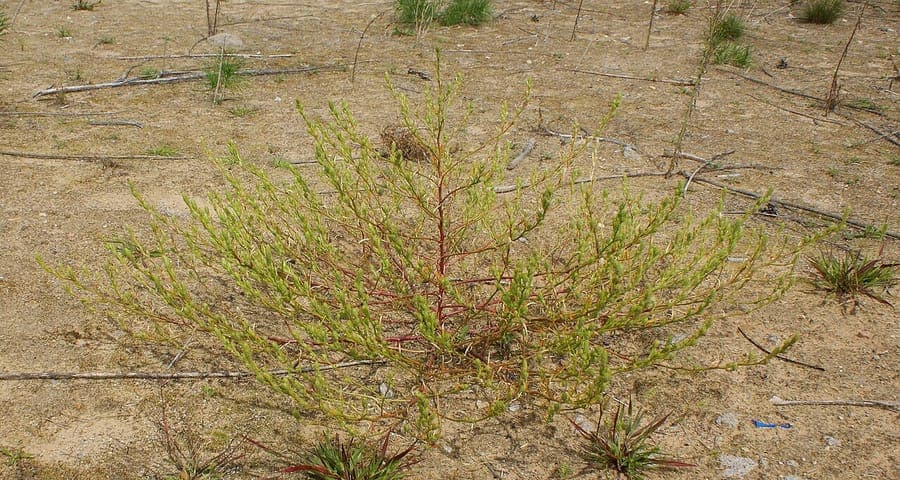
Krzysztof Ziarnek (Kenraiz) / CC BY-SA 3.0, via Wikimedia Commons
Corispermum pallasii: complete guide
Corispermum pallasii
¿Quieres ver Corispermum pallasii: complete guide en tu jardín?
1 minuto, sin tarjeta de crédito
Overview
Siberian bugseed (Corispermum pallasii) is a remarkable annual or biennial herb native to Siberia and Central Europe. Prized for its delicate, fine foliage and distinctive winged seeds that mature into ornamental seed pods by autumn, this plant thrives in full sun and drought conditions. Its airy structure adds lightness to any garden design.
Appearance and Bloom
This delicate plant reaches 30-60 cm in height with extremely thin, linear leaves creating an elegant, minimalist appearance. Small greenish-white flowers bloom from August through September, followed by striking winged fruits that persist into October. The ornamental seed heads provide autumn interest and serve as food for birds.
Ideal Location
Corispermum pallasii thrives in full sun positions with at least 6 hours of direct daily sunlight. The plant is remarkably adaptable to shade but produces superior flowers and seeds in bright locations. A windy site supports the plant's naturally airy growth habit.
Soil
This species excels in dry to moderately moist, well-drained soils. Heavy clay or waterlogged conditions should be avoided. Light, sandy, or rocky soil is ideal. Calcareous soils are suitable. Avoid nutrient-rich soils that promote excessive foliage at the expense of flowering.
Diseño gratis
¿Quieres ver Corispermum pallasii: complete guide en tu jardín? Crea un diseño gratis ahora.
Watering
Once established, Corispermum pallasii is extremely drought-tolerant. Water young plants regularly until well-rooted. Thereafter, minimal supplemental watering is needed. During abundant rainfall, no additional irrigation required.
Pruning
This species requires minimal maintenance. Old flower heads can be removed after blooming for a neater appearance, though not strictly necessary. Retain mature seed pods until late in the season for maximum ornamental value.
Maintenance Calendar
Spring: Direct-sow seed on warm soil. May-June: Water regularly until established. July-September: Peak bloom and fruiting. October-November: Appreciate seed decoration. Winter: No maintenance required.
Winter Hardiness
This annual is fully frost-resistant. Seeds can be sown in autumn for natural winter stratification. Established plants tolerate subzero temperatures without protection.
Companion Plants
Pairs beautifully with other drought-loving plants such as Sedum, Artemisia, Salvia, and Echinops. Ideal for sunny borders, rock gardens, and Mediterranean planting schemes. Excellent with ornamental grasses on dry sites.
Closing Remarks
Corispermum pallasii offers years of low-maintenance beauty with elegant foliage and ornamental seed development. A small powerhouse for those seeking hardy, drought-tolerant accents. Available at most garden centers in Europe. For more xeriscaping ideas, visit gardenworld.app/en!
¿Quieres ver Corispermum pallasii: complete guide en tu jardín? Crea un diseño gratis ahora.
Sube una foto, elige un estilo y obtén un diseño fotorrealista con lista de plantas en menos de un minuto.
Más de 10.000 jardines diseñados
Sin tarjeta de crédito


Plantas similares
Bassia laniflora (woolly summer-cypress): complete guide
Bassia laniflora
Full guide to Bassia laniflora: origin, appearance, ideal location, soil, watering and care for this drought-tolerant annual.
Suaeda spicata: complete guide
Suaeda spicata
Everything about Suaeda spicata (spiked seablite): a rare salt-tolerant coastal succulent from the western Mediterranean and Macaronesia.
California amaranth: complete guide
Amaranthus californicus
Full guide to California amaranth (Amaranthus californicus): growing tips, ideal location, soil needs, watering, and garden design ideas.