
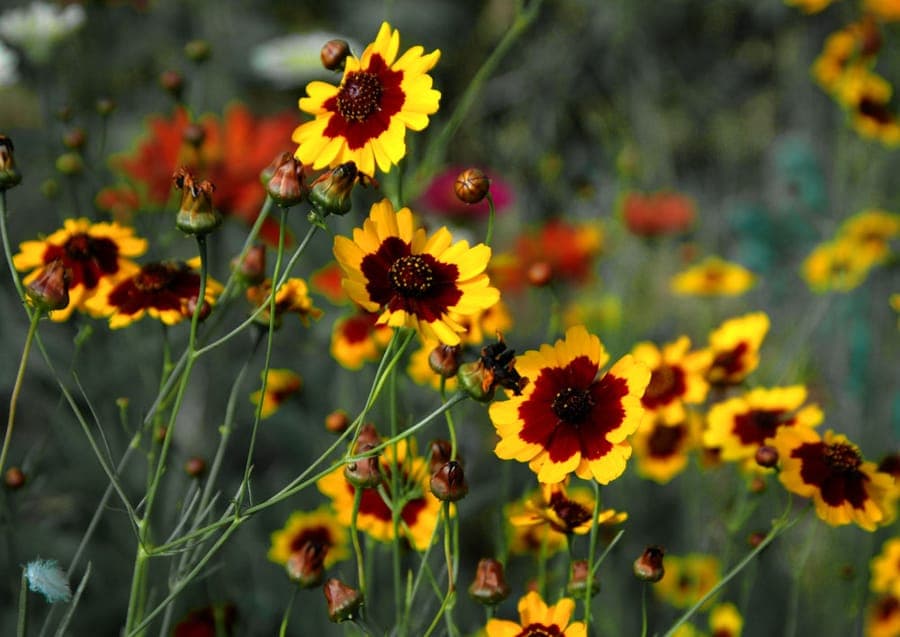
No machine-readable author provided. C.Maylett assumed (based on copyright claims). / CC BY-SA 3.0, via Wikimedia Commons
Coreopsis tinctoria: complete guide
Coreopsis tinctoria
¿Quieres ver Coreopsis tinctoria: complete guide en tu jardín?
1 minuto, sin tarjeta de crédito
Overview
Coreopsis tinctoria, commonly called calliopsis, is a spectacular annual flowering plant that provides continuous pleasure throughout summer. This member of the Asteraceae family is renowned for its delicate red, yellow, and brown flowers. In many regions, calliopsis remains a favorite flower due to its generosity and extended flowering period.
Beyond practical value as cut flowers for borders, coreopsis tinctoria excels in bringing persistent color to garden spaces. For gardeners seeking vibrant hues, this plant offers continuous color supply. For design inspiration incorporating flowering plants, visit gardenworld.app to explore professional garden designs.
Appearance and bloom
The defining characteristic of coreopsis tinctoria involves bright, round flowers featuring vivid color combinations. Blooms display red, yellow, and brown tones, frequently in combination, creating distinctly characteristic appearance. Some varieties remain entirely yellow, while others display darker red. Flowers measure approximately 2.5-5 centimeters across, growing on long thin stems.
The plant itself reaches 30-90 centimeters tall depending on variety and growing conditions. Foliage is fine and delicate, typically featuring narrowly cut leaves providing green structural interest. Flowering begins in June and continues until the first frost, making this plant absolutely essential for sustained color display.
When spent flowers are removed, coreopsis tinctoria continuously produces new buds and blooms abundantly. This deadheading process proves essential for maximum enjoyment of this plant's extended flowering season.
Ideal location
Coreopsis tinctoria thrives in sunny locations receiving minimum six hours direct sunlight daily. The plant performs poorly in shade and becomes thin and weak. Full sun produces maximum flowers and most vibrant possible colors. In very hot climates, afternoon shade provides some benefit.
The plant remains unbothered by wind and grows well in exposed locations. This makes it perfect for rooftops, balconies, and open gardens where significant wind occurs. Long thin stems prove flexible and rarely break in gusty conditions.
In temperate climates, you can grow coreopsis tinctoria in containers or directly in ground. The plant works very decoratively in mixed borders and mass plantings for maximum color impact.
Soil
Coreopsis tinctoria grows well in virtually all soil types but thrives in well-draining, lightly fertilized soil. Ideal growing medium ranges from sandy to loamy soil with pH approximately 6.0 to 7.5. Before planting, work compost into soil, though this remains not strictly necessary.
For container cultivation, standard potting soil delivers excellent results. The plant proves not particularly demanding nutritionally and actually performs better in less fertile soil, because excessive fertility produces excessive foliage with fewer flowers.
Well-draining soil proves essential because coreopsis tinctoria cannot tolerate waterlogging. Ensure good drainage and add sand or perlite if you possess heavy soil.
Diseño gratis
¿Quieres ver Coreopsis tinctoria: complete guide en tu jardín? Crea un diseño gratis ahora.
Watering
Coreopsis tinctoria requires moderate water and proves quite drought tolerant once established. Water when the top soil layer feels dry to touch, but avoid excessive watering. During dry periods, water deeply to encourage roots to penetrate deeper into soil.
Once established and growing, coreopsis tinctoria becomes fairly self-sufficient and requires less water than many other border plants. This makes it ideal for dry gardens and for gardeners with limited time availability.
When growing coreopsis tinctoria indoors in containers, regularly check moisture levels. Water when the top centimeter becomes dry. Ensure pots have good drainage holes.
Pruning
Deadheading represents the most important pruning for coreopsis tinctoria. Remove spent flowers to encourage continuous blooming. Many gardeners deadhead all wilted flowers every two or three days for maximum floriferousness.
When plants produce fewer flowers at season's end, cut the entire upper growth back to approximately 15 centimeters to encourage new growth and renewed flowering. This typically works well in September-October.
When plants become excessively tall and leggy, pinch the growing tip in July so plants become more compact and branch more prolifically.
Maintenance calendar
During growing season (May-October), provide moderate water and light fertilizer if desired. Focus on deadheading for continuous blooms.
In late summer (August-September), cut plants back for renewed flowering. Provide regular water.
In autumn (October-November), reduce watering as blooming decreases progressively.
Coreopsis tinctoria represents an annual crop and dies after first frost.
Winter hardiness
Coreopsis tinctoria lacks winter hardiness. This annual plant dies after the first frost and must be replanted each year. Some varieties may self-seed if allowed to mature flowers, though most cultivars produce insufficient seeds for reliable reseeding.
If you want coreopsis to return next season, allow some flowers to mature and drop seeds naturally on soil. Seeds can overwinter and germinate next spring.
Companion plants
Coreopsis tinctoria works beautifully in mixed borders. Combine it with other sun-loving plants including zinnias, rudbeckia, gaillardia, or salvias. The bright flowers create beautiful contrast against purple-flowering plants.
The plant grows well alongside ornamental grasses for textural interest. Try pairing with Stipa or Pennisetum species. In containers, combine coreopsis with lavender, daisies, or other summer bloomers.
The vibrant calliopsis colors provide striking contrast with silver foliage plants like Artemisia, Senecio, or dusty miller.
Conclusion
Coreopsis tinctoria offers a simple, reliable way to enjoy vibrant flowers throughout summer and fall. With minimal water and maintenance, this plant blooms continuously from summer until first frost. Visit gardenworld.app for further inspiration on garden design incorporating flowering plants. For purchasing seed or seedlings, consult garden centres offering diverse color variants of coreopsis tinctoria.
¿Quieres ver Coreopsis tinctoria: complete guide en tu jardín? Crea un diseño gratis ahora.
Sube una foto, elige un estilo y obtén un diseño fotorrealista con lista de plantas en menos de un minuto.
Más de 10.000 jardines diseñados
Sin tarjeta de crédito


Plantas similares
Calendula stellata: complete guide
Calendula stellata
Complete guide to Calendula stellata, the star-flowered marigold from Sicily: location, soil, watering and companion planting tips.
Korean chrysanthemum: complete guide
Chrysanthemum x rubellum
Chrysanthemum x rubellum is a hardy autumn perennial with single pink to copper flowers from August to November. Care and combinations.
Helianthus divaricatus: complete guide
Helianthus divaricatus
Helianthus divaricatus is a North American woodland sunflower with yellow summer blooms, ideal for naturalistic borders and shady edges.