
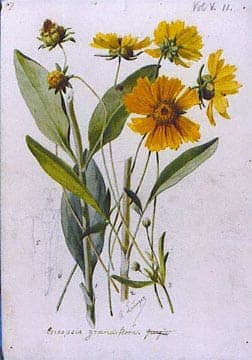
Alois Lunzer (1840-?) / Public domain, via Wikimedia Commons
Coreopsis grandiflora: complete guide
Coreopsis grandiflora
¿Quieres ver Coreopsis grandiflora: complete guide en tu jardín?
1 minuto, sin tarjeta de crédito
Overview
Coreopsis grandiflora, known as Large-flowered tickseed or American tickseed, is a stunning perennial belonging to the Asteraceae family (Daisy family). This North American beauty produces countless bright yellow flowers for months, thriving in full sun and dry conditions. With its compact growth habit and exceptionally long flowering season, Coreopsis grandiflora is ideal for borders, rock gardens, and containers.
Appearance and Bloom
Coreopsis grandiflora reaches heights of approximately 60-90 cm with a spread of 45-60 cm. The plant grows upright with thin, thread-like stems bearing finely pinnate, linear leaves. Flowers are single or double rosettes, 3-5 cm in diameter, displaying an intense yellow color. Some cultivars feature a red disk in the center. Blooming starts in June and continues until late October if regularly deadheaded. The plant readily refoliates after cutting.
Ideal Location
Coreopsis grandiflora thrives in a sunny spot - at least 6-8 hours of direct sun daily ensures optimal flowering. In shadier situations, the plant may grow but produces significantly fewer blooms. Ensure the plant is well-ventilated so thin stems don't flop in strong winds. A location with some wind protection from surrounding structures helps tremendously.
Soil Composition
The beauty of Coreopsis grandiflora is its modesty regarding soil requirements. It prefers well-draining, moderately fertile soil. Heavier clay soils can be improved with compost and sand. Dry sand and gravel are actually ideal. Ensure no waterlogging occurs; this leads to root rot.
Watering
Once established, Coreopsis grandiflora is quite drought-tolerant. During the growing season, water regularly, especially during establishment and flowering, but the plant tolerates drought quite well. Excessive water is worse than drought. During very dry periods, you can water once weekly; in normal periods, rainwater usually suffices.
Diseño gratis
¿Quieres ver Coreopsis grandiflora: complete guide en tu jardín? Crea un diseño gratis ahora.
Pruning and Maintenance
Regular pruning stimulates branching and extended blooming. As flowers fade, remove them regularly (deadheading). This also prevents self-seeding and keeps the plant compact. In spring (March-April), cut the plant back to about 15 cm. This promotes fuller growth and additional seasonal blooming.
Maintenance Calendar
March-April: cut back, remove old stems. May-June: water regularly, fertilize. June-October: regular deadheading, fertilize to encourage blooming. October-November: remove last flowers, mulch plants in case of frosts.
Winter Hardiness
Coreopsis grandiflora is frost-hardy to approximately -15 to -20 degrees Celsius. In milder maritime climates (Netherlands, Belgium, Germany), plants usually overwinter well if properly established. In very cold winters or wet conditions, younger plants may die. Prevention is better than cure: ensure good drainage and don't cut back the plant in autumn.
Companion Plants
Coreopsis grandiflora combines beautifully with lavender varieties, sage, roses, and hollyhock. Together with blue forget-me-nots and other yellow summer bloomers, it creates stunning contrasts.
Conclusion
Coreopsis grandiflora is perfect for anyone who loves long, trouble-free flowering plants. Purchase your specimen from a garden center and place it in a sunny front yard or border. You'll enjoy months of yellow splendor with minimal effort and maintenance. Visit gardenworld.app for more inspiration and design your own blooming garden plan. Gardenworld.app also offers helpful tips for integrating summer bloomers into your garden scheme.
¿Quieres ver Coreopsis grandiflora: complete guide en tu jardín? Crea un diseño gratis ahora.
Sube una foto, elige un estilo y obtén un diseño fotorrealista con lista de plantas en menos de un minuto.
Más de 10.000 jardines diseñados
Sin tarjeta de crédito


Plantas similares
Calendula stellata: complete guide
Calendula stellata
Complete guide to Calendula stellata, the star-flowered marigold from Sicily: location, soil, watering and companion planting tips.
Korean chrysanthemum: complete guide
Chrysanthemum x rubellum
Chrysanthemum x rubellum is a hardy autumn perennial with single pink to copper flowers from August to November. Care and combinations.
Helianthus divaricatus: complete guide
Helianthus divaricatus
Helianthus divaricatus is a North American woodland sunflower with yellow summer blooms, ideal for naturalistic borders and shady edges.