
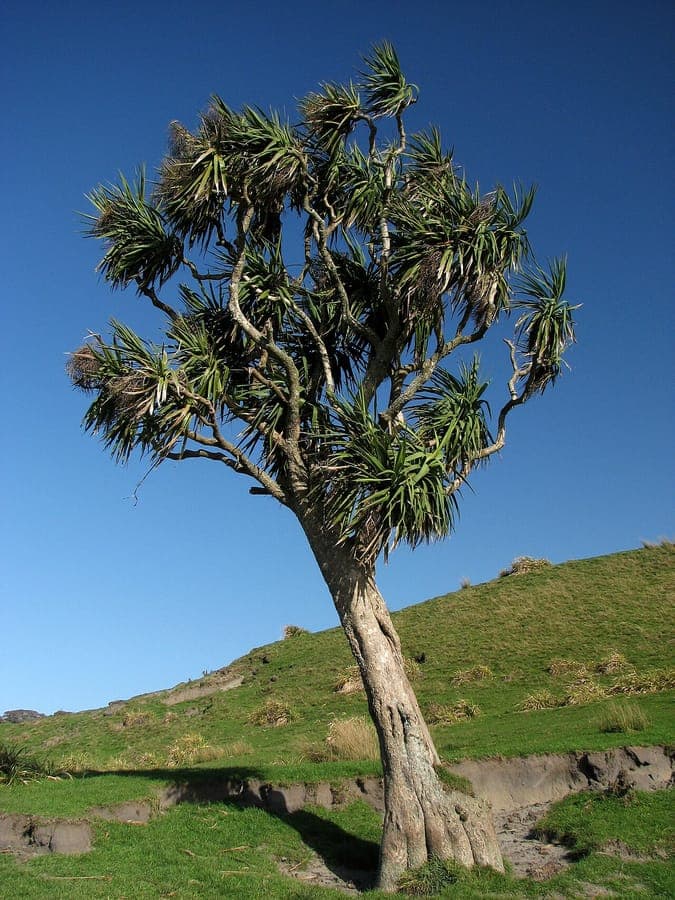
Jade / CC BY-SA 2.0, via Wikimedia Commons
Cordyline australis: complete guide
Cordyline australis
¿Quieres ver Cordyline australis: complete guide en tu jardín?
1 minuto, sin tarjeta de crédito
Overview
Cordyline australis, commonly called Cabbage Tree or Giant Dracaena, is a remarkable foliage plant native to New Zealand. Belonging to the Asparagaceae family, it is prized for its elongated, narrow leaves that form dense clusters at the stem tips. The Cordyline australis functions brilliantly as an accent plant in contemporary and tropical gardens. It can grow several meters tall and imparts an exotic character to your landscape.
Appearance and Bloom
The Cordyline australis is distinguished by long, dark green leaves that can reach up to 60 centimeters in length. The leaves grow in a characteristic tuft formation at the plant's crown. In warm climates, the plant may produce small creamy flowers in elongated spikes, followed by tiny blue berries. The growth pattern is upright and columnar, creating a striking vertical accent line in your landscape design.
Ideal Location
Cordyline australis thrives in warm, sunny locations. Choose a spot where the plant receives at least six hours of direct sunlight daily. In southern regions, consider providing partial shade during the hottest summer months. The plant is sensitive to frost and wind, so ensure shelter in windy areas. A sheltered terrace or position against a heat-absorbing wall is ideal.
Soil
Cordyline australis requires well-draining soil. Heavy clay soil can cause waterlogging issues. Prepare a mixture of garden soil with additional gravel or perlite for drainage. The plant tolerates salty sand well, making it suitable for coastal gardens. Incorporating compost when planting aids root establishment.
Watering
In the first growing season, water regularly to maintain consistently moist (not waterlogged) soil. Once established, the plant is moderately drought-tolerant. Water especially during hot periods. Ensure water does not remain on the leaves. In temperate climates, rainfall usually suffices.
Diseño gratis
¿Quieres ver Cordyline australis: complete guide en tu jardín? Crea un diseño gratis ahora.
Pruning
Pruning Cordyline australis is straightforward and best done in spring. Remove dead or damaged lower leaves. To encourage bushier growth, gently trim the top, though this is optional. The plant benefits from a nutrient boost after pruning.
Maintenance Calendar
Spring (March-May): Monitor soil moisture, perform initial pruning, apply fertilizer. Summer (June-August): Water regularly, mulch to prevent drying. Autumn (September-November): Gradually reduce watering, provide shelter. Winter (December-February): Minimize watering, provide frost protection if needed.
Winter Hardiness
Cordyline australis is not fully winter-hardy in Northern Europe. In southern regions, outdoor specimens may survive in very sheltered locations. Elsewhere, it is prudent to move potted plants indoors or provide comprehensive protection with burlap during severe winters. Temperatures below -5°C can be lethal.
Companion Plants
Cordyline australis pairs beautifully with other warmth-loving plants. Combine with foliage plants such as Phormium (New Zealand Flax), Clivia, or Alocasia. Ground covers like silvery foliage or lavender varieties provide attractive contrast. Dark conifers create striking visual contrast.
Closing
Cordyline australis is a refined choice for those seeking tropical flair. This plant provides year-round structure and character in your front garden. With a sunny location and frost protection, this striking foliage plant flourishes in gardens with enhanced warmth. Find excellent specimens at major garden centers. For more garden design inspiration, visit gardenworld.app. At gardenworld.app you'll also discover practical tips for tropical garden designs.
¿Quieres ver Cordyline australis: complete guide en tu jardín? Crea un diseño gratis ahora.
Sube una foto, elige un estilo y obtén un diseño fotorrealista con lista de plantas en menos de un minuto.
Más de 10.000 jardines diseñados
Sin tarjeta de crédito


Plantas similares
Narrow-leaved dracaena: complete guide
Dracaena angustifolia
Everything about Dracaena angustifolia - the narrow-leaved dracaena: location, care, overwintering and use as a houseplant or patio plant.
Chaparral yucca: complete guide to Hesperoyucca whipplei
Hesperoyucca whipplei
Hesperoyucca whipplei (Our Lord's candle) is a dramatic rosette-forming plant from California that produces a towering flower spike, ideal for dry and gravel gardens.
False lily-of-the-valley: complete guide
Maianthemum dilatatum
Everything about Maianthemum dilatatum, the false lily-of-the-valley. Care, shade location, propagation and garden combinations for this popular shade ground cover.