
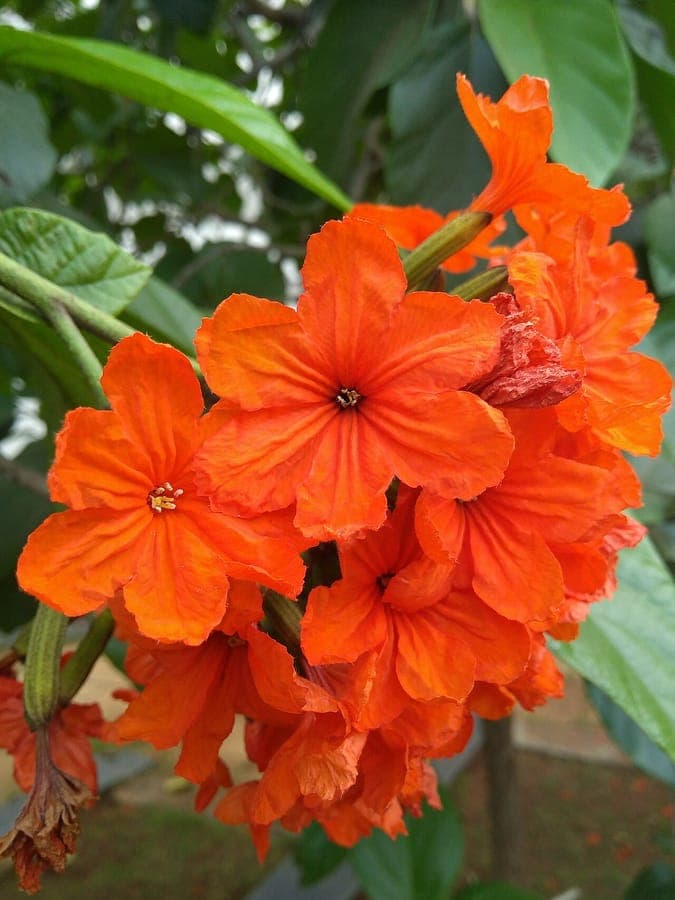
SKsiddhartthan / CC BY-SA 4.0, via Wikimedia Commons
Cordia sebestena: complete guide
Cordia sebestena
¿Quieres ver Cordia sebestena: complete guide en tu jardín?
1 minuto, sin tarjeta de crédito
Overview
Cordia sebestena, commonly known as the Scarlet Cordia, Geiger Tree, or Geranium-tree, is a stunning tropical tree belonging to the Boraginaceae family. Native to Florida, the Caribbean, and Central America, this remarkable specimen has captivated gardeners worldwide with its striking red-orange flowers and robust growth habit.
Appearance & Bloom
The Scarlet Cordia grows as a medium-sized tree with a compact, rounded canopy. Its large, rough-textured leaves display a deep green color and provide an excellent backdrop for the showstopping flowers. The plant produces vibrant red-orange clusters of small flowers that bloom prolifically throughout the growing season. These flowers are highly attractive to butterflies, hummingbirds, and bees, making this tree an excellent choice for pollinator-focused gardens.
Ideal Location
Cordia sebestena thrives in full sun conditions with at least 6-8 hours of direct sunlight daily. Choose a location protected from strong winds and severe frost. In cooler climates, growing in containers that can be moved indoors during winter is highly recommended.
Soil
Well-draining, fertile soil is essential for optimal growth. Incorporate organic matter such as compost or peat moss into the planting hole. The ideal pH range is 6.0 to 7.0. Avoid heavy clay soils that retain water excessively.
Diseño gratis
¿Quieres ver Cordia sebestena: complete guide en tu jardín? Crea un diseño gratis ahora.
Watering
Keep the soil consistently moist but not waterlogged during the growing season. Water when the top inch of soil becomes dry. In autumn and winter, reduce watering frequency significantly. Ensure proper drainage to prevent root rot.
Pruning
Cordia sebestena responds well to pruning and training. Prune after the flowering period to maintain shape and encourage bushier growth. Remove dead, damaged, or crossing branches. Regular pruning promotes fuller growth and more abundant flowering.
Maintenance Calendar
Spring: Resume regular watering and fertilize with a balanced, slow-release fertilizer. Summer: Maintain consistent watering and monthly feeding. Autumn: Gradually reduce watering as growth slows. Winter: Minimal watering, no feeding. Monitor for pests regularly.
Winter Hardiness
The Scarlet Cordia is not frost-hardy and cannot tolerate temperatures below 10 degrees Celsius. In temperate regions, this tree must be grown in containers and moved indoors during winter months.
Companion Plants
Pair with heat-loving perennials like bougainvillea, lantana, or salvia. Combine with foliage plants like coleus or caladiums to create stunning visual contrasts.
Closing Thoughts
Cordia sebestena is an enchanting tropical tree that brings year-round color and character to any garden. Its spectacular flowers and easy-care nature make it an excellent investment for warm climates. Visit specialized nurseries for quality specimens and expert guidance. For design inspiration, visit gardenworld.app/en to see how this plant can transform your outdoor space.
¿Quieres ver Cordia sebestena: complete guide en tu jardín? Crea un diseño gratis ahora.
Sube una foto, elige un estilo y obtén un diseño fotorrealista con lista de plantas en menos de un minuto.
Más de 10.000 jardines diseñados
Sin tarjeta de crédito


Plantas similares
Western waterleaf: complete guide
Hydrophyllum occidentale
Full growing guide for western waterleaf (Hydrophyllum occidentale): shade tolerance, soil needs, watering, winter hardiness and naturalistic garden use.
Limestone phacelia (Phacelia affinis): complete guide
Phacelia affinis
Full guide to Phacelia affinis, the limestone phacelia: sowing tips, purple-blue bee flowers, drought tolerance and uses in dry or wildlife gardens.
Pyrenean viper's bugloss: complete guide
Echium asperrimum
Echium asperrimum is a striking biennial from the western Mediterranean with rough bristly stems and vivid blue flowers. A magnet for bees and a bold border plant.