
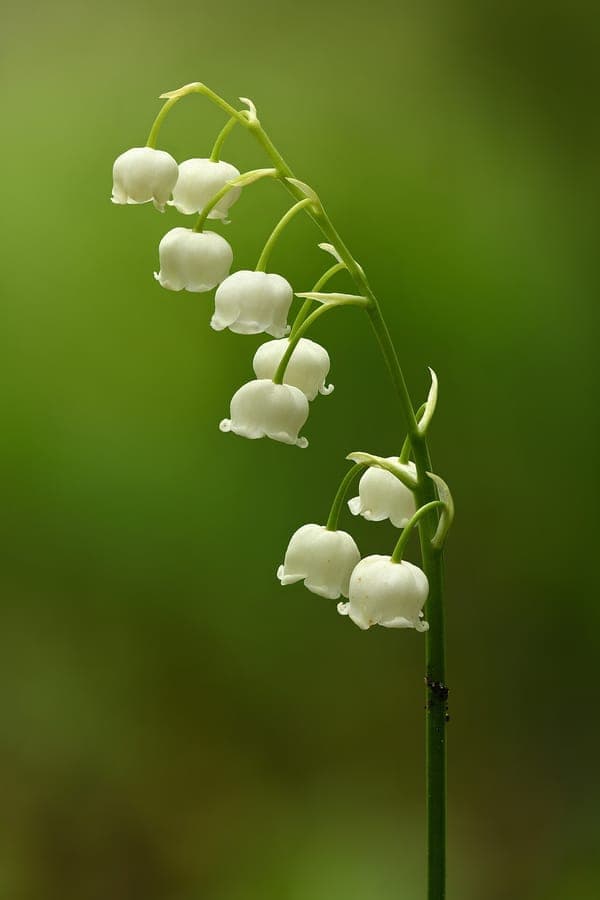
Ivar Leidus / CC BY-SA 4.0, via Wikimedia Commons
Lily-of-the-valley: complete guide
Convallaria majalis
¿Quieres ver Lily-of-the-valley: complete guide en tu jardín?
1 minuto, sin tarjeta de crédito
Overview
Lily-of-the-valley (Convallaria majalis) is a captivating fragrant perennial in the Asparagaceae family. This classic spring bloomer is native to Europe through the Caucasus. It's an exceptional groundcover for shaded areas and frequently used in landscape design for its delicate beauty and intoxicating scent.
Appearance and bloom cycle
The plant grows to approximately 15-25 cm in height. Lily-of-the-valley produces two to three elongated green leaves per shoot. During April and May, delicate white bell-shaped flowers appear in graceful drooping racemes. The fragrance is exquisite and highly valued by gardeners. Small red berries follow flowering.
Ideal location
Lily-of-the-valley thrives in shade to partial shade. It's an ideal choice under trees or in shaded borders. Although capable of growing in full sun, it performs best with 50-75% shade. Avoid intense midday sun.
Soil requirements
This plant prefers humus-rich, moist soils. Incorporate organic matter such as compost or leaf mold before planting. A pH of 5.0-7.5 is optimal. Well-draining soil prevents root rot.
Watering
Maintain consistently moist soil during the growing season. Once established, lily-of-the-valley is relatively drought-tolerant. Ensure soil doesn't dry completely during dry periods, especially in sunny locations.
Diseño gratis
¿Quieres ver Lily-of-the-valley: complete guide en tu jardín? Crea un diseño gratis ahora.
Pruning
No pruning required. Remove spent flowers and foliage in autumn. Very established colonies can be carefully thinned in early spring.
Maintenance calendar
March: Shoots emerge. April-May: Flowering peaks. June-July: Berries mature. August-October: Foliage remains green. November: Leaves die back. January-February: Winter dormancy.
Winter hardiness
Lily-of-the-valley is fully winter hardy to USDA zone 2 (-40°C). It's highly suitable for cold climates and thrives throughout the Netherlands and Belgium.
Companion plants
Lily-of-the-valley combines beautifully with other shade-lovers such as lungwort, sedges, and hellebores. Plant with hosta for foliage contrast. These combinations also benefit spring pollinators.
Conclusion
Lily-of-the-valley is an unparalleled groundcover for shaded gardens. With minimal maintenance requirements, it provides enduring value through its fragrance and form. Discover on gardenworld.app how to integrate this shade-loving jewel into your landscape. Use gardenworld.app for personalized garden designs that maximize the potential of shaded areas.
¿Quieres ver Lily-of-the-valley: complete guide en tu jardín? Crea un diseño gratis ahora.
Sube una foto, elige un estilo y obtén un diseño fotorrealista con lista de plantas en menos de un minuto.
Más de 10.000 jardines diseñados
Sin tarjeta de crédito


Plantas similares
Narrow-leaved dracaena: complete guide
Dracaena angustifolia
Everything about Dracaena angustifolia - the narrow-leaved dracaena: location, care, overwintering and use as a houseplant or patio plant.
Chaparral yucca: complete guide to Hesperoyucca whipplei
Hesperoyucca whipplei
Hesperoyucca whipplei (Our Lord's candle) is a dramatic rosette-forming plant from California that produces a towering flower spike, ideal for dry and gravel gardens.
False lily-of-the-valley: complete guide
Maianthemum dilatatum
Everything about Maianthemum dilatatum, the false lily-of-the-valley. Care, shade location, propagation and garden combinations for this popular shade ground cover.