
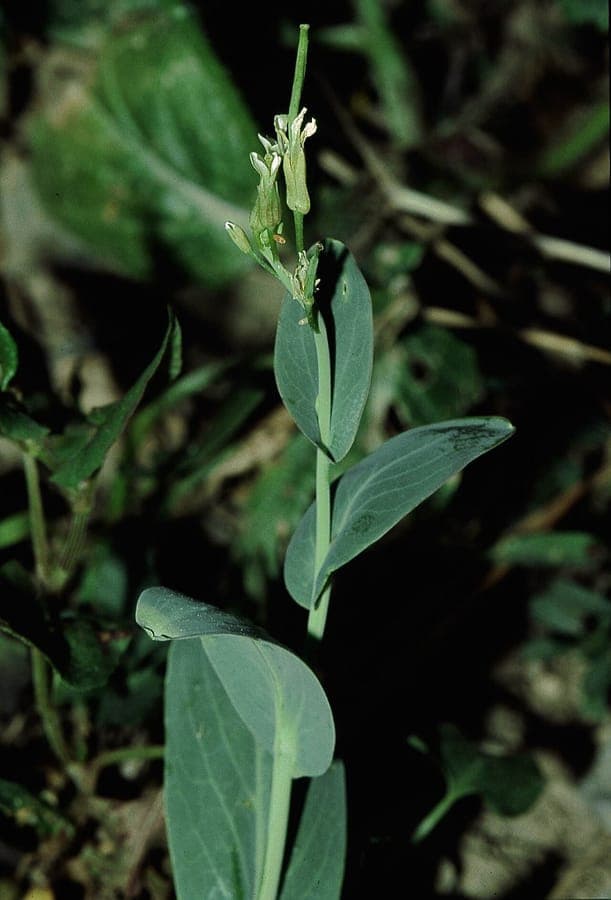
Wikimedia Commons / CC BY-SA 3.0, via Wikimedia Commons
Hare's ear mustard: complete guide
Conringia orientalis
¿Quieres ver Hare's ear mustard: complete guide en tu jardín?
1 minuto, sin tarjeta de crédito
Overview
Hare's ear mustard (Conringia orientalis) is a notable annual plant in the Brassicaceae family, the same family that includes cabbages and radishes. Native to Central Europe through the Mediterranean basin, this plant has naturalized in many regions worldwide. It's a hardy species that thrives in dry, sunny conditions with minimal soil requirements.
Appearance and bloom cycle
Hare's ear mustard grows to approximately 40-60 cm in height. The plant produces elongated, grey-green leaves that clasp the stem. Flowering occurs from May through July, producing small yellow flowers arranged in clusters. After blooming, distinctive long, narrow seed pods develop that are characteristic of mustard relatives.
Ideal location
This species prospers in full sun. Select locations receiving at least 6 hours of direct sunlight daily. While tolerant of partial shade, flowering is more prolific in bright positions. The plant excels in open, windy sites and naturally thrives in coastal or stony habitats.
Soil requirements
Hare's ear mustard is undemanding regarding soil composition. It flourishes on dry, infertile soils and tolerates limestone. Ensure excellent drainage - waterlogging damages roots. For optimal performance, provide sandy or gravelly substrate.
Diseño gratis
¿Quieres ver Hare's ear mustard: complete guide en tu jardín? Crea un diseño gratis ahora.
Watering
Once established, this plant requires minimal irrigation. Water regularly during the first month after sowing, but thereafter it demonstrates excellent drought tolerance. Excessive moisture is detrimental to root health.
Pruning
As an annual, hare's ear mustard requires no pruning. You may remove spent flowers to encourage additional blooms. After seed set, self-sown seedlings may appear in subsequent seasons.
Maintenance calendar
March-April: Sow seeds directly in soil. May-June: Maintain regular moisture. July: Flowering peaks. August-September: Seeds mature. October: Harvest seeds for next season.
Winter hardiness
Hare's ear mustard is not winter hardy. As an annual, it's sown in spring and dies with the first hard frost, typically October through November.
Companion plants
Hare's ear mustard combines well with other drought-tolerant species such as lavender, Spanish needles, and carob. Plant together for a Mediterranean xeriscape theme. These associations also benefit pollinating insects.
Conclusion
Hare's ear mustard is an excellent choice for dry soils and sunny locations. With minimal care, this plant provides years of yellow blooms and striking seed structures. Visit gardenworld.app for more ideas on drought-tolerant garden plants and sustainable landscaping. Discover how gardenworld.app can transform your outdoor spaces with personalized garden designs.
¿Quieres ver Hare's ear mustard: complete guide en tu jardín? Crea un diseño gratis ahora.
Sube una foto, elige un estilo y obtén un diseño fotorrealista con lista de plantas en menos de un minuto.
Más de 10.000 jardines diseñados
Sin tarjeta de crédito


Plantas similares
Brassica cretica: complete guide
Brassica cretica
Brassica cretica, the Cretan cabbage, grows wild on Aegean cliffs. Discover how to grow this drought-tolerant, yellow-flowered Mediterranean perennial.
Corsican cabbage: complete guide
Brassica insularis
Corsican cabbage is a rare Mediterranean rock cabbage with white flowers and blue-green leaves. Location, soil and winter protection.
Prostrate cabbage: complete guide
Brassica procumbens
Prostrate cabbage is a creeping North African cliff plant with yellow flowers. Discover location, soil type and winter protection.