
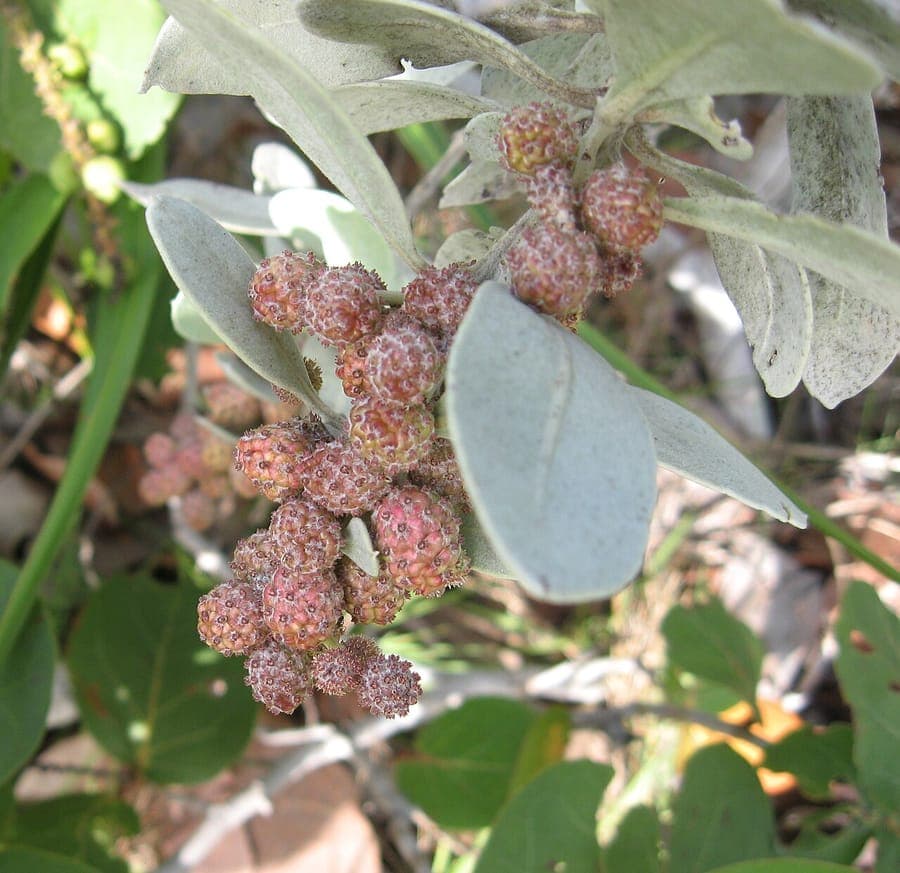
Mason Brock (Masebrock) / Public domain, via Wikimedia Commons
Button mangrove: complete guide
Conocarpus erectus
¿Quieres ver Button mangrove: complete guide en tu jardín?
1 minuto, sin tarjeta de crédito
Overview
The button mangrove (Conocarpus erectus), also called dwarf mangrove or buttonwood, is a robust, small tree from tropical and subtropical coasts of West Africa, Americas, and Caribbean. This rare ornamental belongs to the mangrove family and is celebrated for its salt tolerance and compact growth. In coastal zones it's a vital part of mangrove ecosystems protecting mudflats and shorelines.
In Europe, button mangrove is primarily cultivated as a greenhouse plant or container specimen for collectors. The tree reaches 4-8 meters tall in wild state, but in pot culture remains much more compact at 1-2 meters. The plant is long-lived and can remain in the same pot for years with proper care.
Appearance & bloom cycle
Button mangrove is recognizable by its small, slender leaves (2-4 cm) with silvery undersides. The trunk is thinner and more upright than many other mangrove species. The flowers are inconspicuous, small and yellowish-white, appearing in dense clusters.
After flowering, characteristic small feathery seeds develop that feed seabirds and fish. The complete plant creates an airy, elegant silhouette. In greenhouse conditions the plant remains compact and responsive to shaping.
Ideal location
Button mangrove requires abundant light and direct sun. In greenhouses position it against south-facing walls with maximum light exposure. The plant also grows in partial shade, but grows less vigorously there.
For summer cultivation in cool climates you can cautiously place it outdoors on sheltered terraces in June-September. Provide wind protection; strong winds damage delicate foliage. Temperature must stay between 18-28°C; below 15°C growth stagnates.
Soil requirements
Button mangrove tolerates a very broad range of soil types. In container cultivation mix greenhouse soil (50%) with sand (30%) and nutrient-rich compost (20%). The plant tolerates salt, so seawater mixtures are possible.
Drainage is crucial; combine sand and clay equally for perfect water drainage. The plant even grows in pure sand, so poor soil poses no problem. Acidic to alkaline pH (5.5-8.0) is acceptable.
Diseño gratis
¿Quieres ver Button mangrove: complete guide en tu jardín? Crea un diseño gratis ahora.
Watering
Button mangrove loves moisture. Water regularly during growing season (May-September) so soil always stays moist. In wild state it grows in mangrove swamps, so wet roots aren't a problem.
Actually using seawater is possible for authentic cultivation. Fresh tap water works equally well. In winter slightly reduce watering, but soil must never dry completely.
Pruning
Button mangrove requires minimal pruning. Remove only dead branches and damaged leaves. For compact formation you can gently pinch growth tips in spring.
Naturally it grows more shrub-like than tree-like. You can later develop into a standard form by removing side branches. Don't prune aggressively; it grows slowly.
Maintenance calendar
Spring: Water regularly, no feeding needed. Late spring-summer: Mist regularly for humidity. Summer: Water continuously, fertilize every 4 weeks. Fall: Gradually reduce watering. Winter: Sparse water, no feeding, cool rest (15-18°C) required.
Check regularly for scale insects and spider mites, especially in dry greenhouse air. Clean foliage monthly with soft sponge.
Winter hardiness
Button mangrove is not frost-hardy. Dies at 10°C. In northern Europe it can only overwinter in heated greenhouse spaces. For optimal growth minimum 15°C required.
Preventing damage is essential; cold causes leaf yellowing and drop. Maintain stable temperature without sudden drops. On very cold nights (below 12°C) remove from outdoor locations.
Companion plants
Button mangrove grows well in tropical greenhouse collections alongside other mangrove species. Also interesting with other salt-tolerant plants: halophyte plants, glasswort, silverleaf species.
Combine with other coastal associates like Avicennia marina (black mangrove) for complete mini-mangrove ecosystem. Ensure temperatures match.
Closing
Button mangrove is a botanical rarity for specialized gardeners with greenhouse space. The plant tells the story of tropical coasts and mangrove forests. With patience and moist, warm conditions you can nurture this unique tree for years. Source plant material from specialized greenhouse plant suppliers or at international plant fairs. A true treasure for the advanced collector.
¿Quieres ver Button mangrove: complete guide en tu jardín? Crea un diseño gratis ahora.
Sube una foto, elige un estilo y obtén un diseño fotorrealista con lista de plantas en menos de un minuto.
Más de 10.000 jardines diseñados
Sin tarjeta de crédito


Plantas similares
White-flowered mangrove: complete guide
Lumnitzera racemosa
Discover the white-flowered mangrove. This article covers cultivation, care and placement for coastal gardens.
Terminalia superba (Limba): complete guide
Terminalia superba
Terminalia superba, known as Limba or Afara, is a majestic West African tree. With its light timber quality and elegant appearance, this species adds structure to large gardens.
Kinkeliba: complete guide
Combretum micranthum
Discover Kinkeliba (Combretum micranthum), an African shrub with medicinal value. Warm-climate lover, fine foliage, traditionally used in herbal medicine.