
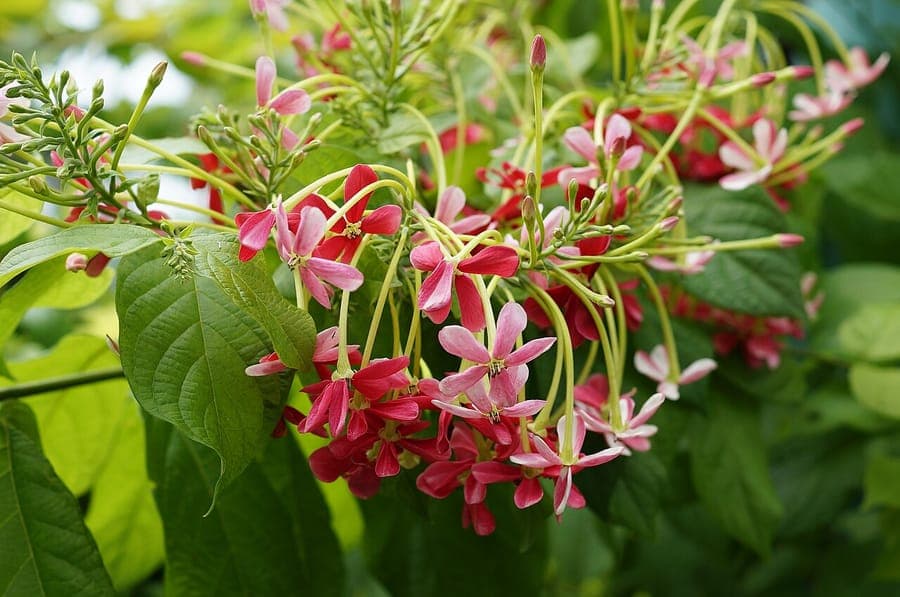
Prenn / CC BY-SA 3.0, via Wikimedia Commons
Rangoon creeper: complete guide
Combretum indicum
¿Quieres ver Rangoon creeper: complete guide en tu jardín?
1 minuto, sin tarjeta de crédito
Overview
The Rangoon creeper (Combretum indicum), also known as quisqualis, is a lush climbing vine from tropical and subtropical Asia. This exotic beauty belongs to the Combretaceae family and is famous for its enchanting color-changing flowers that shift from white to pink to deep red. In warm climates it creates a waterfall of color along pergolas and walls.
The plant grows wild in Bangladesh, India, Myanmar and throughout East Asia. In temperate European climates it thrives only in heated greenhouses. The plant can grow 3-5 meters long and has flexible, twining stems that easily wind around supports.
Appearance & bloom cycle
Rangoon creeper is recognizable by its opposite leaves and slender, climbing stems. The foliage is elongated, 6-10 cm, green with fine hairiness. The spectacular flowers are the true show, appearing from May through October.
Each floret begins creamy-white or light pink, changing after several days to rose-red and deep red when mature. This color shift continues throughout the blooming season. The flowers attract birds and produce abundant nectar. After bloom, small dark-gray fruits develop.
Ideal location
Rangoon creeper requires abundant light and warmth. In greenhouse conditions position it against south- or west-facing walls with ample glass and sunlight. Minimum 6 hours direct sunlight daily is required. Temperature must not drop below 15°C; 20-28°C is optimal.
The plant dislikes drafty positions. Ensure stable, warm air circulation in the greenhouse. For summer cultivation you can cautiously place it outdoors in sheltered conditions, but bring it back before frost.
Soil requirements
Rangoon creeper grows in rich, well-draining soils. In container cultivation mix standard greenhouse soil with 30% coarse sand and compost (ratio 4:1:1). The plant appreciates moist but not wet soil.
Neutral pH (6.5-7.5) works best. Add organic matter (leaf mold, coir fibers) for better water retention. Provide thick drainage layer (3-5cm) under potting mix.
Diseño gratis
¿Quieres ver Rangoon creeper: complete guide en tu jardín? Crea un diseño gratis ahora.
Watering
Rangoon creeper loves moist soil. Water regularly during growing season (May-September) so soil never dries out. Daily misting of foliage is beneficial for humidity.
In fall gradually reduce watering. In winter only minimal water; soil can be noticeably moister but no waterlogging. Rainwater is better than tap water.
Pruning
Rangoon creeper requires regular pruning for shape and structure. In early spring (March) prune back heavily to 50-60% of branch length. This encourages bushiness and flower production.
During growth you can remove weak shoots and crossing branches. After blooming (October) prune gently for shape. Don't prune too heavily; retain plenty of foliage.
Maintenance calendar
Spring: Prune heavily, apply fertilizer. Late spring: Check supports, mist foliage. Summer: Water regularly, fertilize every 2-3 weeks. Fall: Reduce watering, diminish feeding. Winter: Minimal water, no feeding, frost protection.
Check monthly for whitefly and spider mites; very susceptible in greenhouse conditions.
Winter hardiness
Rangoon creeper is not frost-hardy. Dies at 10°C. In northern Europe it can only overwinter in heated greenhouse spaces. Bring plant material indoors in October, back outside end of May.
Ensure stable winter temperature of 15-18°C without severe frosts or sudden freezing. Decline begins at temperatures below 12°C prolonged.
Companion plants
Rangoon creeper grows well on the same support with other vines: Passiflora, Jasmine, tropical Clematis. In greenhouse settings alongside Bougainvillea and Lantana for contrasting color effects.
Combine with understory plantings of tropical groundcovers. Ensure all companion plants are warmth-loving.
Closing
Rangoon creeper is a glamorous choice for warm greenhouse gardens. The flower color-change provides years of wonder. Source plant material from specialized greenhouse plant suppliers. Sometimes available at garden centers. With proper supports and warmth you create true jungle effect in cold climates.
¿Quieres ver Rangoon creeper: complete guide en tu jardín? Crea un diseño gratis ahora.
Sube una foto, elige un estilo y obtén un diseño fotorrealista con lista de plantas en menos de un minuto.
Más de 10.000 jardines diseñados
Sin tarjeta de crédito


Plantas similares
White-flowered mangrove: complete guide
Lumnitzera racemosa
Discover the white-flowered mangrove. This article covers cultivation, care and placement for coastal gardens.
Terminalia superba (Limba): complete guide
Terminalia superba
Terminalia superba, known as Limba or Afara, is a majestic West African tree. With its light timber quality and elegant appearance, this species adds structure to large gardens.
Kinkeliba: complete guide
Combretum micranthum
Discover Kinkeliba (Combretum micranthum), an African shrub with medicinal value. Warm-climate lover, fine foliage, traditionally used in herbal medicine.