
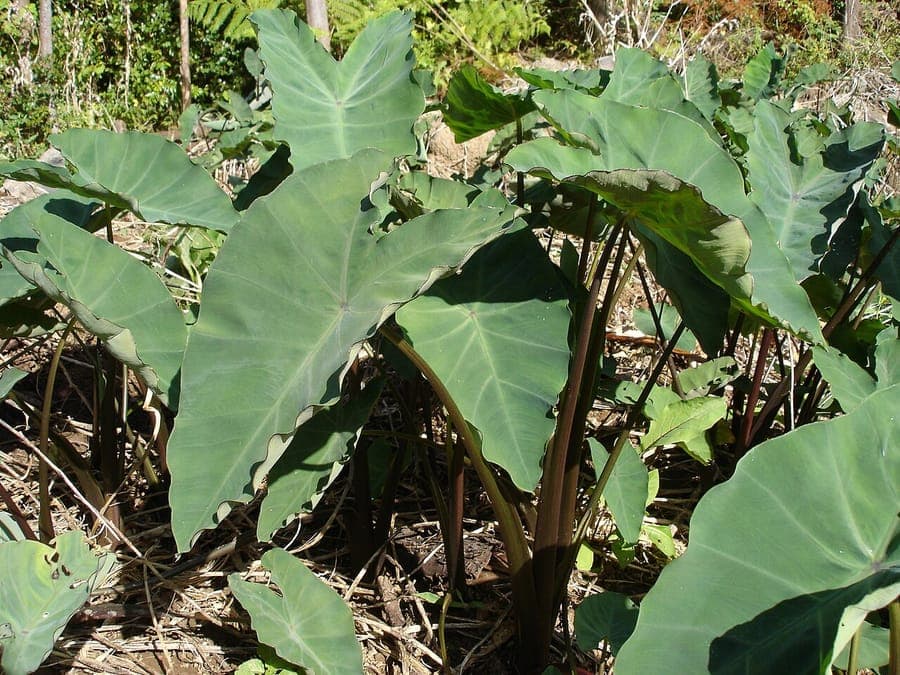
No machine-readable author provided. Thierry Caro assumed (based on copyright claims). / CC BY-SA 2.5, via Wikimedia Commons
Colocasia esculenta: complete guide
Colocasia esculenta
¿Quieres ver Colocasia esculenta: complete guide en tu jardín?
1 minuto, sin tarjeta de crédito
Overview
Colocasia esculenta, commonly known as taro or elephant ear, is a remarkable tropical plant with a cultivation history spanning thousands of years. Belonging to the Araceae family, this plant impresses gardeners with its massive heart-shaped leaves and nutritious underground corms. While primarily cultivated in warm regions, colocasia esculenta can thrive in temperate climates with proper care and conditions.
Beyond its practical value as a food crop, colocasia esculenta offers outstanding ornamental qualities. The enormous foliage creates an undeniably tropical ambiance that transforms any garden space. For enthusiasts seeking to incorporate exotic tropical elements into their landscape, this plant delivers authentic results. Explore design inspiration on gardenworld.app to see how professionals integrate tropical elements into cohesive garden schemes.
Appearance and bloom
The defining characteristic of colocasia esculenta is its massive, smooth, heart-shaped foliage. Individual leaves can reach 60 centimeters in length, extending from long, sturdy petioles. Leaf coloration ranges from deep green to yellowish-green depending on variety and growing conditions. Some cultivars display purple markings or veining on their distinctive leaves.
The inflorescence, while present, is less conspicuous. The plant produces cream-colored spathes measuring 10-15 centimeters in length. These flowers typically remain hidden beneath the expansive foliage. Following flowering, small red berries may develop, though this rarely occurs in temperate climates.
In subtropical and tropical regions, colocasia esculenta reaches heights of 1.5 meters. In temperate zones, growth remains significantly more compact and controlled, making the plant more manageable for container cultivation.
Ideal location
Colocasia esculenta thrives in warm, sheltered locations receiving plenty of light. This plant originates from warm regions and demands substantial heat for optimal performance. Position your colocasia in full sun to partial shade where temperatures never drop below 15 degrees Celsius. Maximum sunlight intensity promotes vigorous growth, though in extremely hot climates, partial shade prevents leaf scorching.
Protection from strong winds proves essential because large foliage tears readily in gusty conditions. In temperate climates, container cultivation with seasonal movement to protected locations ensures plant survival. Overwintering indoors is often necessary in regions with harsh winters.
Grouping multiple plants together creates authentic tropical ambiance. The expansive foliage produces dramatic visual effects when positioned against dark backgrounds or architectural structures.
Soil
Colocasia esculenta reaches peak performance in nutrient-rich, well-draining soil that remains consistently moist. Ideal growing medium incorporates substantial organic matter, so work compost or aged manure into planting areas beforehand. Soil pH should remain neutral to slightly acidic, approximately 5.8 to 7.0.
For container cultivation, combine potting soil, compost, and perlite or sand to ensure excellent drainage. Moisture-retention properties remain important because colocasia demands consistent hydration while avoiding waterlogging conditions.
Supply regular organic fertilizer throughout the growing season, providing consistent nutrient availability for producing large, vigorous foliage. This consistent feeding schedule supports the plant's energy demands for leaf expansion.
Diseño gratis
¿Quieres ver Colocasia esculenta: complete guide en tu jardín? Crea un diseño gratis ahora.
Watering
Maintain consistently moist soil throughout the growing season without creating waterlogged conditions. From May through October, colocasia esculenta requires substantial water. Water whenever the top soil layer feels dry to the touch. During hot weather, daily watering often becomes necessary.
Reduce watering significantly during winter months when many colocasia plants enter dormancy and require minimal hydration. Regularly monitor soil moisture without allowing waterlogging to occur.
When growing colocasia indoors in containers, ensure excellent drainage through pot holes and consistent monitoring. Tap water works adequately, though rainwater offers superior results.
Pruning
Colocasia esculenta requires minimal pruning intervention. Simply remove dead or damaged leaves to concentrate plant energy toward healthy growth. Yellowing lower leaves can be removed to improve plant appearance and air circulation.
When plants become excessively large, selective leaf removal improves air circulation without significantly impacting growth rates. Some gardeners remove all foliage in autumn as preparation for dormancy and overwintering.
Maintenance calendar
During growing season (May-October), water regularly and provide monthly fertilizer applications while monitoring for pests and diseases.
In autumn (October-November), gradually reduce watering and discontinue fertilizer application as the plant prepares for dormancy.
Winter (November-March) constitutes the dormant period. Provide minimal water and no fertilizer, keeping plants in cool locations.
Early spring (March-April) marks the beginning of renewed growth. Gradually increase water applications as new foliage emerges.
Winter hardiness
Colocasia esculenta lacks winter hardiness in temperate climates. This tropical plant cannot tolerate temperatures below 10 degrees Celsius. In regions like the UK, plant overwintering indoors in warm locations such as heated conservatories or living spaces becomes essential.
As temperatures decline, growth slows considerably and the plant loses foliage. This normal seasonal response does not indicate plant death. With returning warmth in spring, plants regenerate new growth from underground structures.
Optionally, harvest underground corms in autumn, allow them to dry thoroughly, and store in cool, dry conditions around 10-15 degrees Celsius until spring. This approach requires less maintenance than maintaining complete plants throughout winter.
Companion plants
Colocasia esculenta pairs excellently with other tropical species. Combine it with fellow moisture-loving plants including begonias, caladiums, or kentia palms. The massive foliage provides perfect background display for smaller flowering specimens.
In container gardening, combine colocasia with aglaonemas, caladiums, or compact ficus trees. Note that all these plants share similar moisture requirements and tropical preferences.
In hot, humid garden regions, colocasia combines effectively with other tropical crops like bananas or papaya for gardeners willing to attempt their cultivation.
Conclusion
Colocasia esculenta provides an exceptional opportunity for bringing authentic tropical exoticism to your garden or home environment. With attention to warmth, humidity, and consistent nutrition, you can successfully cultivate this stunning plant. Visit gardenworld.app for further inspiration regarding integrating exotic plants into cohesive landscape designs. For sourcing colocasia corms, consult your local garden centres who offer diverse varietal selections for tropical gardening enthusiasts.
¿Quieres ver Colocasia esculenta: complete guide en tu jardín? Crea un diseño gratis ahora.
Sube una foto, elige un estilo y obtén un diseño fotorrealista con lista de plantas en menos de un minuto.
Más de 10.000 jardines diseñados
Sin tarjeta de crédito


Plantas similares
Arrowhead vine: complete guide
Syngonium auritum
Everything about Syngonium auritum, the tropical five-fingers houseplant. Care, location, watering, and pruning explained clearly for beginners and enthusiasts.
Minute duckweed: complete guide to Lemna perpusilla
Lemna perpusilla
Everything about Lemna perpusilla, the minute duckweed: ecology, pond management, water quality and care in garden water features.
Dead horse arum lily: complete guide
Helicodiceros muscivorus
Everything about the dead horse arum lily (Helicodiceros muscivorus): growing conditions, spectacular bloom, thermogenesis, and care for this Mediterranean aroid.