
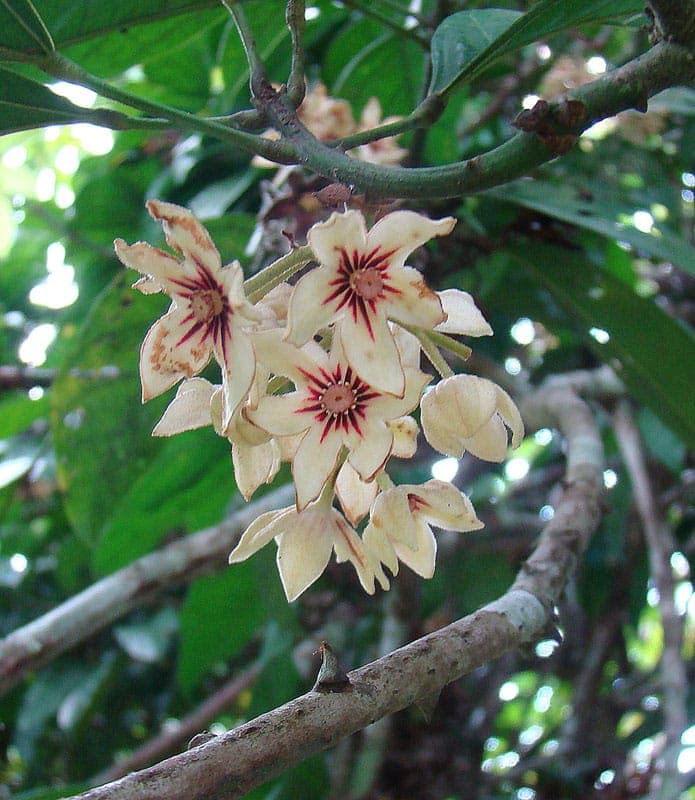
Dick Culbert from Gibsons, B.C., Canada / CC BY 2.0, via Wikimedia Commons
Cola acuminata: complete guide
Cola acuminata
¿Quieres ver Cola acuminata: complete guide en tu jardín?
1 minuto, sin tarjeta de crédito
Overview
Cola acuminata, commonly known as true kola nut or abata cola, is a tropical tree from West Africa. This plant belongs to the Malvaceae family and is highly valued in cultural history. The nuts of Cola acuminata contain caffeine and have been used for centuries in traditional rituals and as a stimulant.
The kola nut tree grows slowly but can reach up to 20 meters in ideal conditions. The tree slowly produces its characteristic star-shaped fruits, each containing multiple nuts. This tree requires tropical or subtropical climates and is sensitive to frost.
Appearance and Bloom
Cola acuminata forms a dense, pyramidal crown with glossy, dark green leaves. The leaves are elliptical to elongated, approximately 10-25 centimeters long, with a leathery texture. The leaves grow densely together, creating a full, decorative crown.
The flowers are small, yellow to reddish colored, approximately 1.5 centimeters in diameter, and appear in flower panicles. They are not particularly conspicuous but attract pollinators. After pollination, characteristic star or palm-shaped fruits form, approximately 8-10 centimeters large. Each fruit usually contains 4-5 large, flattened nuts with brown-green seeds.
Ideal Location
Cola acuminata thrives in full sun to light shade. Ensure the tree receives at least 4-6 hours of direct sunlight daily. The tree tolerates light shade better than many other tropical crops and can grow under larger trees.
The location must be well protected against wind, as young trees can be fragile. Avoid planting in windy valleys. The tree needs good drainage.
Soil
Cola acuminata grows well in fertile, well-draining soil with high organic content. The plant prefers slightly acidic terrain (pH 5.5-6.5). A deep, humus-rich layer is essential for root development.
The soil must remain consistently moist but not waterlogged. Add mulch to keep soil temperature stable and retain moisture. Avoid heavy, waterlogged soils that can cause root problems.
Diseño gratis
¿Quieres ver Cola acuminata: complete guide en tu jardín? Crea un diseño gratis ahora.
Watering
Young Cola acuminata trees require regular watering, especially in the first 2-3 years. Water when the top 3 centimeters of soil feel dry. Once established, trees are moderately drought-tolerant but grow better with regular watering.
Water during growth periods if it does not rain. In dry seasons, provide additional water. Over-watering can cause root problems, so ensure good drainage is crucial.
Pruning
Cola acuminata requires minimal pruning when grown for its natural form. Dead, damaged, or diseased branches can be removed year-round. First-year pruning can help form a stronger framework by encouraging lateral branching.
Heavy pruning is better performed after harvest. Topping can help encourage lateral growth and form a more compact tree.
Maintenance Calendar
Spring: Add fertilizer when new growth begins. Water regularly. Summer: Monitor for pest damage. Harvest ripe fruits. Fall: Harvesting continues. Stop feeding. Winter: Minimal watering. Tree may become dormant in cooler periods.
Winter Hardiness
Cola acuminata is not winter-hardy. The tree dies back at temperatures below 10-12 degrees Celsius. It grows only in tropical to subtropical regions (USDA 10-12). In temperate climates it can only be grown in heated greenhouses.
Companion Plants
Cola acuminata combines nicely in tropical gardens with:
- Other trees: Mangifera, Artocarpus, Theobroma
- Underplantings: Heliconia, Anthurium, Musa
- Evergreen shrubs: Ilex, Prunus laurocerasus
Closing Thoughts
Cola acuminata is a fascinating tropical tree with rich cultural history. Although it grows slowly and requires tropical conditions, it is a unique addition to tropical and subtropical gardens. The characteristic fruits and nuts add interest and educational value.
Visit gardenworld.app for more tropical inspiration. For seeds, seek specialized tropical tree nurseries or seed suppliers.
¿Quieres ver Cola acuminata: complete guide en tu jardín? Crea un diseño gratis ahora.
Sube una foto, elige un estilo y obtén un diseño fotorrealista con lista de plantas en menos de un minuto.
Más de 10.000 jardines diseñados
Sin tarjeta de crédito


Plantas similares
Crimean linden: complete guide
Tilia × euchlora
Crimean linden is an elegant, fast-growing shade tree ideal for large gardens. Discover cultivars, spacing, maintenance tips and winter hardiness.
California flannelbush: complete guide
Fremontodendron californicum
Everything about California flannelbush (Fremontodendron californicum): sunny placement, drainage, pruning and care for this spectacular yellow-flowering shrub.
Hairy rose mallow: complete guide
Hibiscus moscheutos subsp. lasiocarpos
Full growing guide for hairy rose mallow (Hibiscus moscheutos subsp. lasiocarpos): location, soil, watering, winter hardiness and garden design tips.