
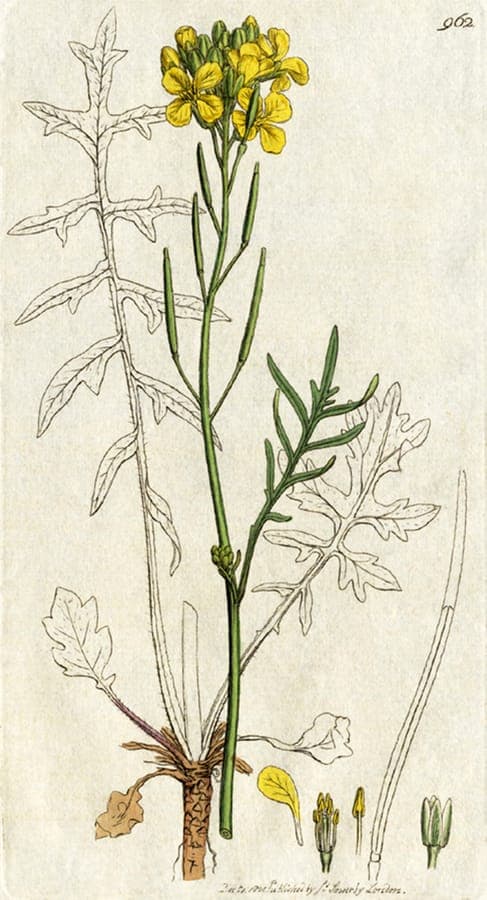
James Sowerby (1757–1822) / Public domain, via Wikimedia Commons
Coincya monensis: complete guide
Coincya monensis
¿Quieres ver Coincya monensis: complete guide en tu jardín?
1 minuto, sin tarjeta de crédito
Overview
Coincya monensis, better known as star-mustard or wallflower-mustard, is a versatile herbaceous plant from Western Europe and the Mediterranean region. This plant is noted for its vibrant yellow flowers, aromatic foliage, and distinctive fruit shape. Coincya monensis is a fascinating choice for rock gardens, border edges, and wild plantings, where it delivers years of blooming.
Appearance and Bloom
Coincya monensis forms a compact, low-growing plant approximately 30-60 cm tall and 30-40 cm wide. The leaves are roughly lobed and fragrant, especially when brushed. The flowers are bright yellow, appearing in dense clusters from May to July (often flowering again later). The fruits are distinctive, with long, thin siliques (seed pods) that remain interesting. The plant attracts bees and butterflies.
Ideal Location
Coincya monensis thrives in full sun to light shade. Ensure at least 5-6 hours of direct sunlight daily for optimal flowering. The plant tolerates some shade but flowers less profusely. Well-draining soil is more important than location. Wind is generally not problematic.
Soil
Coincya monensis is highly adaptable and grows in virtually all soils provided they drain well. Sandy, loamy, and even poor, dry soils are suitable. The plant prefers neutral to slightly acidic pH. Heavy clay soils should be avoided; add sand and gravel for improved drainage. This plant also tolerates alkaline soils well.
Watering
Once established, Coincya monensis is drought-tolerant and requires minimal watering. During dry periods, especially during growth, supplemental water helps. Prevent waterlogging which causes root rot. In pot culture, allow soil to dry between waterings. This plant thrives slightly on the drier side.
Diseño gratis
¿Quieres ver Coincya monensis: complete guide en tu jardín? Crea un diseño gratis ahora.
Pruning
Pruning is generally unnecessary for Coincya monensis. Remove faded flowers to encourage continued blooming. For neater appearance, stems can be cut back after flowering. Old, thin stems may be removed. Allowing the plant to grow naturally usually yields the best, wilder effect.
Maintenance Calendar
March-April: Sow seeds or plant young specimens. May-July: Enjoy flowers, add water during dry periods. August-September: Allow seed-to-develop, leave seed stalks standing. October-November: Stop watering, inspect for damage. December-February: Rest period, minimal maintenance.
Winter Hardiness
Coincya monensis is hardy to approximately -10degC, though behavior varies. Many specimens behave as biennials, flowering in their second year. In severe winters, plants may die, but seeds typically survive winter. Preventing wet feet (drainage) is more important than protecting against cold.
Companion Plants
Excellent companions for Coincya monensis:
- Lavender (for fragrance and color echoing)
- Salvia (for structural contrast)
- Low junipers (for winter interest)
- Drought-tolerant groundcovers (for texture)
- Other Mediterranean herbs
Closing
Coincya monensis is a fascinating plant delivering years of flowering and botanical interest. This versatile mustard is perfect for gardeners seeking carefree, low-maintenance plants. Grow it in rock gardens, borders, or containers for yellow spring-summer color.
Garden centers stock specialist varieties. Discover more wildlife-friendly plants using gardenworld.app/en!
¿Quieres ver Coincya monensis: complete guide en tu jardín? Crea un diseño gratis ahora.
Sube una foto, elige un estilo y obtén un diseño fotorrealista con lista de plantas en menos de un minuto.
Más de 10.000 jardines diseñados
Sin tarjeta de crédito


Plantas similares
Brassica cretica: complete guide
Brassica cretica
Brassica cretica, the Cretan cabbage, grows wild on Aegean cliffs. Discover how to grow this drought-tolerant, yellow-flowered Mediterranean perennial.
Corsican cabbage: complete guide
Brassica insularis
Corsican cabbage is a rare Mediterranean rock cabbage with white flowers and blue-green leaves. Location, soil and winter protection.
Prostrate cabbage: complete guide
Brassica procumbens
Prostrate cabbage is a creeping North African cliff plant with yellow flowers. Discover location, soil type and winter protection.