
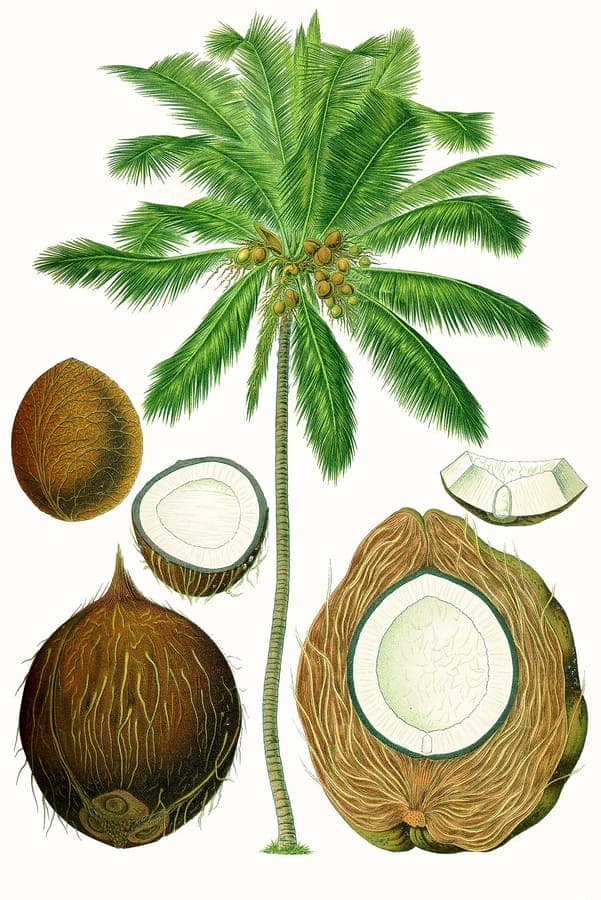
Franz Eugen Köhler, Köhler's Medizinal-Pflanzen / Public domain, via Wikimedia Commons
Coconut palm: complete guide
Cocos nucifera
¿Quieres ver Coconut palm: complete guide en tu jardín?
1 minuto, sin tarjeta de crédito
Overview
The coconut palm (Cocos nucifera) is among the world's most useful plants. This slender palm produces not just the famous coconut, but also coconut water, copra, palm oil, and fibrous coconut husks. In tropical regions, coconut palms grow along beaches and coastal areas where they withstand salt and sand.
In Europe, coconut palms succeed only indoors in heated greenhouses or conservatories. Mature trees reach 20-30 meters tall and have adapted to extreme climate conditions. Palms are long-lived, reaching 100 years, and continue producing fruit throughout their lifespan.
Appearance & bloom cycle
The coconut palm is recognizable by its straight, gray-brown trunk without branches. Leaves are large and feathered, often 4-6 meters long, with slender leaflets. In tropical climates, the plant flowers year-round with yellow blooms in compact clusters.
The fruits are distinctive: green or yellow outside, with thick fibrous covering. The hard shell contains white flesh and sweet coconut water. At full maturity, each tree produces 40-100 nuts annually.
Ideal location
Coconut palms require abundant light, minimum 12 hours of direct sunlight daily. In Europe, place them in bright greenhouses or conservatories with plenty of windows. South- or west-facing walls work well if sheltered from strong wind.
The plant dislikes drafts; ensure stable warmth (minimum 25°C daytime, not below 18°C at night). For summer cultivation, move young palms outdoors to sheltered spots.
Soil requirements
Coconut palms prefer sandy, well-draining soil. Mix potting soil with coarse sand in 2:1 ratio. The plant tolerates saline and alkaline soils, but also grows in acidic ones.
Ensure excellent drainage; waterlogging is fatal. Add organic matter (coconut fiber, compost) to increase water retention. For container cultivation use nutrient-rich potting soil supplemented with perlite or foam.
Diseño gratis
¿Quieres ver Coconut palm: complete guide en tu jardín? Crea un diseño gratis ahora.
Watering
During growing season (May-September) water regularly to keep soil moist. Give generously but avoid stagnant water. In winter, reduce watering but never let soil dry completely.
Coconut palms tolerate drought well due to their deep root system, but younger plants need regular water. In greenhouse settings, mist foliage to raise humidity to 60-70%.
Pruning
Coconut palms require minimal pruning. Remove only dead leaves and damaged fruits. Never prune the growing tip, as it's crucial for growth.
On young plants, remove lowest leaves if yellowing. Leave damaged leaf bases in place until they naturally fall; they provide trunk support.
Maintenance calendar
Spring: apply slow-release fertilizer and summer misting. Summer: water regularly, fertilize every 2 weeks. Autumn: gradually reduce watering. Winter: minimal water, no feeding, temperature 18-20°C.
Check monthly for spider mites and scale insects, especially in dry greenhouse air. Vacuum dead leaf debris to prevent disease.
Winter hardiness
Coconut palms are not frost-hardy; they die below 10°C. In Europe, they can only overwinter in heated spaces. Move trees indoors in November and back outside end of May.
Young potted palms must be protected against temperatures below 15°C. Much cold damage results from sudden temperature drops, so acclimate slowly.
Companion plants
Coconut palms grow well with other tropical plants: orchids, anthurium, tropical ferns. In warm, humid greenhouse conditions, create understory planting with bromeliads or small aroid species.
Avoid direct contact with other plants; coarse leaf bases can be damaging. Good companion plants thrive in warm, humid rest periods.
Closing
The coconut palm is a fascinating project for advanced plant enthusiasts with access to heated growing space. With proper placement, nutrition, and light, you can create a beautiful, thriving tropical tree. Visit garden centers for young plant material and palm-specific care products.
¿Quieres ver Coconut palm: complete guide en tu jardín? Crea un diseño gratis ahora.
Sube una foto, elige un estilo y obtén un diseño fotorrealista con lista de plantas en menos de un minuto.
Más de 10.000 jardines diseñados
Sin tarjeta de crédito


Plantas similares
Needle palm: complete guide
Rhapidophyllum hystrix
Everything about the needle palm: the world's hardiest palm, suitable for gardens in temperate climates down to USDA zone 7b.
Saw palmetto: complete guide
Serenoa repens
A complete guide to saw palmetto (Serenoa repens), the iconic fan palm from Florida and the southeastern United States, prized for its toughness.
Puerto Rican hat palm: complete guide
Sabal causiarum
Grow Puerto Rican hat palm successfully. A majestic fan palm with tropical presence suited to sheltered Mediterranean-style gardens.