
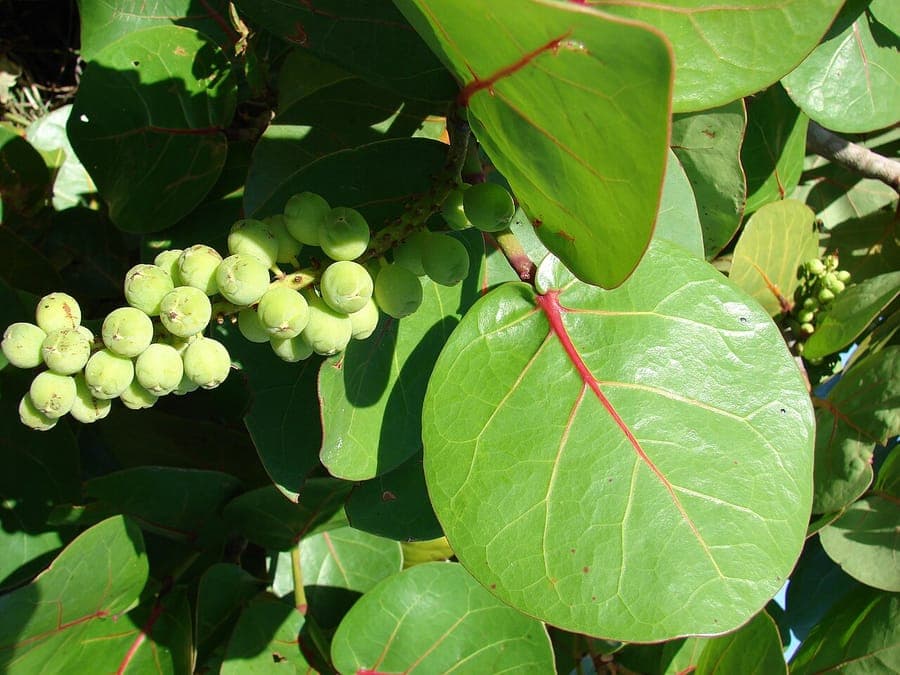
Forest & Kim Starr / CC BY 3.0, via Wikimedia Commons
Coccoloba uvifera: complete guide
Coccoloba uvifera
¿Quieres ver Coccoloba uvifera: complete guide en tu jardín?
1 minuto, sin tarjeta de crédito
Overview
Coccoloba uvifera, commonly known as Seagrape, Shore Grape, or Platterleaf, is a unique tropical tree from the Caribbean region and Florida. This tree is remarkable for its very large, heart-shaped leaves and small, dark-purple fruits that are edible and taste like wine.
The tree is highly salt-tolerant and grows perfectly in coastal areas. This makes it ideal for seaside gardens and salt-spray regions. In temperate climates, it can grow as a large potted plant that's brought indoors in winter.
Appearance and Bloom
Coccoloba uvifera grows as a shrub to small tree, reaching 4-8 meters height in natural conditions. The most striking feature is the large, smooth, heart-shaped leaves that can reach 20 cm diameter. The foliage is thick, glossy, and very decorative.
The plant produces long flower spikes with small white flowers attractive to bees. After blooming, small, round fruits (1-3 cm) form that are first green, gradually turn red, and finally dark purple. The fruits have a wine-like flavor and can be eaten fresh or processed into jam or wine.
Ideal Location
Coccoloba uvifera thrives best in a very sunny location with full sun. The tree loves warmth and tolerates extreme heat well. Full sunlight promotes the best fruit production.
The tree is salt-wind tolerant and grows even in coastal salt spray. This makes it ideal for seaside areas. In temperate climates, it grows best in the warmest, sunniest spot available.
Soil Requirements
Coccoloba uvifera is not soil-picky. It grows in sand, rocky soil, and almost any soil type. The tree tolerates salt-laden soil well - better than many other plants. This makes it perfect for coastal areas where other plants fail.
However, the soil must drain well. Ensure drainage in pots. The tree tolerates poor soil but grows better with some organic matter.
Diseño gratis
¿Quieres ver Coccoloba uvifera: complete guide en tu jardín? Crea un diseño gratis ahora.
Watering
Coccoloba uvifera is drought-tolerant once established. In potted trees, water regularly in the first months, then less frequently. The tree tolerates drought well.
In very hot, dry periods, more water can help stimulate fruit production. Ensure pots have good drainage - salt tolerance doesn't mean the tree accepts waterlogging.
Pruning
Coccoloba uvifera can be pruned for shape and size control, though it doesn't require intensive pruning. The tree grows naturally beautiful. Remove only dead branches or excess growth if needed.
Pruning can be done after harvest. The tree tolerates pruning well.
Maintenance Calendar
Spring: Plant begins growth. Start regular watering if potted. Summer: Growth and blooming period. Full sun. Feeding can help fruit production. Fall: Fruits ripen. Harvest. Taper watering. Winter: In warm climate: plant rests. In temperate climate: bring pot indoors before frost.
Winter Hardiness
Coccoloba uvifera is not winter hardy and cannot tolerate frost. In USDA zones 10-11 it can stay outside. In colder areas, it must be kept as a potted plant indoors for winter.
The tree can sustain slight damage at temperatures below 5 degrees Celsius. Frost kills it. In temperate climates, it must be protected or brought indoors.
Companion Plants
Coccoloba uvifera grows well with other coastal salt-tolerant plants like Conocarpus (Button Mangrove), Thrinax (Palmtrees), and other salt-tolerant species. In pots it can be combined with Lantana or other tropical shrubs.
In warm gardens, it works well with other large tropical fruit and foliage plants.
Closing
Coccoloba uvifera is a unique, long-lived fruit tree for those gardening in coastal conditions or wanting a tropical tree that tolerates drought and salt. The large decorative leaves alone justify growing it, while the edible fruits make it even better. With full sun, good drainage, and minimal maintenance, you'll grow this tree effortlessly. Perfect for seaside gardens or as a warm-climate container plant.
Available at garden centres worldwide. Find more inspiration at gardenworld.app and gardenworld.app for additional plant collections.
¿Quieres ver Coccoloba uvifera: complete guide en tu jardín? Crea un diseño gratis ahora.
Sube una foto, elige un estilo y obtén un diseño fotorrealista con lista de plantas en menos de un minuto.
Más de 10.000 jardines diseñados
Sin tarjeta de crédito


Plantas similares
Crosby's wild buckwheat: complete guide
Eriogonum crosbyae
Full guide to growing Eriogonum crosbyae: ideal site, soil, watering, winter hardiness and companion plants for this rare western wild buckwheat.
Spreading buckwheat: complete guide
Eriogonum effusum
Full guide to growing Eriogonum effusum: ideal site, soil, watering, winter hardiness and companion plants for this prairie subshrub from the American West.
Tall woolly buckwheat: complete guide
Eriogonum elatum
Full guide to Eriogonum elatum: siting, soil, watering, pruning and companion plants for this elegant white-flowered buckwheat from the western United States.