
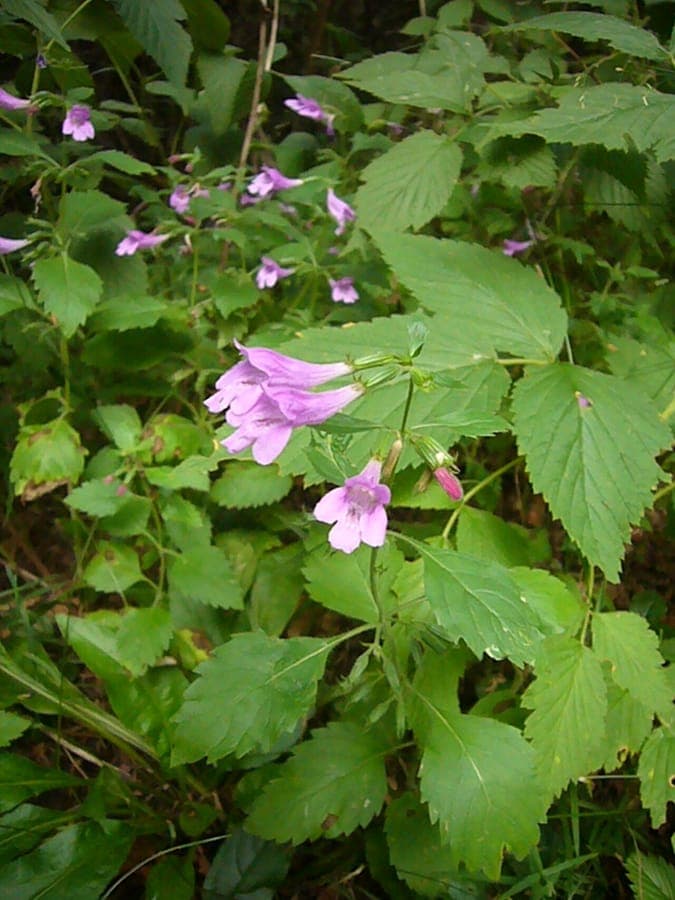
Jmp48 / CC BY-SA 3.0, via Wikimedia Commons
Greater calamint: complete guide
Clinopodium grandiflorum
¿Quieres ver Greater calamint: complete guide en tu jardín?
1 minuto, sin tarjeta de crédito
Overview
The Greater calamint (Clinopodium grandiflorum) is a striking Mediterranean plant from the Lamiaceae family (mint family). This aromatic dwarf shrub grows naturally in southern Europe around the Mediterranean to northern Iran.
With its large rose to purple flowers and finely aromatic foliage, this plant is a valuable addition to Mediterranean gardens. Once established, it requires minimal care whilst flowering throughout summer.
Appearance and bloom
The Greater calamint forms a compact semi-woody shrub reaching thirty centimetres tall. Leaves are small, oval, and fragrant when touched, characteristic of the mint family.
Flowers appear from July through October in tightly packed verticils at stem tips. Individual blooms reach two centimetres long, rose-purple in colour with prominent stamens. They grow in tiered formations surrounded by characteristic bracts. The scent is sweet and pleasant.
Ideal location
The Greater calamint grows optimally in full sun on dry, well-drained soil. The plant is extremely drought-tolerant and thrives in warm positions.
Plant along sunny borders, in rock gardens, beside Mediterranean pathways, or on pergolas. It combines beautifully with lavender, sage, and other warm-climate plants.
Soil
The Greater calamint grows best on poor, dry, well-drained soils. The plant tolerates both chalky and acid substrates. Rich feeding is undesirable.
Sand, gravel, and sparse conditions pose no problems. Waterlogging is fatal. Add no extra compost; the plant actually thrives in poor soils.
Watering
Water upon planting. Once established, supplementary watering is rarely needed. The plant is extremely drought-tolerant.
Regular rainfall in temperate gardens may be sufficient. During very dry periods, water occasionally. Avoid waterlogging as this causes disease.
Diseño gratis
¿Quieres ver Greater calamint: complete guide en tu jardín? Crea un diseño gratis ahora.
Pruning
The Greater calamint requires minimal pruning. The plant grows naturally compact. After flowering, it may be gently cut back halfway to encourage next season's growth.
Normally the plant fills in neatly by itself. Remove only dead foliage in spring. Excessive pruning should be avoided; the plant tolerates this poorly.
Maintenance calendar
March-April: Gentle tidying after late frost passes. Plant or repot. Check drainage.
May-June: Growth phase. Minimal watering. Light support for young plants.
July-August: Flowering begins. Enjoy blooms. Many butterflies and bees visit.
September-October: Peak flowering. Flowers persist long. Prevent seed setting by deadheading.
November-February: Winter period. Plant may be sensitive to harsh wet winters. Protect or shelter.
Winter hardiness
The Greater calamint is moderately hardy. In temperate regions, it may survive mild winters, particularly in well-drained situations. However, severe winters or wet conditions may kill established plants.
Protection with dry leaves or branches helps. In wet regions, grow in containers and overwinter indoors.
Companion plants
The Greater calamint combines beautifully with:
- Lavender - complementary colours and preferences
- Sage - shared aromatic qualities
- Stonecrop - drought-tolerant texture partner
- Bindweed - gentle colour contrast
- Oregano - herbal companionship
Conclusion
The Greater calamint is a beautiful plant for Mediterranean gardens and heat-lovers. With striking rose flowers and aromatic foliage, it adds much to summer borders.
Plant in groups for maximum impact on sunny dry positions. Protect against winter wet. Allow seeds to mature for natural regeneration. A true Mediterranean gem!
Learn more at gardenworld.app/en and gardenworld.app/nl.
¿Quieres ver Greater calamint: complete guide en tu jardín? Crea un diseño gratis ahora.
Sube una foto, elige un estilo y obtén un diseño fotorrealista con lista de plantas en menos de un minuto.
Más de 10.000 jardines diseñados
Sin tarjeta de crédito


Plantas similares
Apple mint (Mentha x villosa): complete guide
Mentha x villosa
Meet apple mint (Mentha x villosa): a fruity-scented kitchen herb with woolly leaves, perfect for tea and mojitos.
Salvia peyronii: complete guide
Salvia peyronii
Discover Salvia peyronii, a rare Lebanese mountain sage. Growing tips, hardiness, and companion planting for a Mediterranean gravel garden.
Bigleaf mint (Mentha x rotundifolia): complete guide
Mentha x rotundifolia
Discover bigleaf mint: cultivation, care tips, and garden uses. Learn how to grow this aromatic herb with soft, hairy leaves.