
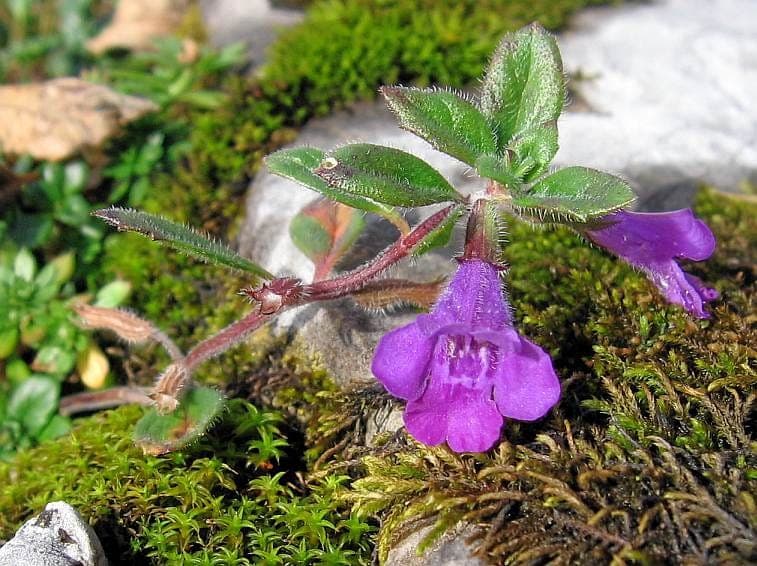
Wikimedia Commons / CC BY-SA 3.0, via Wikimedia Commons
Clinopodium alpinum: complete guide
Clinopodium alpinum
¿Quieres ver Clinopodium alpinum: complete guide en tu jardín?
1 minuto, sin tarjeta de crédito
Overview
Clinopodium alpinum, commonly known as Alpine calamint or Alpine basil thyme, is a compact, aromatic herb from the Lamiaceae or mint family. This European alpine plant ranges from central Europe through the Mediterranean. Growing to just 10-25 cm in height, it forms tight, compact mats with fine foliage. The plant blooms June through August with purple-pink flowers. This represents an excellent choice for alpine gardens, rock gardens, and troughs.
Appearance and bloom
Clinopodium alpinum forms dense, compact mats with very fine, small leaves. Foliage is oval, green, and intensely aromatic. When touched, leaves release a strong, pleasant scent reminiscent of mint and oregano. Flowers appear June through August, small, purple-pink to violet-tinted. The blooms prove highly attractive to bees and butterflies. This plant remains evergreen or semi-evergreen year-round.
Ideal location
Clinopodium alpinum grows best in completely sunny positions in alpine or mountain gardens. The plant requires abundant light; shade causes leggy growth and fewer flowers. Good ventilation is essential. Position it in elevated, windy locations in alpine rock gardens or troughs. This plant is perfect for full sun on dry, exposed sites.
Soil
Clinopodium alpinum demands excellent drainage with poor fertility. Add gravel, perlite, or pumice for outstanding drainage. This plant thrives on lean soils; rich feeding causes excessive growth. pH can range from acidic to alkaline (pH 5-9). This plant grows better on calcareous soils than acidic ones. Poor, stony, or sandy substrates are ideal.
Diseño gratis
¿Quieres ver Clinopodium alpinum: complete guide en tu jardín? Crea un diseño gratis ahora.
Watering
Clinopodium alpinum is extremely drought-tolerant. Once established it requires minimal water. Do not allow complete drying during growth season, but ensure rapid drainage. Waterlogging kills this plant. In winter, almost no water is needed. This is a very water-efficient plant.
Pruning
Clinopodium alpinum requires virtually no pruning. Remove only spent flowers or damaged foliage. The plant grows compactly and requires no thinning. A light clean-up after bloom is optional.
Maintenance calendar
APRIL-MAY: Growing season starts, minimal water. JUNE-JULY-AUGUST: Peak bloom period, minimal watering. SEPTEMBER-OCTOBER: Bloom ends, monitor drainage. NOVEMBER-MARCH: Winter dormancy, keep dry.
Winter hardiness
This plant is extremely hardy to zone 4 (below -30°C). Alpines tolerate some winter desiccation. No extra protection ever needed.
Companion plants
Clinopodium alpinum combines beautifully with other alpine herbs like Thymus, Teucrium, and Origanum. Perfect in rock gardens with small alpines. Lovely with other purple-pink bloomers.
Final thoughts
Clinopodium alpinum is an essential plant for alpine gardeners. Aromatic, hardy, and extremely low-maintenance. Available from specialty alpine nurseries worldwide. Once established, this jewel will perform reliably for many years.
¿Quieres ver Clinopodium alpinum: complete guide en tu jardín? Crea un diseño gratis ahora.
Sube una foto, elige un estilo y obtén un diseño fotorrealista con lista de plantas en menos de un minuto.
Más de 10.000 jardines diseñados
Sin tarjeta de crédito


Plantas similares
Apple mint (Mentha x villosa): complete guide
Mentha x villosa
Meet apple mint (Mentha x villosa): a fruity-scented kitchen herb with woolly leaves, perfect for tea and mojitos.
Salvia peyronii: complete guide
Salvia peyronii
Discover Salvia peyronii, a rare Lebanese mountain sage. Growing tips, hardiness, and companion planting for a Mediterranean gravel garden.
Bigleaf mint (Mentha x rotundifolia): complete guide
Mentha x rotundifolia
Discover bigleaf mint: cultivation, care tips, and garden uses. Learn how to grow this aromatic herb with soft, hairy leaves.