
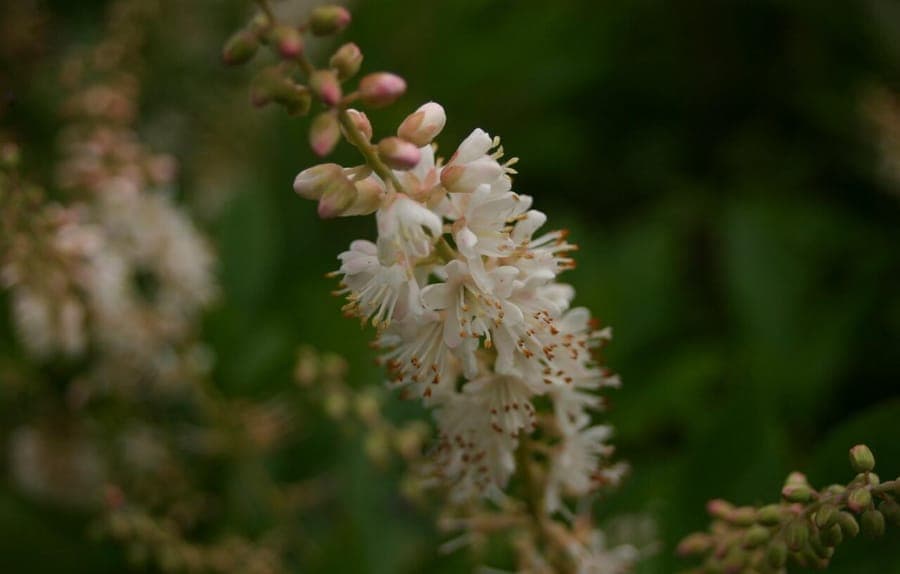
Sten Porse / CC BY-SA 3.0, via Wikimedia Commons
Clethra alnifolia: complete guide
Clethra alnifolia
¿Quieres ver Clethra alnifolia: complete guide en tu jardín?
1 minuto, sin tarjeta de crédito
Overview
Clethra alnifolia, commonly known as Summersweet or Sweet pepperbush, is a fragrant, floriferous shrub from the Clethraceae family. This North American shrub ranges from southeastern Canada through Texas and is hardy to zone 3. Growing 1.5 to 2.5 meters in height, it forms an elegant, upright shrub. The plant is particularly valued for its intoxicating white flowers appearing from July through September. This represents an excellent choice for fragrance lovers and those wishing to attract bees and butterflies.
Appearance and bloom
Clethra alnifolia is an upright, multi-stemmed shrub with fine, glossy foliage ranging from green to dark green. Leaves are wavy-margined, elliptic in shape. The flowers are the true stars: tiny white blooms arranged in dense, vertical racemes reaching 15 cm in length. The fragrance is certainly overwhelmingly pleasant, with citrus and menthol tones. This shrub blooms far longer than most others: from July through September. In autumn, foliage turns yellow to orange.
Ideal location
Clethra alnifolia grows best in partial shade, though it also thrives in full sun if soil remains consistently moist. The plant displays remarkable flexibility regarding light but produces most flowers in sunny positions. Partial shade beneath trees is ideal. It suits woodland edges or understory plantings beautifully.
Soil
Clethra alnifolia demands moist, well-draining soils, preferably acidic (pH 4.5-7). The plant thrives in wet soils or waterside locations. It can, however, also grow on drier soils if watered well the first year. Adding compost or acidic peat helps adjust pH. This plant cannot tolerate chalky soils.
Diseño gratis
¿Quieres ver Clethra alnifolia: complete guide en tu jardín? Crea un diseño gratis ahora.
Watering
Clethra alnifolia requires regular watering, especially during the first growing year after planting. Once established it demonstrates reasonable drought tolerance, but moist soils produce better flowers. In dry summers, supplemental watering becomes essential. Mulching helps retain moisture. Do not place it on very dry sites.
Pruning
Clethra alnifolia requires minimal pruning. Remove only dead or damaged branches. The plant can be lightly pruned after blooming to maintain shape. Avoid severe cutbacks, which damage flower production. Older branches can be removed in spring to encourage rejuvenation.
Maintenance calendar
APRIL-MAY: Careful pruning, apply nutrient-rich fertilizer. JUNE-JULY: Flowering begins, water regularly. AUGUST-SEPTEMBER: Peak bloom, intense fragrance. OCTOBER-NOVEMBER: Bloom ends, monitor moisture. DECEMBER-MARCH: Winter dormancy, minimal care.
Winter hardiness
This plant is hardy to zone 3 (below -40°C). Extremely cold-resistant. No special winter protection required.
Companion plants
Clethra alnifolia combines beautifully with other summer bloomers. Excellent with Hydrangea, Euonymus, and Viburnum. White flowers contrast nicely with dark-foliaged plants. Provides background for lower summer bloomers. Strongly favored by bees, butterflies, and hummingbirds.
Final thoughts
Clethra alnifolia represents an essential choice for fragrance lovers. The extended blooming period, intense scent, and insect appeal make it a valuable addition to any garden. This shrub consistently wins space in gardens across temperate zones.
¿Quieres ver Clethra alnifolia: complete guide en tu jardín? Crea un diseño gratis ahora.
Sube una foto, elige un estilo y obtén un diseño fotorrealista con lista de plantas en menos de un minuto.
Más de 10.000 jardines diseñados
Sin tarjeta de crédito


Plantas similares
Acer pycnanthum: complete guide
Acer pycnanthum
Acer pycnanthum, the Japanese swamp maple, is a fast-growing tree with early red flowers and brilliant autumn color, ideal for damp garden settings.
Freeman maple: complete guide
Acer × freemanii
Everything about the Freeman maple (Acer x freemanii): a fast-growing shade tree with spectacular autumn colour for large gardens.
Silver vine: complete guide
Actinidia polygama
Discover silver vine (Actinidia polygama): a hardy climbing plant with silvery foliage, loved by gardeners and cats alike.