
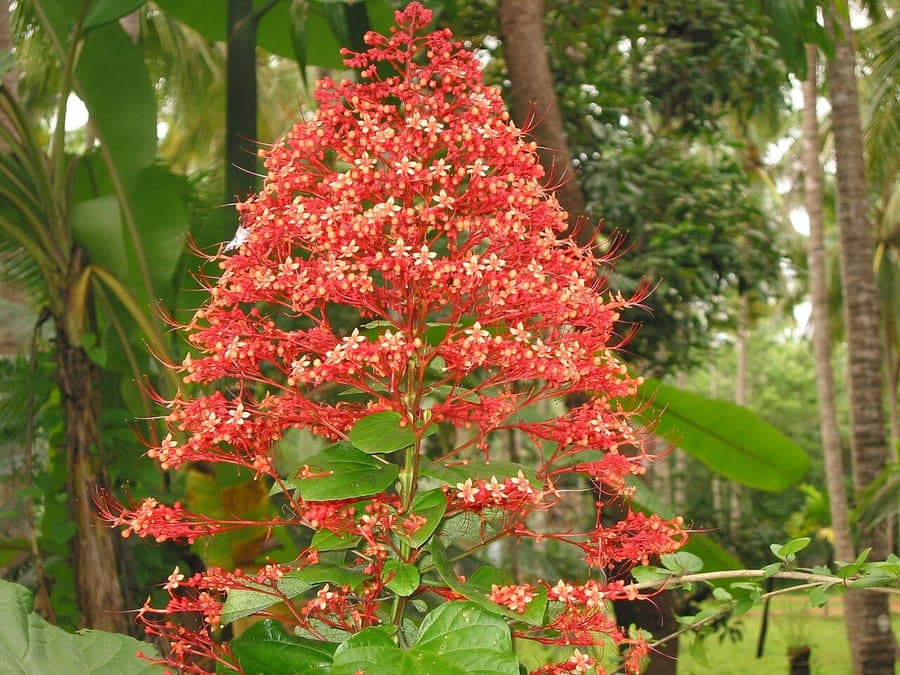
ShajiA at Malayalam Wikipedia / Public domain, via Wikimedia Commons
Pagoda-flower: complete guide
Clerodendrum paniculatum
¿Quieres ver Pagoda-flower: complete guide en tu jardín?
1 minuto, sin tarjeta de crédito
Overview
The pagoda-flower, scientifically known as Clerodendrum paniculatum, is a striking shrub native to tropical Asia. This plant is prized for its unique, pyramid-shaped flower clusters filled with vibrant red blooms arranged in dense panicles. The plant thrives in warm, humid conditions and makes an impressive statement in any tropical garden.
Appearance and Bloom
The pagoda-flower grows into a substantial upright shrub reaching up to 2 meters in height. The leaves are large, oval-shaped, and deep green, providing beautiful contrast to the abundant red flowers. The flowers appear in long, dense pyramidal inflorescences that can reach 30 centimeters in length, giving the plant its characteristic pagoda-like appearance.
Blooming typically occurs during summer and autumn months when growing conditions are optimal. Although individual flowers are small, together they create a spectacular floral display that attracts insects and adds drama to the garden.
Ideal Location
Choose a location in your garden with plenty of sunlight. The pagoda-flower thrives best in positions receiving at least 6-8 hours of direct sun daily. Protect the plant from strong winds, which can damage delicate flowers. In temperate climates, a sunny position against a wall is preferred, as this provides extra warmth and shelter.
Soil
The pagoda-flower prefers nutrient-rich, well-draining soil. Add plenty of organic material such as compost or leaf mold for optimal growing conditions. The soil must drain well to prevent waterlogging. Ensure the soil is slightly acidic to neutral, with a pH between 6.0 and 7.0.
Watering
This tropical shrub loves moist conditions. Water regularly, especially during the growing and flowering period. Keep the soil moist but not waterlogged. Allow the top centimeter of soil to dry slightly between waterings. Reduce watering in winter. During dry summer weather, additional misting is beneficial.
Diseño gratis
¿Quieres ver Pagoda-flower: complete guide en tu jardín? Crea un diseño gratis ahora.
Pruning
Pruning helps keep the plant compact and full. After flowering, gently prune your pagoda-flower to maintain shape. Remove dead or damaged branches immediately. In spring, cut back the plant to about one-third of its size to stimulate new growth.
Maintenance Calendar
Spring: Prune and support new growth with feeding. Begin regular watering.
Summer: Water regularly, especially during dry spells. Monitor for pests.
Autumn: Flowering begins, reduce feeding. Prepare for winter dormancy.
Winter: Minimal watering, protection needed in temperate regions. Possible indoor overwintering required.
Winter Hardiness
The pagoda-flower is suitable only for the warmest climates. It is frost-sensitive and cannot tolerate temperatures below 10 degrees Celsius. In temperate regions, bring the plant indoors before winter. Place it in a warm, bright room with temperatures between 15-20 degrees Celsius.
Companion Plants
Combine your pagoda-flower with other tropical plants such as Fuchsia, Mandevilla, or other heat-loving shrubs. Low-growing plants like tropical Colocasia work well at the base. Silver-foliaged plants provide nice contrast.
Closing Remarks
The pagoda-flower is an excellent choice for those wanting to give their front yard a tropical, exotic character. With striking red blooms and lush growth habit, it immediately adds personality to any space. With attention to warmth, light, and nutrition, this shrub will flower year after year.
Available at major garden centers. Visit gardenworld.app for more tropical garden design inspiration. Gardenworld.app offers comprehensive guides for subtropical and exotic garden plans.
¿Quieres ver Pagoda-flower: complete guide en tu jardín? Crea un diseño gratis ahora.
Sube una foto, elige un estilo y obtén un diseño fotorrealista con lista de plantas en menos de un minuto.
Más de 10.000 jardines diseñados
Sin tarjeta de crédito


Plantas similares
Apple mint (Mentha x villosa): complete guide
Mentha x villosa
Meet apple mint (Mentha x villosa): a fruity-scented kitchen herb with woolly leaves, perfect for tea and mojitos.
Salvia peyronii: complete guide
Salvia peyronii
Discover Salvia peyronii, a rare Lebanese mountain sage. Growing tips, hardiness, and companion planting for a Mediterranean gravel garden.
Bigleaf mint (Mentha x rotundifolia): complete guide
Mentha x rotundifolia
Discover bigleaf mint: cultivation, care tips, and garden uses. Learn how to grow this aromatic herb with soft, hairy leaves.