
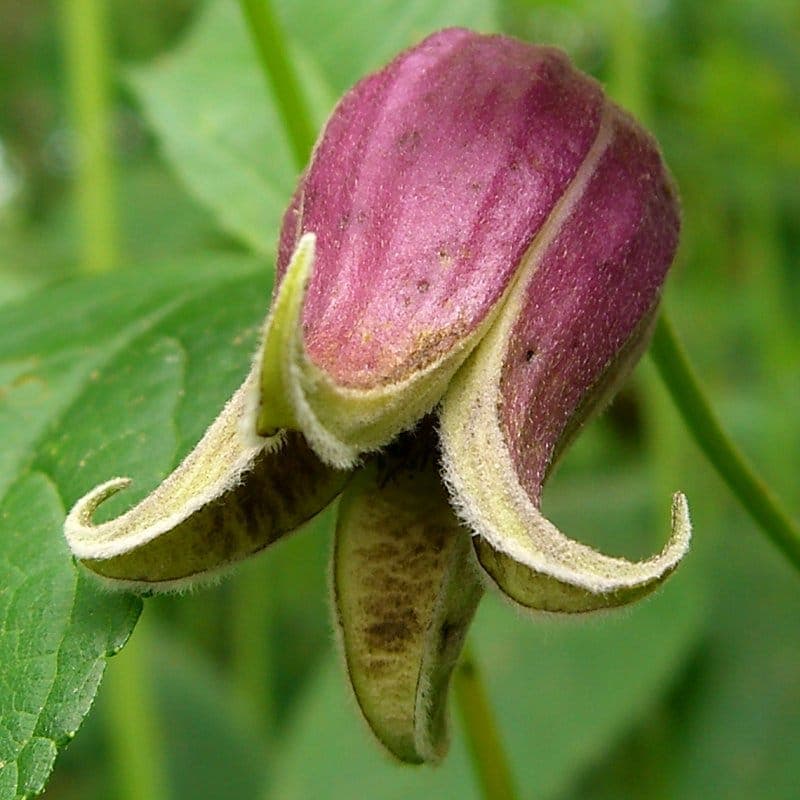
Jason Hollinger / CC BY 2.0, via Wikimedia Commons
Clematis viorna: complete guide
Clematis viorna
¿Quieres ver Clematis viorna: complete guide en tu jardín?
1 minuto, sin tarjeta de crédito
Overview
Clematis viorna, known as leather-flower or vasevine, is an elegant climbing plant from the Ranunculaceae family. This American species grows natively in the eastern and central parts of the United States, from Alabama to Pennsylvania. The plant is known for its characteristic, leather-like, bell-shaped flowers that have an intriguing texture.
In English gardens, Clematis viorna is valued as a refined climber that adds elegance without the robustness of larger clematis species.
Appearance and bloom
Clematis viorna grows as an elegant vine that can reach 2 to 3 metres in length. The leaves are compound and green, often with 3 lobes (trifoliate). This gives the plant a light, graceful appearance.
Flowers appear from August to September and are the main attraction of this plant. They are uniquely bell-shaped, about 2 to 3 centimetres long, and have a leathery appearance that is dark purple to maroon in colour. The flowers hang downward, giving them a soft, elegant look.
After flowering, the plant produces spectacular seed heads that are silky. These seed heads remain on the plant and provide interest in autumn and winter.
Ideal location
Clematis viorna grows best in places where the feet are in shade but the upper part gets full sun. This is the classic "cool roots, head in the sun" rule for clematis.
A location against a south-facing wall, over a pergola, or along a trellis works well. Make sure there is support for the plants to climb.
In the wild, this species grows in forest edges and climbs with other vines through shrubs and small trees. This helps us understand that the plant hopes for some shade to the roots.
Soil
Clematis viorna grows best in well-drained, neutral to slightly alkaline soil (pH 6.5 to 7.5). The plant accepts diverse soils as long as drainage is good.
Prepare the planting hole by mixing nutrient-rich compost and gravel in equal parts. This provides good drainage while nutrients are available.
Mulch around the base with 5 to 8 centimetres of compost or wood chips. This keeps the roots cool and moist.
Diseño gratis
¿Quieres ver Clematis viorna: complete guide en tu jardín? Crea un diseño gratis ahora.
Watering
Once planted, water regularly throughout the first season until the plant is well-established. Water until 5 centimetres deep feels moist.
Once established, Clematis viorna needs much less water. Only during dry periods (more than 2-3 weeks without rain) does supplementation need.
Use drip irrigation or soaker hoses to deliver water directly to the roots. Avoiding wet foliage helps prevent fungal diseases.
Pruning
Clematis viorna is known as a "group 3" clematis, meaning it can be cut back hard. In early spring (February-March), prune all stems back to approximately 30 to 45 centimetres in height.
Alternatively, some gardeners only remove dead or damaged stems. The plant grows well with minimal pruning.
Remove tangled stems and guide new growth against the support.
Maintenance calendar
February-March: Perform pruning, work compost around the base.
April-May: Monitor for pest insects, ensure plant grows against support.
June-July: Water as needed, remove dead flowers.
August-September: Enjoy spectacular flowering.
October-November: Enjoy seed heads, leave them for birds.
December-January: Minimal maintenance. Prepare for pruning.
Winter hardiness
Clematis viorna is completely winter-hardy in the UK to USDA zone 4 (-30 degrees Celsius or colder). This is more than adequate for all British climates.
The plant will die back above ground partly or completely in winter, but the roots remain deeply protected in the soil and shoot again in spring.
No protection is needed. The plant will return year after year.
Companion plants
Clematis viorna combines well with:
- Clematis montana: earlier flowering, great contrast
- Clematis jackmanii: contemporary blooming, deeper colours
- Roses: classic combination, softer colours
- Lavender: colour harmony
- Jasmine: scent, airy foliage
Mix different clematis blooming times for extended interest.
Closing thoughts
Clematis viorna brings refinement to vertical garden designs with its unusual leather-like flowers and silky seed heads. Though delicate in appearance, it is easy-growing and long-lived. Available at garden centres.
Visit gardenworld.app for inspiration on how to integrate vertical elements in your garden!
Looking for interesting clematis? Check gardenworld.app!
¿Quieres ver Clematis viorna: complete guide en tu jardín? Crea un diseño gratis ahora.
Sube una foto, elige un estilo y obtén un diseño fotorrealista con lista de plantas en menos de un minuto.
Más de 10.000 jardines diseñados
Sin tarjeta de crédito


Plantas similares
Drummond's anemone: complete guide
Anemone drummondii
Discover Drummond's anemone (Anemone drummondii): a silvery-grey mountain plant for cool rock gardens and alpine troughs.
Korean clematis: complete guide
Clematis serratifolia
Clematis serratifolia is a hardy climber with fragrant yellow bell flowers in August-September. Pruning group 3, location and care tips.
Aquilegia brevistyla: complete guide
Aquilegia brevistyla
Discover Aquilegia brevistyla, the elegant North American columbine. Growing tips, shade tolerance, and design ideas for woodland and shadowed gardens.