
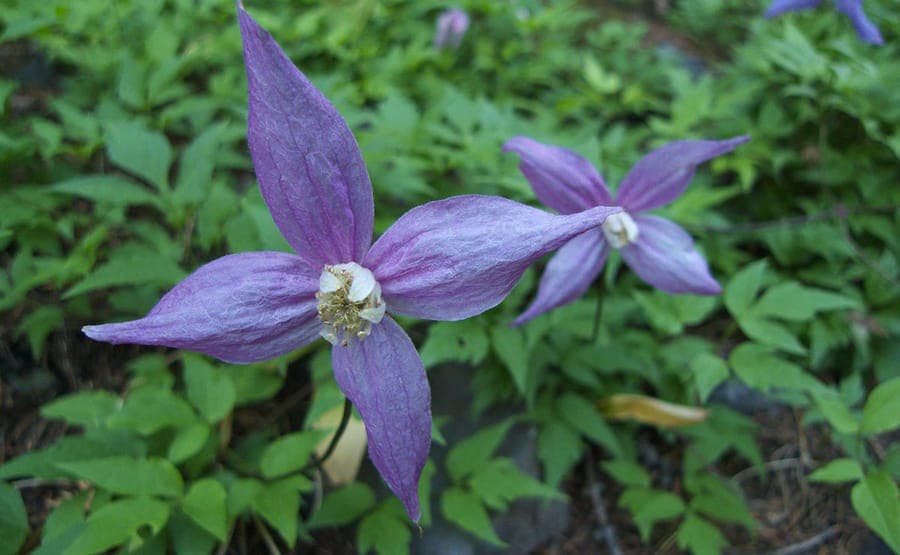
Thayne Tuason / CC BY-SA 4.0, via Wikimedia Commons
Clematis occidentalis: complete guide
Clematis occidentalis
¿Quieres ver Clematis occidentalis: complete guide en tu jardín?
1 minuto, sin tarjeta de crédito
Overview
Clematis occidentalis, commonly known as purple clematis or western blue virginsbower, is an elegant climbing vine native to North America. This fast-growing climber belongs to the Ranunculaceae family and is prized for its preference for cooler climates and stunning purple to blue flowers.
This Clematis grows naturally from Canada to the eastern USA. It is winter-hardy to USDA zone 3, making it excellent for gardens with cold winters. The plant reaches 2 to 3 meters in height and is thus ideal for pergolas, trellises, and walls.
Appearance and Bloom
Clematis occidentalis forms an elegant branched network of thin, green climbing stems. The leaves are compound, consisting of three small, elongated leaflets with soft texture. The plant becomes fully green and forms dense foliage during the growing season.
The flowers are the true highlight. They appear in May to June on thin stems. Each flower has four to six purple to blue sepals with yellow stamens in the center. The flowers are approximately 4-5 centimeters in diameter and possess a subtle fragrance. After flowering, decorative silvery feathery seed heads form.
Ideal Location
Clematis occidentalis thrives best in locations where the feet remain in shade while the upper portions receive full sun. This means half sun - for example when a trellis or pergola is shaded at the base by lower plants.
The plant prefers cooler conditions and grows better in climates with mild summers. Protect against intense midday sun in very warm areas. The climber requires support - use a trellis, pergola, or fence.
Soil
Clematis occidentalis grows well in well-draining, humus-rich soil. The plant prefers neutral to slightly alkaline terrain (pH 6-7.5). Add compost or peat to improve soil quality.
Ensure drainage is excellent - waterlogged soil can cause serious root problems. Heavy clay soils can be improved with sand and organic material.
Diseño gratis
¿Quieres ver Clematis occidentalis: complete guide en tu jardín? Crea un diseño gratis ahora.
Watering
Young Clematis plants require regular watering, especially during the first growing season. Keep the soil evenly moist without oversaturation. Established plants are moderately drought-tolerant, especially when the root zone is covered with mulch or low plants.
Water more during heavy growth periods in spring and early summer. In fall and winter, water requirements decrease. Avoid wetting the foliage, as this can promote fungal diseases.
Pruning
Clematis occidentalis belongs to Group 1 (early-flowering clematis), meaning it blooms primarily on previous year's wood. Minimal pruning is needed. Remove only dead wood immediately after flowering or in early spring.
Heavy pruning can eliminate flowering for that year. If desired, the plant can be lightly cut back right after blooming to encourage branching.
Maintenance Calendar
Spring: Check for winter damage and remove dead wood. Begin moderate feeding when growth starts. Summer: Water regularly during dry spells. Enjoy the blooms. Seed heads form. Fall: Seed heads may remain for winter interest. Stop feeding. Winter: Plant is dormant. Add mulch in very cold regions.
Winter Hardiness
Clematis occidentalis is very winter-hardy and grows to USDA zone 3 (-35 to -40 degrees Celsius). This makes it perfect for cold climates where many other clematis varieties fail. The plant survives harsh frosts without protection.
Companion Plants
Clematis occidentalis combines beautifully with:
- Lower climbers: Hedera helix, Trachelospermum
- Shrubs: Forsythia, Weigela, Syringa
- Perennials: Lathyrus, Achillea, Delphinium
- Foliage plants: Hosta, Helleborus
Closing Thoughts
Clematis occidentalis is a beautiful choice for cold climates. With its elegant purple flowers and winter hardiness, it adds classic charm to northern gardens. It is easy to maintain and provides reliable blooms year after year.
Visit gardenworld.app for more inspiration. Or order your vine today from major retailers and start growing this cold-hardy climber.
¿Quieres ver Clematis occidentalis: complete guide en tu jardín? Crea un diseño gratis ahora.
Sube una foto, elige un estilo y obtén un diseño fotorrealista con lista de plantas en menos de un minuto.
Más de 10.000 jardines diseñados
Sin tarjeta de crédito


Plantas similares
Drummond's anemone: complete guide
Anemone drummondii
Discover Drummond's anemone (Anemone drummondii): a silvery-grey mountain plant for cool rock gardens and alpine troughs.
Korean clematis: complete guide
Clematis serratifolia
Clematis serratifolia is a hardy climber with fragrant yellow bell flowers in August-September. Pruning group 3, location and care tips.
Aquilegia brevistyla: complete guide
Aquilegia brevistyla
Discover Aquilegia brevistyla, the elegant North American columbine. Growing tips, shade tolerance, and design ideas for woodland and shadowed gardens.