
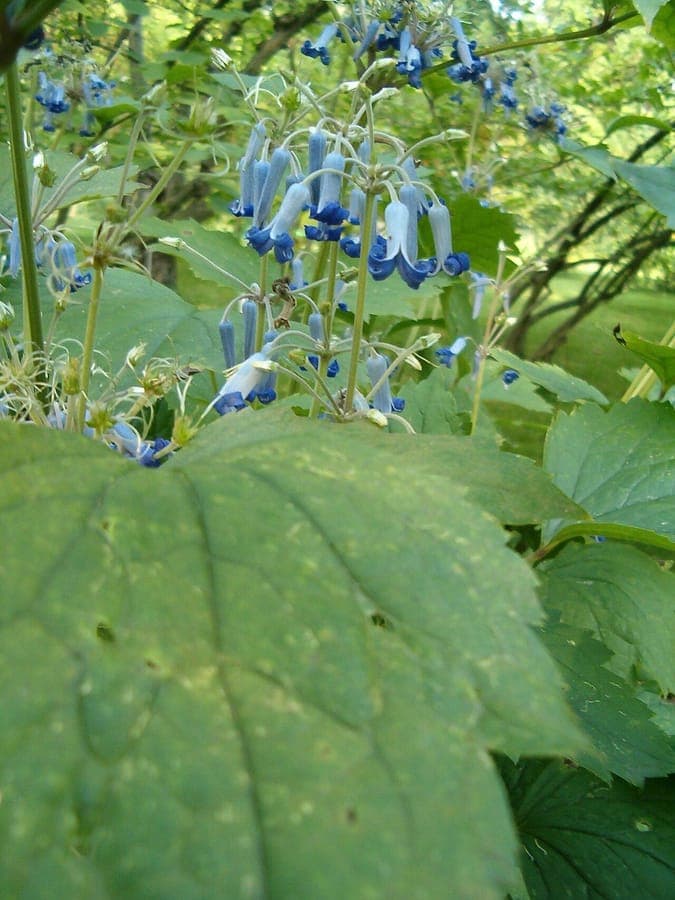
Wikimedia Commons / CC BY-SA 3.0, via Wikimedia Commons
Clematis heracleifolia: complete guide
Clematis heracleifolia
¿Quieres ver Clematis heracleifolia: complete guide en tu jardín?
1 minuto, sin tarjeta de crédito
Overview
Clematis heracleifolia, commonly known as Hyacinth-flower clematis, is an elegant climbing plant originating from China and Korea. Unlike many vigorous clematis varieties, this species grows gently and temperately, making it perfect for smaller gardens or containers. The plant belongs to the Ranunculaceae family and typically reaches heights of 150-180 centimeters.
The blooming period extends from July through September, providing months of blue color in your garden. The foliage is distinctly large and heart-shaped, giving the plant a full, lush appearance throughout the growing season. This clematis is completely winter-hardy across Western Europe and requires minimal maintenance.
Appearance and Bloom
The hyacinth-flower clematis grows as a gentle, non-invasive climber with thick, herbaceous stems. Leaves are large, reaching up to 15 centimeters in length, with characteristic heart-shaped forms and rounded serrated edges. They maintain a fresh green color throughout summer.
The flowers are this plant's true highlight. They grow in clusters at the shoot tips and display a lovely soft blue color with subtle purple tinges. Each flower consists of four sepals and emits a pleasant sweet fragrance, particularly noticeable in the evening. The blooms are distributed evenly across the plant, creating impressive floral abundance.
Ideal Location
Clematis heracleifolia performs best in locations receiving at least four hours of direct sunlight daily. While the plant tolerates partial shade, flowering is more abundant in full sun. Plant against a south-southwest facing wall or pergola for optimal results.
The plant prefers protection from strong winds, especially during early spring when new growth is tender. An east-facing wall provides wind shelter while ensuring adequate light exposure.
In urban environments, avoid placing the plant directly along busy roads where pollution might inhibit flowering.
Soil
Clematis heracleifolia thrives in nutrient-rich, well-draining soil with a pH between 6.5 and 7.5. Incorporate generous amounts of compost or rotted organic matter during planting to enhance soil quality.
The plant dislikes waterlogged conditions, so ensure proper drainage. Root damage from stagnation can lead to disease. For clay-heavy soils, amend with sand and compost.
Maintaining good soil quality is essential, particularly during the first growing season. Mulch around the base with a layer of leaf mold or compost, keeping it several centimeters away from the stem.
Diseño gratis
¿Quieres ver Clematis heracleifolia: complete guide en tu jardín? Crea un diseño gratis ahora.
Watering
Clematis heracleifolia requires regular water, especially during dry summer periods. Water deeply one to two times weekly, depending on weather and soil conditions.
Like most clematis species, this plant prefers consistently moist (but not waterlogged) soil. During warm periods, daily foliar misting can prevent humidity-related problems.
Adequate watering during blooming season is critical for maximum flower production. Apply mulch to improve moisture retention and prevent shallow root growth.
Pruning
Clematis heracleifolia belongs to clematis pruning group 3, meaning hard pruning in spring (March-April) to about 30 centimeters above ground is recommended. This severe cut encourages compact, full growth.
During the growing season, remove spent flowers and trim excessively long shoots to encourage branching and more blooms.
In November, at season's end, remove dead wood and shape the plant for winter dormancy.
Maintenance Calendar
March-April: Hard pruning, apply fertilizer. May: Check supports and tie-ins. June: Begin regular watering. July: Peak bloom, deadhead older flowers. August-September: Continued flowering, regular watering. October-November: Flowering ends, remove dead wood. December-February: Winter dormancy, minimal care.
Winter Hardiness
Clematis heracleifolia is fully hardy to approximately -20 degrees Celsius. The plant survives cold winters without protection across most Western European regions.
In very severe winters, foliage may die back, but roots will regenerate in spring. In areas with extreme winters, provide cautious mulching around the base for extra protection.
Companion Plants
Clematis heracleifolia combines well with other climbers like Hedera (ivy) or lighter varieties such as Passiflora. Underplanting works excellently with shade lovers like Hosta, ferns, or low-growing Bergenia.
Pair with dark-foliaged plants to maximize contrast with blue flowers. Add Rosemary or lavender at the base for aromatic effect.
Closing
Clematis heracleifolia is a hardy, maintenance-friendly climber providing years of reliable blooms. With minimal care and proper placement, this Chinese beauty thrives in virtually any garden. Visit specialty retailers like Intratuin or Gamma for quality plants and expert advice. Bring flowering blue to your garden using gardenworld.app's design tools. Explore gardenworld.app for additional plant guides and garden designs.
¿Quieres ver Clematis heracleifolia: complete guide en tu jardín? Crea un diseño gratis ahora.
Sube una foto, elige un estilo y obtén un diseño fotorrealista con lista de plantas en menos de un minuto.
Más de 10.000 jardines diseñados
Sin tarjeta de crédito


Plantas similares
Drummond's anemone: complete guide
Anemone drummondii
Discover Drummond's anemone (Anemone drummondii): a silvery-grey mountain plant for cool rock gardens and alpine troughs.
Korean clematis: complete guide
Clematis serratifolia
Clematis serratifolia is a hardy climber with fragrant yellow bell flowers in August-September. Pruning group 3, location and care tips.
Aquilegia brevistyla: complete guide
Aquilegia brevistyla
Discover Aquilegia brevistyla, the elegant North American columbine. Growing tips, shade tolerance, and design ideas for woodland and shadowed gardens.