
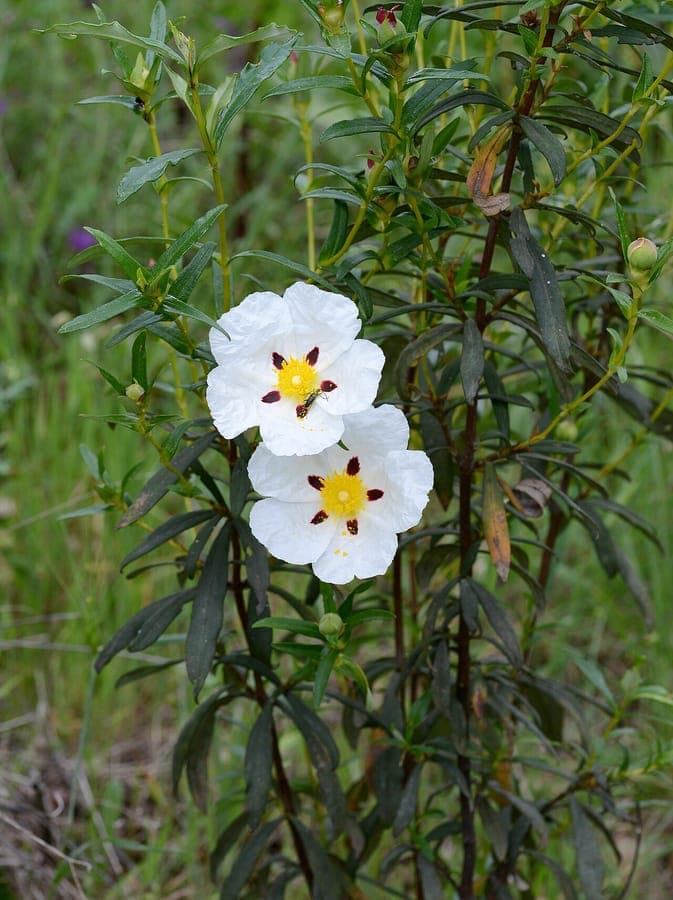
Alvesgaspar / CC BY-SA 4.0, via Wikimedia Commons
Cistus ladanifer: complete guide
Cistus ladanifer
¿Quieres ver Cistus ladanifer: complete guide en tu jardín?
1 minuto, sin tarjeta de crédito
Overview
Cistus ladanifer, commonly known as the gum rock-rose or common gum cistus, is a striking Mediterranean shrub prized for its showy white flowers and intensely fragrant foliage. This natural resident of the Mediterranean (native to Spain, Portugal, France, Morocco, and Algeria) thrives in sunny, dry gardens where it adds distinctive form and texture. When brushed, Cistus ladanifer releases an intoxicating fragrance due to volatile resins that have historically been harvested for traditional incense and perfume.
Appearance and Bloom
Cistus ladanifer grows as a dense, branching, semi-evergreen shrub reaching approximately 1.5 meters in height. The leaves are lance-shaped, green, and distinctly hairy, giving them a silky appearance. Most striking are the large, five-petaled white flowers with deep red blotches at the base and golden stamens in the center. These blooms appear in clusters from May through September and attract pollinators. Although each flower lasts only one day, successive buds ensure continuous blooming.
Ideal Location
Position Cistus ladanifer in full sun - minimum 6-8 hours of direct sunlight daily. The plant thrives in warm, dry climates and represents one of the best choices for Mediterranean or xeric (drought-tolerant) gardens. It excels on slopes, rocky areas, and in containers. In temperate climates, select the warmest, south-facing location with maximum protection. The shrub is excellent for companion plantings with other drought-tolerant species.
Soil
Cistus ladanifer demands exceptionally well-draining soil - this is non-negotiable. Heavy clay or consistently wet soils are fatal to this species. Amend native soil with coarse sand, gravel, or perlite, ensuring the mixture contains at least 30% inorganic materials. The plant accepts poor to moderately fertile soils, so fertilization is typically unnecessary and may even prove counterproductive. A slightly acidic to neutral pH (6.0-7.5) is ideal. Mulch around the plant with bark fragments or gravel, never with organic matter that retains moisture.
Watering
Maturely established Cistus ladanifer is exceptionally drought-tolerant and requires minimal supplemental watering. Water newly planted specimens regularly (once weekly) during the first growing season until roots establish - typically 2-3 months. Then gradually reduce watering. In Mediterranean climates, plants survive without supplemental water. In temperate regions, water during sustained dry periods, but always sparingly - soil should dry between waterings. Never allow water to pool around the plant.
Diseño gratis
¿Quieres ver Cistus ladanifer: complete guide en tu jardín? Crea un diseño gratis ahora.
Pruning
Cistus ladanifer responds well to light pruning to maintain shape. Remove deformed or damaged branches after flowering. Avoid heavy cutting into old wood, as this plant doesn't regenerate well from older stems. Regular pruning of young plants encourages bushier growth. Remove dead wood in spring. Annual heavy pruning isn't necessary; subtle shaping suffices.
Maintenance Calendar
Spring: Plant nursery-raised specimens in early spring or autumn. Summer: Water regularly during dry spells; enjoy the blooms. Autumn: Collect seed for propagation. Winter: In cold regions, protect young plants with horticultural fleece; no watering needed. This plant truly requires minimal maintenance once established.
Winter Hardiness
Cistus ladanifer is semi-hardy and tolerates temperatures to approximately -5 to -10°C, depending on variety and provenance. In areas experiencing harsher winters (below -10°C), provide protection: wrap young plants in winter fleece in frost-threatened periods, or cultivate in containers you can move indoors. In Mediterranean and warmer temperate climates, they grow outdoors without protection. Young specimens are more frost-sensitive than mature plants.
Companion Plants
Cistus ladanifer thrives alongside other Mediterranean shrubs: Lavandula (lavender), Rosmarinus (rosemary), Genista (broom), Santolina, and Artemisia. These plants share identical preferences for sun, dry soil, and minimal watering. Grouped together, they create cohesive Mediterranean landscapes requiring little maintenance. Avoid moisture-loving plants - competition and disease pressure increase. Soil nutrients may be modest, so pair with similarly undemanding species.
Closing Thoughts
Cistus ladanifer is a spectacular, low-maintenance shrub for gardeners drawn to Mediterranean vegetation. With correct site selection (sun, drainage), appropriate climate, and minimal care, this plant delivers white blooms and enchanting fragrances for years. Its robustness and beauty make it a favorite choice in professional landscape design. Available at major nurseries and garden centers for those seeking Mediterranean character.
Visit gardenworld.app for comprehensive Mediterranean plant advice and garden design consultation. Gardenworld.app delivers photorealistic garden designs with exact recommendations for companion plantings and maintenance schedules.
¿Quieres ver Cistus ladanifer: complete guide en tu jardín? Crea un diseño gratis ahora.
Sube una foto, elige un estilo y obtén un diseño fotorrealista con lista de plantas en menos de un minuto.
Más de 10.000 jardines diseñados
Sin tarjeta de crédito


Plantas similares
Curled-leaf rock rose: complete guide
Cistus crispus
Everything you need to grow Cistus crispus, the curled-leaf rock rose from the western Mediterranean. Siting, soil, pruning, and winter care fully explained.
Marjoram-leaved sun rose: complete guide
Helianthemum marifolium
Everything about Helianthemum marifolium, the marjoram-leaved sun rose: location, dry soil, flowering season and care for this Mediterranean rock plant in your garden.
Beach-heath: complete guide
Hudsonia tomentosa
Complete guide to Hudsonia tomentosa: growing this woolly sand-heath on poor sandy soils, its care needs, companions and garden uses.