
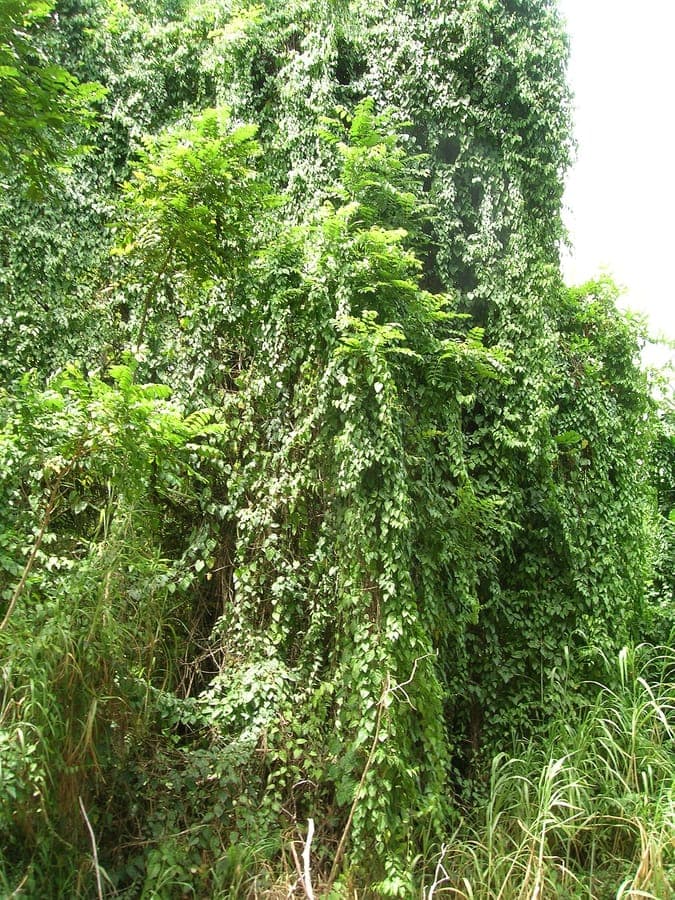
Forest & Kim Starr / CC BY 3.0, via Wikimedia Commons
Cissus verticillata: complete guide
Cissus verticillata
¿Quieres ver Cissus verticillata: complete guide en tu jardín?
1 minuto, sin tarjeta de crédito
Overview
Cissus verticillata, commonly known as the princess vine or pudding withe, is an elegant climbing plant from the Vitaceae family native to tropical regions of America. This refined plant is appreciated for its delicate, graceful foliage and its ability to quickly climb well-structured surfaces. The plant is relatively low-maintenance and suitable for both beginners and experienced plant lovers. The ornamental value of Cissus verticillata is considerable, especially as it slowly wraps around its surroundings.
In interiors where it grows as a houseplant, it can create a green wall or screen. The plant is also used as a hanging plant in hanging baskets, which suits its natural growth habit. The plant feels at home in indirect light situations, making it ideal for office and home environments where sunlight is not always abundant.
Appearance and Bloom
Cissus verticillata is a slender climbing plant with fine, jointed stems and small leaves that appear in groups of three (trifoliate). The leaves are approximately 2-5 centimeters long and have a fine, elegant shape. The color is bright green, giving the plant an airy and refined appearance.
The plant produces small, inconspicuous green flowers in small inflorescences, followed by small dark blue berries. These flowers and fruits are not spectacular, but they do contribute to the overall plant diversity. Flowering occurs mainly in summer.
The vines of Cissus verticillata grow continuously and can become quite long, especially when they have support. Without support, the plant will naturally grow trailing and hanging.
Ideal Location
Cissus verticillata thrives best in locations with bright, indirect light. Direct sunlight can cause leaf burn, especially in enclosed spaces where heat can accumulate. A spot several meters from a window is ideal.
The plant also tolerates shadier conditions better than many other plants. It can grow in somewhat darker corners of homes, though growth will be slower. Complete darkness is not necessary.
This is a tropical plant, so warmth is beneficial. Temperatures between 18-25 degrees Celsius are ideal. Avoid temperatures below 10 degrees, as this can be harmful.
Air humidity is beneficial but not essential. The plant grows well in normal household humidity, though it looks fuller in more humid conditions.
Diseño gratis
¿Quieres ver Cissus verticillata: complete guide en tu jardín? Crea un diseño gratis ahora.
Soil
Cissus verticillata requires well-draining, humus-rich potting soil. Standard houseplant potting soil is suitable. The plant prefers neutral to slightly acidic soils (pH 6.0-7.0).
The soil should not become waterlogged but should retain sufficient moisture. A good mixture consists of 2 parts potting soil and 1 part perlite or orchid bark.
Watering
Cissus verticillata likes consistently moist but not soggy conditions. Water when the top centimeter of soil feels dry to the touch.
During the growing season (spring and summer), water more generously. In winter, watering can be reduced.
Overwatering can cause root rot, so ensure pots drain well. Use pots with drainage holes.
Preferably use filtered or rainwater, as this plant tolerates moisture stress better.
Pruning
Pruning is not strictly necessary, but you can shape the plant by cutting side vines to desired length. The plant will respond from the buds with more branching.
Remove dead or damaged leaves or stems with sharp scissors.
Because the plant grows quickly, regular pruning can help keep it in shape and encourage fuller growth.
Maintenance Calendar
Spring: Growth increases, more watering, start feeding every two weeks. Summer: Maximum growth, abundant water needed, monthly feeding beneficial. Autumn: Gradually reduce watering. Winter: Minimal water, no feeding, protect from cold.
Winter Hardiness
Cissus verticillata is not winter hardy in temperate climates. The plant can only be grown as a houseplant or outdoors in tropical regions. In winter, this plant must remain protected from cold.
Companion Planting
Cissus verticillata combines well with other vines and hanging plants:
Epipremnum pinnatum (golden pothos) Scindapsus pictus (satin pothos) Rhaphidophora tetrasperma Pothos in various varieties
This combination creates a green jungle in households.
Conclusion
Cissus verticillata is an elegant and low-maintenance climbing plant that can adorn many interiors. With its delicate foliage and slender growth, it creates a distinguished appearance. Due to its tolerance for indirect light conditions, it is suitable for various home environments. Plant it in well-draining soil, keep it consistently moist, and you will enjoy this beautiful plant. Discover more inspiration at gardenworld.app.
¿Quieres ver Cissus verticillata: complete guide en tu jardín? Crea un diseño gratis ahora.
Sube una foto, elige un estilo y obtén un diseño fotorrealista con lista de plantas en menos de un minuto.
Más de 10.000 jardines diseñados
Sin tarjeta de crédito


Plantas similares
Catbird grape: complete guide
Vitis palmata
Discover the Catbird grape (Vitis palmata), a hardy wild grapevine that draws songbirds. Learn about location, pruning, and year-round care.
Monkshoodvine: complete guide
Ampelopsis aconitifolia
Discover Monkshoodvine. Learn how to care for this plant in your garden.
Vitis girdiana: complete guide to this resilient desert wild grape
Vitis girdiana
Discover Vitis girdiana, the Desert Wild Grape: a resilient native vine from California and Mexico. Perfect for dry, warm gardens and pergola screening.