
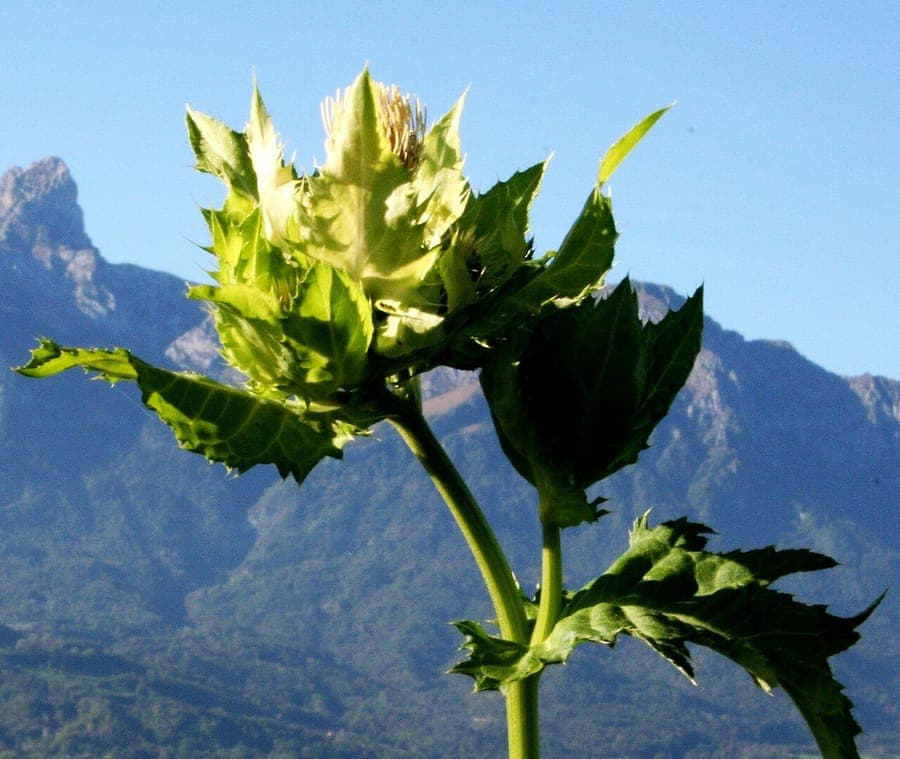
Enrico Blasutto / CC BY-SA 4.0, via Wikimedia Commons
Cirsium oleraceum: complete guide
Cirsium oleraceum
¿Quieres ver Cirsium oleraceum: complete guide en tu jardín?
1 minuto, sin tarjeta de crédito
Overview
Cirsium oleraceum, commonly known as cabbage thistle or kale thistle, is an elegant biennial thistle from the Asteraceae family (Aster family). This European plant grows from Europe to Siberia and Kazakhstan and thrives in moist grasslands, mountain meadows, and slow-moving water margins. With its striking yellow flowers and edible young leaves, this thistle offers ecological and culinary benefits.
Appearance & Bloom Cycle
This biennial reaches 60–120 cm in its second year with an upright stem. The basal leaves are green, spiny, and sometimes covered with spider-like hairs. The stem leaves are smaller, less spiny. The flowers are strikingly yellow-green to pale yellow, appearing in dense spherical flower heads 2–3 cm across from June to September. All flowers are followed by seed plankton with silky hairs.
Ideal Location
Cirsium oleraceum grows best in moist grasslands, along water margins, and in half-shaded spots. Plant in locations with regular moisture - marshy grasslands, stream banks, and pond margins. It also accepts full sun provided soil remains adequately moist. Protect from strong winds that can break the tall stems.
Soil Requirements
Moisture-retaining, nutrient-rich soils are ideal. It prefers neutral to slightly acidic soil (pH 6.0–7.5). This thistle grows poorly in dry soils - consistent moisture is essential. Mulch around the plant to retain moisture. In lean soils: add compost or other organic matter.
Watering
Water regularly and consistently during the growing season. Avoid waterlogging but ensure soil remains moist. Water during dry spells, especially in the first year. Young plants need more guidance than established specimens. This plant tolerates very wet soil better than dry.
Diseño gratis
¿Quieres ver Cirsium oleraceum: complete guide en tu jardín? Crea un diseño gratis ahora.
Pruning
No pruning needed - this plant grows naturally beautifully. Remove spent flower heads when seed dispersal is unwanted. Otherwise, leave seed heads for birds and natural seed production. In autumn, dead foliage can be removed. Young plants can be pinched to encourage a more compact form.
Maintenance Calendar
- April–May: Plant seedlings or allow natural seedlings to grow. Water well.
- June–August: Regular watering, remove spent flowers when seed production is not desired
- September–October: Seed production - leave for birds. Continue watering.
- November–February: Plant dies back in second year. Compost remaining material. Prepare for next seeding
Winter Hardiness
Cold-tolerant in USDA zones 3–8. This biennial survives outdoor winters in the Netherlands, Belgium, and West Europe well. Shield young plants from strong winter desiccation winds. Snow protects young foliage well. Snow cover presence aids survival in extremely cold winters.
Companion Plants
Cabbage thistle works well with other grassland thistle plants: Knautia dipsacoides, Succisa pratensis (devil's-bit). Plant with moist groundcovers like Filipendula ulmaria (meadowsweet). For texture contrast: add Astilbe or Hosta. Beautiful with other moist-site plant compositions.
Closing
Cabbage thistle is an elegant and ecologically valuable addition to moist grasslands and wild gardens. With its attractive yellow flowers, edible leaves, and bird food, it offers multiple benefits. For more inspiration on wild thistles and biennials: consult gardenworld.app. Plant this ecological beauty on gardenworld.app for nature-friendly garden designs.
¿Quieres ver Cirsium oleraceum: complete guide en tu jardín? Crea un diseño gratis ahora.
Sube una foto, elige un estilo y obtén un diseño fotorrealista con lista de plantas en menos de un minuto.
Más de 10.000 jardines diseñados
Sin tarjeta de crédito


Plantas similares
Calendula stellata: complete guide
Calendula stellata
Complete guide to Calendula stellata, the star-flowered marigold from Sicily: location, soil, watering and companion planting tips.
Korean chrysanthemum: complete guide
Chrysanthemum x rubellum
Chrysanthemum x rubellum is a hardy autumn perennial with single pink to copper flowers from August to November. Care and combinations.
Helianthus divaricatus: complete guide
Helianthus divaricatus
Helianthus divaricatus is a North American woodland sunflower with yellow summer blooms, ideal for naturalistic borders and shady edges.