
Hectonichus / CC BY-SA 3.0, via Wikimedia Commons
Yellow Thistle: complete guide
Cirsium erisithales
¿Quieres ver Yellow Thistle: complete guide en tu jardín?
1 minuto, sin tarjeta de crédito
Overview
The Yellow Thistle (Cirsium erisithales) is an impressive summer-flowering biennial from the Asteraceae family. This European thistle grows naturally from Albania to Poland and across Mediterranean to Transcaucasus regions.
With its striking golden-yellow flower heads and robust hairy stems, the Yellow Thistle stands majestically in the garden. The plant flowers prolifically, attracts pollinators, and thrives in dry, sunny locations where fewer plants succeed.
Appearance and bloom
The Yellow Thistle forms an imposing plant reaching sixty centimetres tall with rough-hairy stems. Leaves are lance-shaped with downward-curved spines characteristic of thistles.
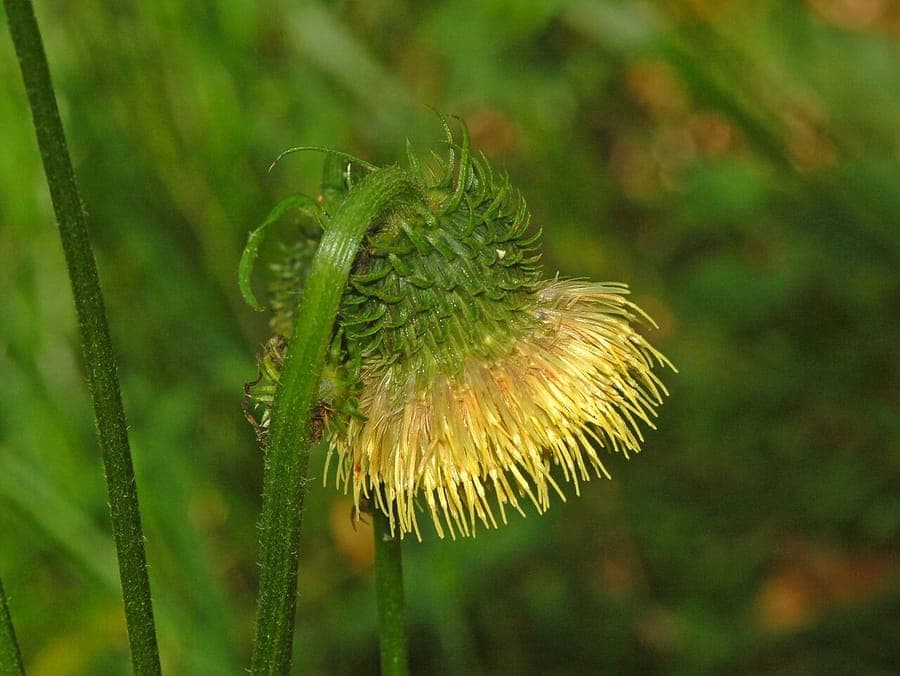
Flowers appear from July through August as solitary golden-yellow spherical flower heads two to three centimetres across. These display distinctly sticky involucral bracts that give the species its 'Sticky Thistle' common name. Following flowering, feathery seed heads form, dispersing many seeds.
Ideal location
The Yellow Thistle grows optimally in full sun on dry, well-drained soils. Once established, plants are extremely drought-tolerant. Place in warm, exposed positions where heat builds intensely.
Mediterranean-style landscapes are perfect: rock gardens, Mediterranean borders, pergolas, or even green roofs. Combines beautifully with other drought-tolerant plants like lavender and sage.
Soil
The Yellow Thistle grows best on poor, dry, well-draining soils. Sand, gravel, and sparse nutrition pose no problems; the plant thrives in poor conditions.
Add minimal compost; rich soils accelerate growth without robustness. pH may range 7.0 to 7.5. Waterlogging must be absolutely avoided.
Watering
Water upon planting. Thereafter water minimally, only during extreme drought periods. Young plants prefer regular moisture, whilst established plants are extremely drought-tolerant.
Waterlogging is fatal. Ensure perfect drainage. In wet climate regions, pay special attention to water runoff.
Diseño gratis
¿Quieres ver Yellow Thistle: complete guide en tu jardín? Crea un diseño gratis ahora.
Pruning
The Yellow Thistle requires minimal pruning. Allow the plant its natural growth pattern. After flowering, remove seed heads for extended blooming or leave for seed development.
The plant is biennial or short-lived. Following seed production, it dies. This is natural. Allow self-seeding for new plants next season.
Maintenance calendar
March-April: Preparation. Work soil, check drainage. Direct sow seed.
May-June: Growth phase. Water only during extreme drought. Support young plants.
July-August: Peak flowering. Enjoy golden blooms. Leave or remove seed heads as preferred.
September-October: Seed ripening. Plant ages. Allow seeds to mature and fall.
November-February: Winter dormancy. Plants decline or disappear.
Winter hardiness
The Yellow Thistle tolerates Dutch winters reasonably as a young plant. However, older plants dislike excessively wet conditions. Protect against waterlogging.
The plant is not always long-lived. It may regenerate from self-sown seed next season. This is part of the natural life cycle.
Companion plants
The Yellow Thistle combines beautifully with:
- Lavender - purple counterpoint, shared drought preference
- Sage - companion in Mediterranean settings
- Bindweed - white flower tones contrast
- Scarlet Pimpernel - warm colour combinations
- Oregano - herbal partner in dry zones
Conclusion
The Yellow Thistle is a spectacular yet underappreciated plant for dry gardens. With golden-yellow blooms and robust presence, it makes an impact where fewer plants thrive.
Plant en masse on warm stone terraces or Mediterranean gardens. Accept its life cycle. Allow seeds to mature for natural regeneration next season. A true character plant!
Learn more at gardenworld.app/en and gardenworld.app/nl.
¿Quieres ver Yellow Thistle: complete guide en tu jardín? Crea un diseño gratis ahora.
Sube una foto, elige un estilo y obtén un diseño fotorrealista con lista de plantas en menos de un minuto.
Más de 10.000 jardines diseñados
Sin tarjeta de crédito


Plantas similares
Calendula stellata: complete guide
Calendula stellata
Complete guide to Calendula stellata, the star-flowered marigold from Sicily: location, soil, watering and companion planting tips.
Korean chrysanthemum: complete guide
Chrysanthemum x rubellum
Chrysanthemum x rubellum is a hardy autumn perennial with single pink to copper flowers from August to November. Care and combinations.
Helianthus divaricatus: complete guide
Helianthus divaricatus
Helianthus divaricatus is a North American woodland sunflower with yellow summer blooms, ideal for naturalistic borders and shady edges.