
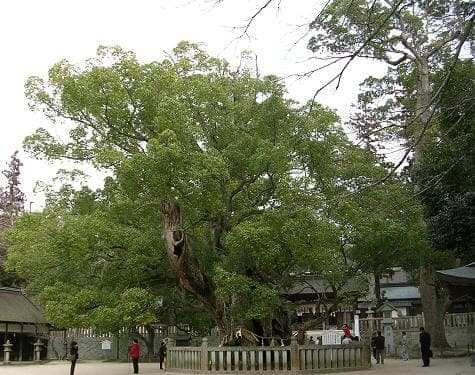
Wikimedia Commons / CC BY-SA 3.0, via Wikimedia Commons
Cinnamomum camphora: complete guide
Cinnamomum camphora
¿Quieres ver Cinnamomum camphora: complete guide en tu jardín?
1 minuto, sin tarjeta de crédito
Overview
Cinnamomum camphora, commonly known as camphor tree or camphorwood, is a majestic tree originating from East Asia (Japan, Korea, Taiwan). This tree is renowned for its characteristic camphor scent and camphor oil that can be derived from the wood structure. The tree has enjoyed thousands of years of traditional use in Asian cultures.
The camphor tree grows to impressive size and forms dense, attractive crown with glossy foliage. The tree is durable, long-lived, and offers numerous benefits: fragrance, medicinal applications, and decorative value. In modern gardens the tree is gaining popularity.
Appearance and Characteristics
Cinnamomum camphora grows into a large tree reaching 10 to 30 meters in height. The plant forms a wide, well-shaped crown with glossy, dark-green foliage. Leaves are oval to lance-shaped and have characteristic aroma when lightly crushed.
Flowers are small, inconspicuous greenish-yellow and appear in spring and early summer. Fruits are black-purple berries approximately 8 to 10 millimeters in diameter. All parts of the tree contain essential oil with characteristic camphor scent.
Ideal Location
Cinnamomum camphora thrives best in full sun to lightly shaded locations. Plant the tree where it receives at least four to six hours of direct sunlight daily. The tree can also grow in partial shade, but flowering and fruiting are better in sun.
The tree is very wind-tolerant and can even withstand strong winds. This makes camphor ideal for open gardens and windy locations. However, avoid very sheltered spots or locations with stagnant air, as this can lead to fungal problems.
Soil and Drainage
Cinnamomum camphora is not fussy regarding soil type. The tree grows in many soil types: sand, loam, clay, as long as drainage is reasonable. Ideal is well-drained soil with moderate fertility.
The tree tolerates acidic to neutral soil well. Heavy clay soil should be improved with sand. Waterlogging is harmful and causes root rot. Always ensure good drainage, especially in first years after planting.
Watering
Cinnamomum camphora is moderately water-demanding. Young newly planted trees must be watered regularly until well-established, usually after about two years. Established trees tolerate dry periods and require much less water.
Water deeply but not frequently. Ensure soil can dry between watering sessions. During rainy seasons supplemental watering can be almost entirely omitted. Excessive watering is more harmful than under-watering.
Feeding and Fertilization
Cinnamomum camphora grows fine on nutrient-poor soils and requires minimal fertilization. Young trees can be lightly fed monthly during growing season (March-September). Mature trees require virtually no supplemental nutrition.
Excessive fertilization can stimulate lush, soft growth that is susceptible to diseases. Therefore use balanced fertilizer in lower concentration. Feeding three to four times yearly during growing season is more than sufficient.
Diseño gratis
¿Quieres ver Cinnamomum camphora: complete guide en tu jardín? Crea un diseño gratis ahora.
Pruning and Shaping
Pruning of Cinnamomum camphora is needed only for shape and removal of dead or diseased branches. The plant grows naturally into a beautiful form and needs little pruning. Avoid heavy pruning, as trees recover slowly.
Remove lower branches so trunks are clear for underplanting. Remove crossed or overlapping branches. Young trees can be pruned to desired height by cutting back the central leader.
Camphor Oil Harvesting
Camphor oil can be extracted from wood, leaves, and roots of the tree. However, the process is chemically complicated and impractical for home use. Much commercial use is made of distilled camphor oil from the tree.
Dried leaves can be used for mild camphor fragrance. Crushed leaves have more intense aroma. These can be placed in sachets for scent distribution.
Medical and Aromatic Benefits
Cinnamomum camphora contains abundant essential oil with medicinal properties. Camphor is used in liniments, salves, and creams against muscle pain. Camphor is also used in respiratory-clearing preparations.
The tree also has traditional applications in Asian medicine. Modern research shows that camphor can help with muscle relaxation and against certain pests. However, pure camphor can be toxic in large quantities.
Diseases and Pests
Cinnamomum camphora is highly resistant to diseases and pests. The essential oil helps against many insects. Fungi can occur in very humid environments, but this is rare.
Root rot can occur with waterlogging, but with good drainage this does not happen. The tree is more resistant to insect pests than many other trees. This is an important advantage for low-maintenance gardens.
Growth and Lifespan
Cinnamomum camphora grows moderately to quickly, depending on growing conditions. Young trees can grow 30 to 50 centimeters yearly. Growth slows as tree ages.
The tree is very long-lived and can become hundreds of years old. Some specimens in East Asia are known to be older than 1000 years. This makes camphor tree ideal as a heritage plant that outlives generations.
Seasonal Benefits
In spring fresh green leaves appear with pleasant aroma. In summer the tree provides dense, pleasant shade. In autumn leaves can acquire golden sheen. In winter the tree remains evergreen and provides continuing structure.
The tree changes throughout the year without major transformation, making it valuable for year-round interest.
Closing Remarks
Cinnamomum camphora is excellent choice for those seeking durable, beautiful tree with practical applications. The tree combines beauty with function. With minimal maintenance, this tree grows into a majestic specimen.
Available from commercial tree nurseries. Consult gardenworld.app for plant inquiries and landscape designs. gardenworld.app offers comprehensive guidelines for successful tree cultivation.
¿Quieres ver Cinnamomum camphora: complete guide en tu jardín? Crea un diseño gratis ahora.
Sube una foto, elige un estilo y obtén un diseño fotorrealista con lista de plantas en menos de un minuto.
Más de 10.000 jardines diseñados
Sin tarjeta de crédito


Plantas similares
Ocotea floribunda: complete guide
Ocotea floribunda
All about Ocotea floribunda, a tropical laurel tree from Central and South America: growing in temperate climates, containers, pruning, and care in greenhouses.
Redbay: complete guide
Persea borbonia
A full guide to redbay (Persea borbonia), a fragrant evergreen tree native to the southeastern United States, related to avocado and laurel.
Swamp bay: complete guide
Persea palustris
A full guide to swamp bay (Persea palustris), an evergreen tree native to the wetlands and coastal swamps of the southeastern United States.