
Wikimedia Commons / Public domain, via Wikimedia Commons
Cinchona pubescens: complete guide
Cinchona pubescens
¿Quieres ver Cinchona pubescens: complete guide en tu jardín?
1 minuto, sin tarjeta de crédito
Overview
Cinchona pubescens, commonly known as red quinine tree, is an important medicinal plant with a fascinating history. This tree originates from the mountain regions of West South America (Colombia, Ecuador, Peru) and is known for alkaloids in its bark, particularly quinine. This substance has been invaluable in pharmaceutical production.
The tree grows in mountain regions at elevations of 1200 to 2500 meters. It is a mid-sized tree with attractive foliage and beautiful, pink-red flowers. The plant has not only historical and medical significance but is also botanically interesting.
Appearance and Blooms
Cinchona pubescens grows into a tree reaching 5 to 12 meters in height. The plant forms an elegant vaulted crown with glossy, dark-green mid-sized leaves. The leaves are covered with fine hair (pubescent), giving the plant its name.
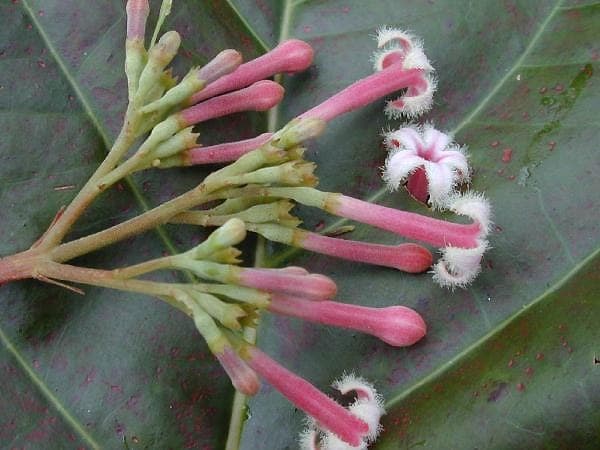
Blooming occurs in spring and summer. Flowers appear in dense flower clusters and display characteristic pink to red coloration. The flowers are two-lipped and highly decorative. After blooming, small seed capsules develop.
Ideal Location
Cinchona pubescens thrives in cool to temperate mountain conditions. Plant the tree in a location with partial sun. Too intense direct sunlight can cause leaf scorch. A spot beneath larger trees or in light shade is ideal.
The tree prefers cooler climate than many tropical plants. Optimal growth occurs at temperatures between 15 and 25 degrees Celsius. Protect the tree from strong winds. The plant does not thrive in warm, lowland regions.
Soil and Drainage
Cinchona pubescens grows in acidic to moderately acidic soil. The plant prefers well-drained, organic-rich soil. Organic material, leaf mold, and sand improve soil structure significantly.
Heavy clay soils are unsuitable without improvement. Maintain acidity of pH 4.5 to 6.5. Add abundant compost and leaf mold. A thick mulch layer protects roots and maintains soil moisture. Avoid pure peat without supplementation.
Watering
Cinchona pubescens requires regular water but not waterlogging. Water when top soil layer feels dry. Young trees require more water than established specimens. During growing season, soil should not dry completely.
Rainwater is better than hard tap water. The plant can be sensitive to chlorine and calcium-laden water. In areas with hard water, it may be better to use collected water or rainwater.
Feeding and Fertilization
Cinchona pubescens is moderately nutrient-demanding. Provide monthly feeding during growing season (March through September). Use well-balanced fertilizer with some emphasis on potassium.
Excess nitrogen can lead to lush leaf growth without strong roots. Avoid high-dose fertilization. The plant grows better on poorer soil with regular maintenance than on very rich soil with excessive feeding.
Diseño gratis
¿Quieres ver Cinchona pubescens: complete guide en tu jardín? Crea un diseño gratis ahora.
Pruning and Shaping
Pruning is necessary to maintain shape and remove diseased branches. In early spring, damaged or dead branches can be removed. Avoid aggressive pruning, as this can weaken the tree.
Form the tree into an open, well-ventilated crown. Remove inward-growing branches. Allow lower branches to develop for shade on trunk. Regular deadheading of spent flowers and seed capsules can encourage continued blooming.
Blooming and Fruit Setting
Cinchona pubescens blooms after two to four years of growth. Blooming is usually abundant and occurs regularly. Flowers last for several weeks. Self-pollination occurs, though insect-pollination is more likely.
After blooming, seed capsules develop. Seed ripens over several months. Seed capsules can be cut and dried for seed preservation. Seed must be used fresh, as viability decreases rapidly.
Seed Propagation
Seed from Cinchona pubescens can be sown in well-drained seed soil. Seed should not be buried deeply: simply press lightly into surface. Keep seed moist and warm (20-25 degrees Celsius). Germination occurs after approximately two to four weeks.
Young seedlings are delicate. Provide them with dappled light and prevent waterlogging. Transplant when they have several leaf pairs. Young plants grow quickly.
Medicinal Value
Cinchona pubescens contains alkaloids, with quinine being the most important. This alkaloid is used in medicines against malaria. The tree bark was used by indigenous peoples long before Western medicine discovered its value.
Other alkaloids are also present, some with biological activity. The plant also has traditional use in South American folk medicine. Modern research continues exploring applications.
Diseases and Pests
Cinchona pubescens is relatively resistant to diseases and pests. In humid environments fungi may occur however. Ensure good air circulation. Remove infected leaves.
Root rot can occur with waterlogging. Always ensure excellent drainage. Spider mites can occur in dry conditions. Fungal diseases can develop, especially in very humid climate.
Growth Habits and Lifespan
Cinchona pubescens is long-lived. Established trees can grow for decades. Growth is at moderate pace: approximately 30 to 60 centimeters yearly under ideal conditions. Mature tree can remain productive throughout its life.
The plant reaches full size after approximately 10 to 15 years. Aging trees can still be floriferous. Plant therefore for long-term garden investment.
Closing Remarks
Cinchona pubescens is an exceptional plant for cooler mountain gardens. The plant combines botanical beauty with medical interest. For those interested in medicinal plant cultivation, this tree is highly valuable.
The tree is relatively difficult to obtain outside specialized nurseries. Contact botanical gardens or medicinal plant specialists. With patience and attention, this fascinating tree can grow well in suitable environment.
¿Quieres ver Cinchona pubescens: complete guide en tu jardín? Crea un diseño gratis ahora.
Sube una foto, elige un estilo y obtén un diseño fotorrealista con lista de plantas en menos de un minuto.
Más de 10.000 jardines diseñados
Sin tarjeta de crédito


Plantas similares
Oregon bedstraw: complete guide
Galium oreganum
Everything about Oregon bedstraw (Galium oreganum): shade planting, soil requirements, care and use as a low groundcover in woodland and shade gardens.
Awned woodruff: complete guide
Asperula aristata
Full guide to growing Asperula aristata, the awned woodruff: sunny location, alkaline soil, minimal watering, and companion plants for dry or rock gardens.
Purple woodruff: complete guide
Asperula purpurea
Full guide to Asperula purpurea, purple woodruff: sunny sites, chalky soil, watering, pruning, winter hardiness and companion plants for rock and dry gardens.