
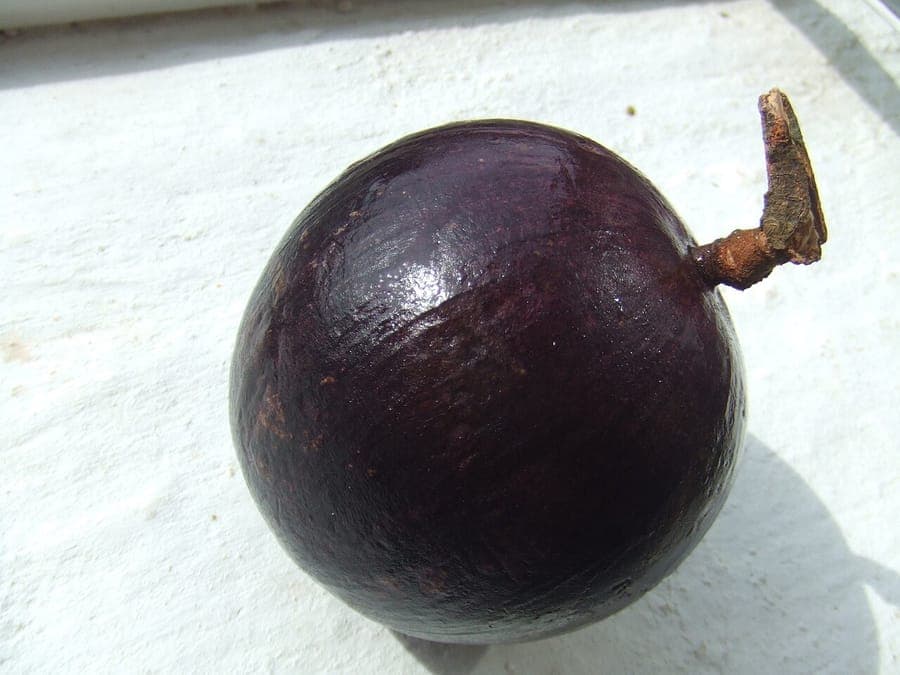
No machine-readable author provided. Hans B.~commonswiki assumed (based on copyright claims). / Public domain, via Wikimedia Commons
Chrysophyllum cainito: complete guide
Chrysophyllum cainito
¿Quieres ver Chrysophyllum cainito: complete guide en tu jardín?
1 minuto, sin tarjeta de crédito
Overview
Chrysophyllum cainito, commonly known as star apple, is a prized tropical fruit tree thriving in warm climates worldwide. This tree produces unique, star-shaped fruits with delightful flavor. The tree originates from Panama and has spread throughout Central America and tropical regions of Africa and Asia.
The star apple grows into a mid-sized tree with attractive foliage and beautiful flowers. The fruits are not only delicious but also remarkable: when cut, the flesh reveals a perfect star formation. This makes the star apple botanically and culinarily fascinating.
Appearance and Fruits
Chrysophyllum cainito grows into a tree reaching 5 to 15 meters in height. The plant forms a compact, rounded crown with glossy, olive-green foliage. The leaves are relatively large and oval, creating elegant overall appearance.
The fruits are spherical and reach approximately 5 to 8 centimeters in diameter. They have smooth skin that changes from green to purple or reddish during ripening, depending on cultivar. The flesh is creamy-white, sweet, and silky. When sliced, the fruit reveals a perfect five-pointed star.
Ideal Location
Chrysophyllum cainito requires warm, sunny location. Plant the tree where it receives minimum six to eight hours of direct sunlight daily. The tree thrives better in protected environment than in windy locations. Wind protection is beneficial.
The tree does not grow in cold climates. Optimal growth occurs at temperatures between 20 and 30 degrees Celsius. Temperatures below 10 degrees Celsius can be harmful. This makes the star apple suitable only for warm gardens, greenhouses, or Mediterranean climates.
Soil and Drainage
Chrysophyllum cainito grows in many soil types but prefers well-draining, slightly acidic to neutral soil. Heavy clay soils must be improved by addition of sand and organic material. Excellent drainage is essential: waterlogging causes root problems.
Add abundant compost or humus when planting. This improves soil structure and water retention. A mulch layer of approximately 10 centimeters protects roots and maintains soil moisture. Avoid placing mulch directly against trunk.
Watering
Chrysophyllum cainito requires regular water, especially during growing season and fruit setting. Water deeply when top soil layer feels dry. During rainy periods, supplemental watering may be minimal.
Young newly planted trees require more water than established specimens. Keep young trees thoroughly moist during first two seasons, but prevent waterlogging. Established trees tolerate dry periods, but produce more and better fruits with regular watering.
Diseño gratis
¿Quieres ver Chrysophyllum cainito: complete guide en tu jardín? Crea un diseño gratis ahora.
Feeding and Fertilization
Chrysophyllum cainito is a nutrient-demanding fruit tree. Provide complete fertilizer monthly during growing season (March through September) with emphasis on potassium and phosphorus, important for fruit setting.
Young newly planted trees must be fertilized carefully. Begin with half dose and increase to full dose gradually. Excess nitrogen stimulates leaf growth but can inhibit fruit setting. Therefore use balanced fertilizer with low nitrogen content.
Pruning and Shaping
Pruning of Chrysophyllum cainito is best done in early spring. Remove broken, damaged, or diseased branches. Form the tree into open crown with strong, well-distributed branches.
Allow lower branches to grow and develop around trunk but not directly above ground level. This protects trunk from sunscald. With young trees, prune central leader to desired height and allow side shoots to develop.
Blooming and Fruit Setting
Chrysophyllum cainito blooms after two to four years of growth. Flowers are small, inconspicuous white to yellow and appear regularly during growing season. The tree can have multiple bloom cycles yearly.
Fruit setting is largely spontaneous and cross-pollination is not required. However, the tree produces more fruits with regular watering and feeding. Thinning fruits can benefit the size of remaining fruits.
Harvest and Storage
Fruits are ripe when skin is deep purple to red and fruit yields slightly to pressure. Harvest carefully and handle gently, as ripe fruits are delicate. Harvest fruits when well-colored but still firm.
Ripe star apples keep approximately one week at room temperature. In refrigerator they can be stored two to three weeks. Fresh fruits taste best eaten directly, but can also be frozen for later use.
Diseases and Pests
Chrysophyllum cainito is relatively resistant to diseases and pests. In humid climates fungi may occur however. Ensure good air circulation and remove affected leaves.
Spider mites and scale insects can occur in dry conditions. Spray regularly with neem oil or insecticidal soap. Root rot can occur with waterlogging, so always ensure good drainage.
Culinary and Health Benefits
The star apple contains substantial vitamins A, C, and B. Minerals such as iron, copper, and magnesium are also present. The fruit has low acidity and is easily digestible.
Fresh star apples are tastiest eaten directly. They can also be used in salads, desserts, or beverages. The flesh can be processed into pulp and frozen. It also has traditional medicinal applications in tropical medicine.
Closing Tips
Chrysophyllum cainito is excellent choice for those seeking unique fruit tree in warm climate. The tree grows vigorously, fruits are exceptionally beautiful and delicious, and maintenance is relatively simple with basic knowledge.
Plant star apples in groups with ample spacing for better fruit setting. Thin extra fruits for larger specimens. With good care and favorable climate, a tree yields abundant harvests. Available from specialty dealers and tree nurseries in warm climates.
¿Quieres ver Chrysophyllum cainito: complete guide en tu jardín? Crea un diseño gratis ahora.
Sube una foto, elige un estilo y obtén un diseño fotorrealista con lista de plantas en menos de un minuto.
Más de 10.000 jardines diseñados
Sin tarjeta de crédito


Plantas similares
Bulletwood: complete guide
Manilkara bidentata
Bulletwood (Manilkara bidentata) is a majestic tropical tree from South America, prized for its extraordinarily dense timber and milky latex.
Sapodilla: complete guide
Manilkara zapota
Sapodilla is a tropical fruit tree with sweet, brown flesh and large green leaves. Ideal for warmer climates and gardens with plenty of space and sunshine.
Mimusops elengi: complete gids
Mimusops elengi
Leer alles over mimusops elengi, een tropische boom met geurige bloemen en voedzame vruchten. Perfecte boom voor warme klimaten.