
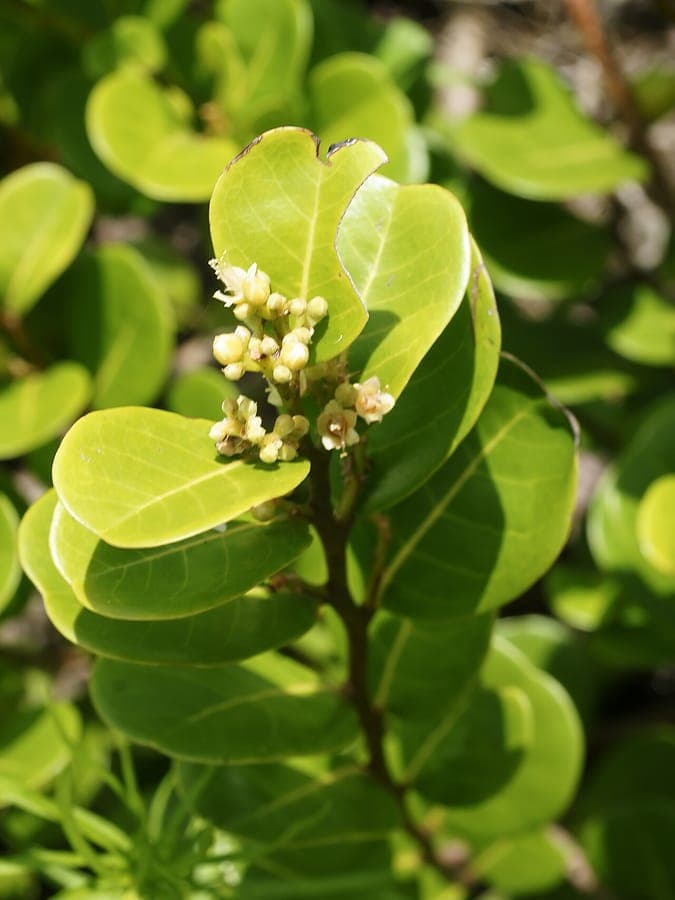
Hans Hillewaert / CC BY-SA 3.0, via Wikimedia Commons
Chrysobalanus icaco: complete guide
Chrysobalanus icaco
¿Quieres ver Chrysobalanus icaco: complete guide en tu jardín?
1 minuto, sin tarjeta de crédito
Overview
Chryssobalanus icaco, commonly known as coco plum or icaco, is a tropical fruit tree originating from southeastern America and West Africa. This medium-sized tree produces delicious, nutty fruits that have been appreciated by indigenous populations for centuries. The tree is also cultivated for its ornamental value.
In Europe, Chrysobalanus icaco can only be grown in very warm gardens or conservatories. The tree performs well in pots. With proper care, this tree will provide years of exotic fruit.
Appearance and bloom
Chryssobalanus icaco grows to a height of 2-5 metres with a compact, rounded crown. The leaves are small, leathery, and dark green in colour. They grow alternately on the branches. The leaves have a fine structure and are highly decorative.
The flowers are small, white or cream, and grow in umbel-like clusters. They appear mainly in early spring. The flowers have a pleasant aroma. After flowering, small, oval fruits form that turn white, yellow, red or dark purple at maturity. The fruits are approximately 2-3 cm long.
Ideal location
Chryssobalanus icaco grows best in full sun to partial shade. Ensure the tree receives at least 4-6 hours of direct sunlight daily. In very warm climates, some afternoon shade can be useful.
The tree grows better in warmth and humidity. In temperate climates, this tree must be kept in a warm greenhouse or conservatory. Ensure temperatures never drop below 10 degrees Celsius.
Soil
Chryssobalanus icaco grows in well-drained, nutrient-rich soil. A mixture of garden soil, compost and coconut coir works well. The pH should be between 5.5 and 7.0. Ensure the soil is moisture-retentive but not waterlogged.
Diseño gratis
¿Quieres ver Chrysobalanus icaco: complete guide en tu jardín? Crea un diseño gratis ahora.
Watering
Chryssobalanus icaco is quite a water lover during the growing season. Ensure the soil remains moist, especially during summer. Water regularly. In winter you can reduce watering. Ensure moisture levels remain consistently high.
Pruning
Chryssobalanus icaco requires minimal pruning. Remove dead or damaged branches whenever you notice them. You can slightly control the tree's shape by light pruning in early spring. Harvesting ripe fruits encourages more flowering.
Maintenance calendar
January-March: Lighter maintenance. Slightly less water. April-May: Growing season begins. More water and feeding. June-July: Intensive growth period. Regular feeding. August-September: Fruiting period. Regular watering. October-November: Reduce feeding. Prepare for winter. December: Minimal maintenance.
Winter hardiness
Chryssobalanus icaco is not winter hardy in temperate climates. The tree can only grow outdoors in very warm, humid regions. In most European areas, the tree must be overwintered in a warm greenhouse or conservatory. Ensure temperatures never drop below 10-15 degrees Celsius.
Companion plants
Mango trees, avocado trees, passionflowers, bromeliads and ginger plants thrive in the same warm, humid conditions.
Closing
Chryssobalanus icaco is a fascinating tropical fruit tree for exotic plant lovers. Although this tree can only grow outdoors in very warm conditions, cultivating it in pots as a greenhouse plant is a promising experience. The attractive flowers and delicious, nutty fruits make this a special addition. Find more information at gardenworld.app. Specialist tropical plant nurseries sometimes have young plants available.
¿Quieres ver Chrysobalanus icaco: complete guide en tu jardín? Crea un diseño gratis ahora.
Sube una foto, elige un estilo y obtén un diseño fotorrealista con lista de plantas en menos de un minuto.
Más de 10.000 jardines diseñados
Sin tarjeta de crédito


Plantas similares
Acer pycnanthum: complete guide
Acer pycnanthum
Acer pycnanthum, the Japanese swamp maple, is a fast-growing tree with early red flowers and brilliant autumn color, ideal for damp garden settings.
Freeman maple: complete guide
Acer × freemanii
Everything about the Freeman maple (Acer x freemanii): a fast-growing shade tree with spectacular autumn colour for large gardens.
Silver vine: complete guide
Actinidia polygama
Discover silver vine (Actinidia polygama): a hardy climbing plant with silvery foliage, loved by gardeners and cats alike.