
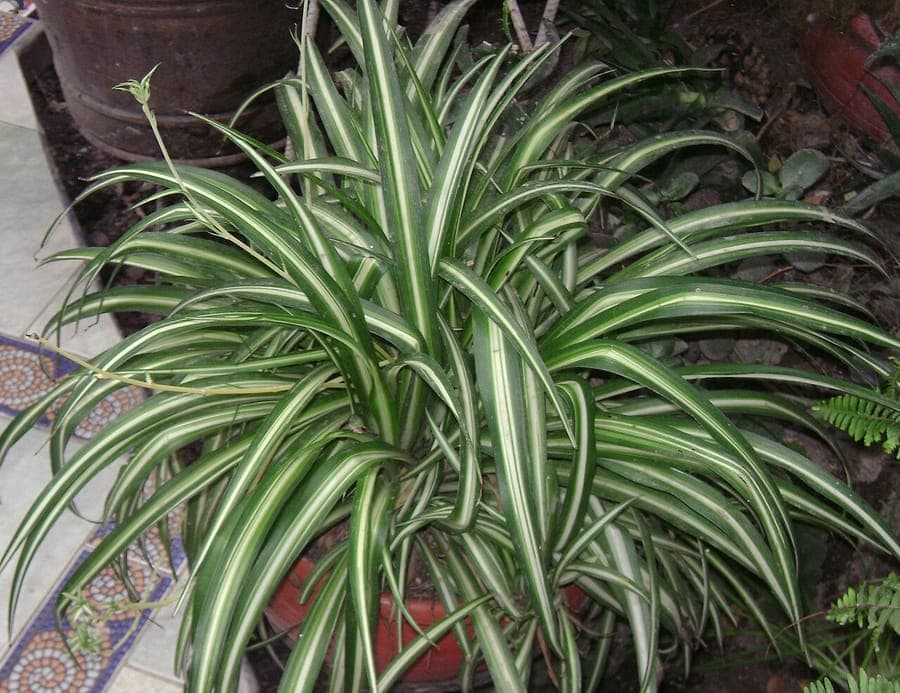
Hierbabuena_0611.JPG: Dtarazona derivative work: Peter coxhead (talk) / Public domain, via Wikimedia Commons
Chlorophytum comosum: complete guide
Chlorophytum comosum
¿Quieres ver Chlorophytum comosum: complete guide en tu jardín?
1 minuto, sin tarjeta de crédito
Overview
Chlorophytum comosum, commonly called spider plant or ribbon plant, is one of the most popular and versatile houseplants worldwide. This plant originates from Africa and is celebrated for its elegant, cascading foliage and particularly the numerous baby plants (runners) that dangle from mature specimens. The spider plant is remarkably easy to maintain and extraordinarily forgiving.
The plant possesses a special characteristic: it effectively purifies air and helps remove harmful household substances. This makes Chlorophytum comosum not only beautiful but also practically ideal for living spaces, offices, and even bedrooms.
Appearance and Blooms
Chlorophytum comosum reaches heights of 30 to 60 centimeters in indoor culture, including cascading foliage. The plant forms dense clumps of narrow, linear leaves that grow long and arch gracefully. The soft, light-green coloration is characteristic, though many cultivars display yellow or white striped varieties.
Blooming occurs during summer and is characterized by small, inconspicuous white flowers. Far more interesting are the runners that develop after flowering. These delicate, decorative stems hang elegantly downward and carry small plantlets (pups) that quickly develop roots.
Ideal Location
Chlorophytum comosum thrives in indirect, diffuse light. Do not position this plant in direct sunlight, as it can cause leaf scorch. A spot several meters from a window is ideal. The plant can also grow under fluorescent lighting, making it suitable for offices lacking substantial window space.
Protect the plant from direct heat from radiators or fans. Dry warm air can cause brown leaf tips. A position in a bright hallway or near softly-lit window is perfect.
Soil and Potting
Chlorophytum comosum thrives in standard potting soil available at any garden center. The plant makes no special demands regarding soil composition. A mixture of potting soil and perlite improves drainage and prevents moisture buildup.
Repot the spider plant annually into a slightly larger container. This encourages growth and provides additional root development space. Always use pots with drainage holes at the base. This is essential for preventing root problems.
Watering
Chlorophytum comosum prefers consistently moist but not waterlogged soil. Water when the top soil layer feels dry, typically once or twice weekly in summer. During winter, reduce watering frequency accordingly.
Be especially careful about water quality. Most tap water contains fluoride and chlorine that cause brown leaf tips. Use distilled water or collected rainwater preferably. Let tap water sit overnight so chlorine can dissipate.
Diseño gratis
¿Quieres ver Chlorophytum comosum: complete guide en tu jardín? Crea un diseño gratis ahora.
Feeding and Fertilization
Provide balanced liquid fertilizer every two weeks during the growing season (April through September). Use a balanced, water-soluble houseplant fertilizer. During winter, fertilization can be completely discontinued.
Avoid over-fertilizing, as this causes salt buildup that causes brown leaf tips. A lower dose applied frequently is better than high doses applied infrequently. When in doubt: under-fertilize rather than over-fertilize.
Propagating Plantlets
One of the greatest advantages of Chlorophytum comosum is how easily new plants develop. The runners dangling from mature plants carry small rosettes with roots already forming. Cut these off and place them in water or light potting soil.
The small plantlets can remain in water until slightly larger or be potted directly in soil. Position them in a warm, bright location and keep soil moist. Within weeks, they develop strong roots and begin vigorous growth.
Maintenance and Cleaning
Regularly remove withered leaves and dead tips to keep the plant neat. Yellow or brown leaves can be gently removed. This also stimulates new growth.
Spider plant leaves can become dusty. Gently wipe them clean with a damp cloth every two weeks. This helps the plant breathe better and improves appearance. Avoid leaf shine products, as they can damage the plant.
Common Mistakes
Brown or pink leaf tips indicate water quality issues or excessive fertilization. Improve water quality or halve fertilizer doses. Yellow leaves may indicate water stagnation: improve drainage. Slow growth usually suggests insufficient feeding during summer or insufficient light.
Many spider plants experience spider mite problems in dry, warm environments. Increase humidity by misting regularly or placing the pot on a tray with water and pebbles.
Special Properties
Chlorophytum comosum effectively removes xylene, formaldehyde, and carbon monoxide from indoor air. Scientific research demonstrates that spider plants significantly contribute to air purification in enclosed spaces. This makes the plant ideal for bedrooms, offices, and living rooms.
The plant is also completely non-toxic to pets. Cats and dogs can consume the plant without harm, though the plant may become somewhat damaged.
Closing Tips
Chlorophytum comosum is the perfect plant for beginners and busy people. With minimal maintenance, this plant develops into a beautiful, graceful specimen. Propagate new plantlets regularly and gift them to friends and family.
Available from all major retailers and garden centers. Consult gardenworld.app for additional plant guidance and interior designs. gardenworld.app offers comprehensive guides for successful indoor plant cultivation.
¿Quieres ver Chlorophytum comosum: complete guide en tu jardín? Crea un diseño gratis ahora.
Sube una foto, elige un estilo y obtén un diseño fotorrealista con lista de plantas en menos de un minuto.
Más de 10.000 jardines diseñados
Sin tarjeta de crédito


Plantas similares
Narrow-leaved dracaena: complete guide
Dracaena angustifolia
Everything about Dracaena angustifolia - the narrow-leaved dracaena: location, care, overwintering and use as a houseplant or patio plant.
Chaparral yucca: complete guide to Hesperoyucca whipplei
Hesperoyucca whipplei
Hesperoyucca whipplei (Our Lord's candle) is a dramatic rosette-forming plant from California that produces a towering flower spike, ideal for dry and gravel gardens.
False lily-of-the-valley: complete guide
Maianthemum dilatatum
Everything about Maianthemum dilatatum, the false lily-of-the-valley. Care, shade location, propagation and garden combinations for this popular shade ground cover.