
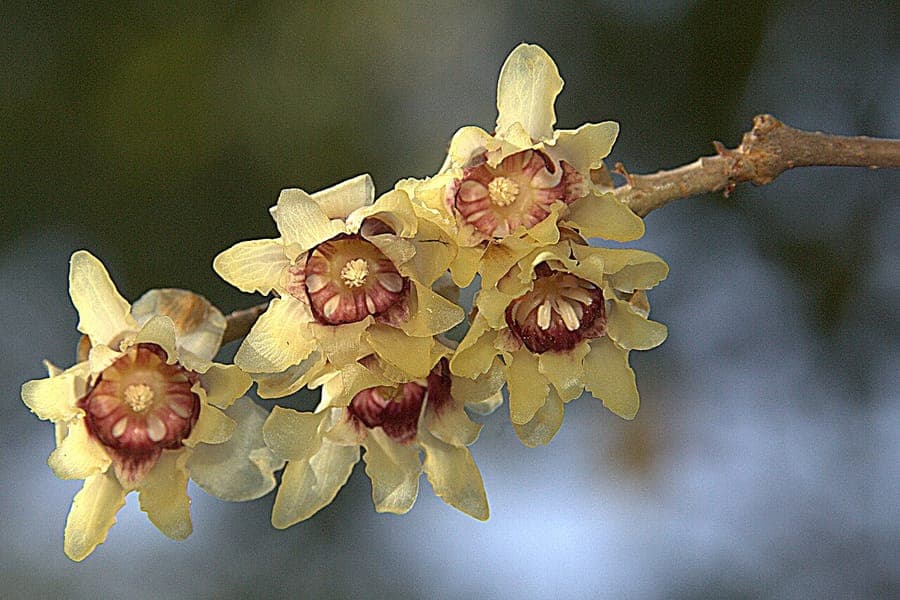
M a n u e l from Valdemoro, Spain / CC BY 2.0, via Wikimedia Commons
Chimonanthus praecox: complete guide
Chimonanthus praecox
¿Quieres ver Chimonanthus praecox: complete guide en tu jardín?
1 minuto, sin tarjeta de crédito
Overview
Chimonanthus praecox, commonly called wintersweet or Japanese allspice, is one of the few shrubs flowering during the deepest winter. This Chinese native stands out for its intoxicatingly fragrant yellow flowers that emerge from December through March, at a time when most gardens sleep.
Appearance and bloom
Winterwsweet develops as a semi-deciduous shrub reaching 2 to 4 meters in height and width. Small, powerfully fragrant yellow flowers with purple centers appear on bare branches throughout winter. The perfume carries strongly even in frigid conditions. After flowering, green summer foliage emerges but proves unremarkable compared to the winter display.
Ideal location
Select a sunny position, preferably against a warm south-facing wall where the plant receives extra frost protection. Flower quality declines noticeably in shaded spots. Sheltered locations allow the fragrance to diffuse more effectively and protect delicate flowers from harsh wind damage.
Soil
Chimonanthus praecox thrives in well-draining soil with a pH between 6.5 and 7.5. Heavy clay causes waterlogging problems. Amend with grit and compost to improve both drainage and soil nutrition. This plant proves reasonably unfussy once established in average garden soil.
Diseño gratis
¿Quieres ver Chimonanthus praecox: complete guide en tu jardín? Crea un diseño gratis ahora.
Watering
Once established, this shrub shows decent drought tolerance. Young plants require regular watering until well-rooted (approximately 1 to 2 years). After establishment, restrict watering to dry periods. Supplemental water during very dry summers can improve the following winter's bloom.
Pruning
Minimal pruning suits this plant best. After flowering, remove excess branches if needed. Avoid heavy cutting as this reduces the following winter's floral display. Maintain natural form unless structural improvement is desired.
Maintenance calendar
Winter: Enjoy fragrant blooms and cut flowers for indoor arrangements. Spring: Remove dead branches after frost period ends. Summer: Water regularly if rainfall is limited. Autumn: Minimal intervention needed.
Winter hardiness
Chimonanthus praecox survives to approximately -15 degrees Celsius in sheltered positions. In very cold regions, a south-facing wall proves essential for winter survival. Young plants may suffer damage in severe winters.
Companion plants
Pair with other winter bloomers such as Viburnum fragrans, Mahonia, or hellebores. The fragrance beautifully complements other winter flowers. Low-growing evergreens provide ground-level visual interest and shelter.
Closing
Chimonanthus praecox adds incomparable fragrance to winter gardens. Early blooms offer hope and beauty during cold months. Available at quality retailers. Discover more winter-flowering plants on gardenworld.app for design inspiration.
¿Quieres ver Chimonanthus praecox: complete guide en tu jardín? Crea un diseño gratis ahora.
Sube una foto, elige un estilo y obtén un diseño fotorrealista con lista de plantas en menos de un minuto.
Más de 10.000 jardines diseñados
Sin tarjeta de crédito


Plantas similares
Acer pycnanthum: complete guide
Acer pycnanthum
Acer pycnanthum, the Japanese swamp maple, is a fast-growing tree with early red flowers and brilliant autumn color, ideal for damp garden settings.
Freeman maple: complete guide
Acer × freemanii
Everything about the Freeman maple (Acer x freemanii): a fast-growing shade tree with spectacular autumn colour for large gardens.
Silver vine: complete guide
Actinidia polygama
Discover silver vine (Actinidia polygama): a hardy climbing plant with silvery foliage, loved by gardeners and cats alike.