
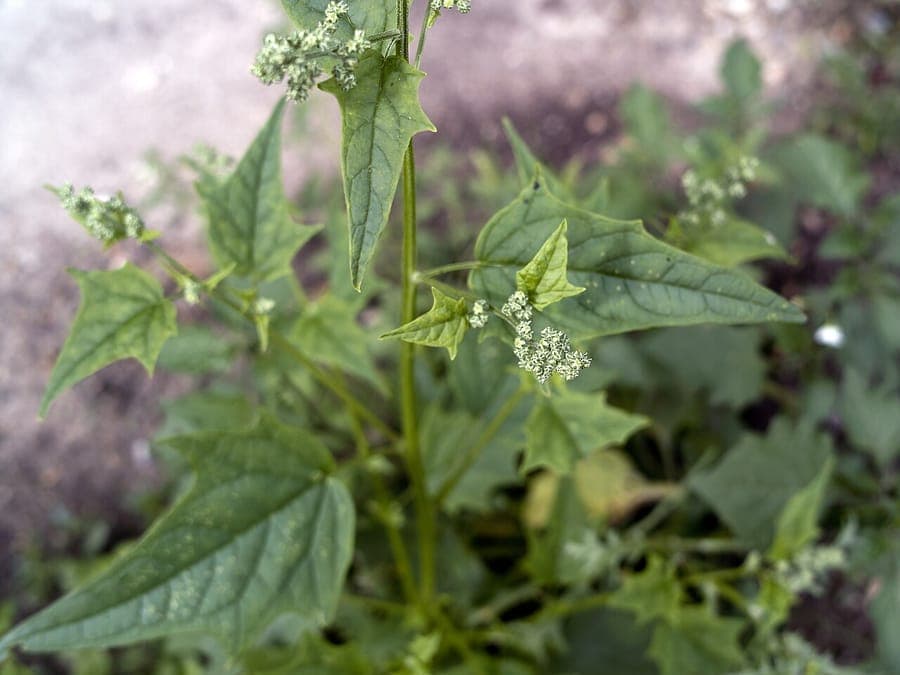
AudreyMuratet / CC BY-SA 4.0, via Wikimedia Commons
Chenopodiastrum hybridum: complete guide
Chenopodiastrum hybridum
¿Quieres ver Chenopodiastrum hybridum: complete guide en tu jardín?
1 minuto, sin tarjeta de crédito
Overview
Chenopodiastrum hybridum, commonly known as maple-leaved goosefoot, is a striking annual herb from the Amaranthaceae family (formerly Chenopodiaceae). This cosmopolitan plant spreads from Europe to Japan and thrives in gardens, wastelands, and grasslands. With its distinctive maple-like leaves and modest green flower spikes, it's an interesting herb with ecological potential.
Appearance & Bloom Cycle
This annual reaches 30–100 cm in height, depending on growing conditions. The leaves are characteristically three-lobed to maple-shaped, green, and smooth. The stems are red or green with subtle stripes. The flowers are tiny, greenish, and appear in dense, upright spikes from July to October. After blooming, small seeds form within leaf-like bracts.
Ideal Location
Chenopodiastrum hybridum grows almost anywhere but thrives in full sun to partial shade. It tolerates contaminated soils and rudeeral (wasteland) spots where other plants struggle. Plant sites along paths, in containers, and wild corners are ideal. This plant feels at home in open gardens where it can self-seed.
Soil Requirements
This plant is unfussy - it grows on virtually all soils from sand to clay. It prefers neutral to slightly alkaline soil (pH 6.0–8.0) but tolerates acidic ground. Poor soils are no problem; it grows independently in lean soils. Drainage is preferred but not critical.
Watering
Minimal water guidance needed - once established, it tolerates drought well. Water young plants regularly until rooted. For optimal growth and foliage development, water regularly during dry spells. Excessive water can lead to leaf yellowing. Quick-draining soils require more water than heavy clay.
Diseño gratis
¿Quieres ver Chenopodiastrum hybridum: complete guide en tu jardín? Crea un diseño gratis ahora.
Pruning
No pruning needed - this is an annual plant that naturally completes its cycle. Remove the plant at season's end when it dies back. If you want to prevent self-seeding: pull plants before they set seed. Otherwise, leave some plants standing to allow natural seed dispersal.
Maintenance Calendar
- April–June: Sow seed directly or allow natural seedlings to grow
- July–September: Water during dry spells, monitor for pests
- October: Seed spikes ripen, leave for birds and natural seed production
- November–March: Plant dead, prepare for next season
Winter Hardiness
Not winter-hardy - this is an annual plant that cannot survive frost. It grows only during the growing season from April to October. Seed can survive cold winters outdoors to germinate next spring. Perfect plant for seasonal rotation in gardens.
Companion Plants
Maple-leaved goosefoot works well with other annual herbs and wild plants. Plant alongside Echinacea purpurea (coneflower) and Cosmos for summer blooms. For texture contrast: add Panicum miliaceum (proso millet) or Amaranthus caudatus. Natural seed-catchers like Zinnia elegans combine beautifully.
Closing
Maple-leaved goosefoot is an unusual but beneficial addition to ecological gardens. With its minimal maintenance, unobtrusive presence, and bird-food value, it offers seasonal interest. Discover more on gardenworld.app for inspiration on wild, easy-growing plants that add biodiversity. For more garden ideas: visit gardenworld.app.
¿Quieres ver Chenopodiastrum hybridum: complete guide en tu jardín? Crea un diseño gratis ahora.
Sube una foto, elige un estilo y obtén un diseño fotorrealista con lista de plantas en menos de un minuto.
Más de 10.000 jardines diseñados
Sin tarjeta de crédito


Plantas similares
Bassia laniflora (woolly summer-cypress): complete guide
Bassia laniflora
Full guide to Bassia laniflora: origin, appearance, ideal location, soil, watering and care for this drought-tolerant annual.
Suaeda spicata: complete guide
Suaeda spicata
Everything about Suaeda spicata (spiked seablite): a rare salt-tolerant coastal succulent from the western Mediterranean and Macaronesia.
California amaranth: complete guide
Amaranthus californicus
Full guide to California amaranth (Amaranthus californicus): growing tips, ideal location, soil needs, watering, and garden design ideas.