
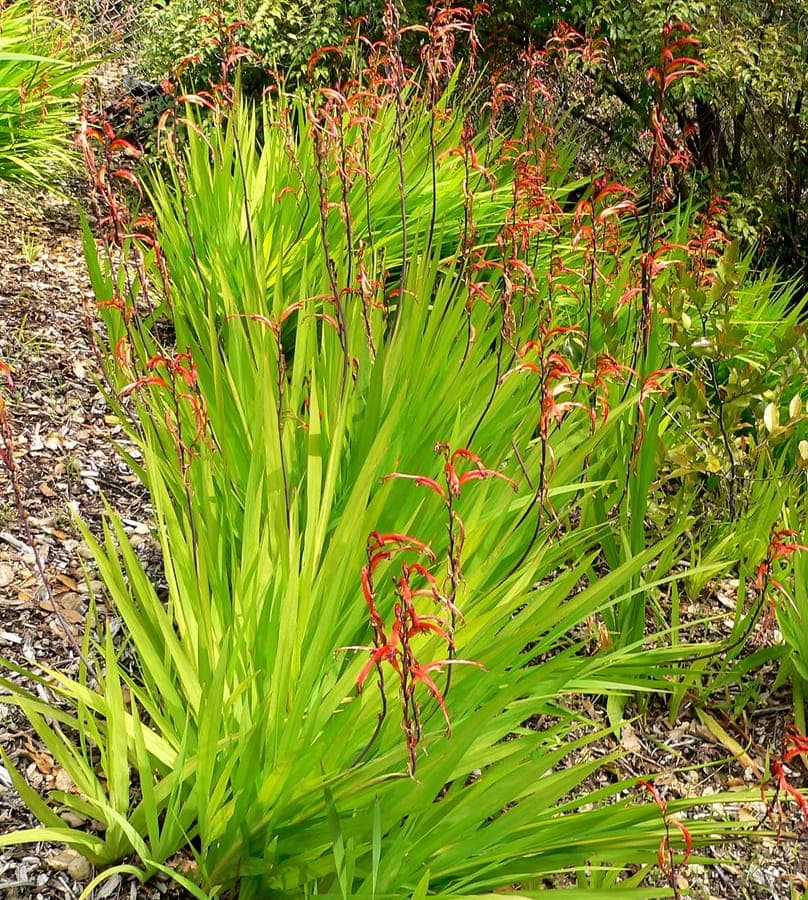
Stan Shebs / CC BY-SA 3.0, via Wikimedia Commons
Chasmanthe floribunda: complete guide
Chasmanthe floribunda
¿Quieres ver Chasmanthe floribunda: complete guide en tu jardín?
1 minuto, sin tarjeta de crédito
Overview
Chasmanthe floribunda, commonly known as the African corn-flag or aunt Eliza, is an impressive flowering plant from the Iridaceae family native to the Cape provinces of South Africa. This plant is valued for its full spikes of vivid flowers that shine in warm orange and red shades. The plant has adapted so well to Mediterranean and subtropical climates that it now flourishes in many South European gardens. The ornamental value of Chasmanthe floribunda is very high, especially when it displays its flower-rich blooming season.
In gardens where it grows, it is a wonderful choice for cut flowers due to the long, elegant flower spikes. The plant is relatively low-maintenance once established and tolerant of various soil types and climate conditions. This makes it suitable for both beginner and experienced gardeners. The ornamental value in the garden is enormous, especially when grown alongside other spring-flowering plants.
Appearance and Bloom
Chasmanthe floribunda is a stately plant that typically reaches heights of 60-100 centimeters, though it can grow taller in ideal conditions. The leaves are elongated and green, resembling grass blades but larger and more robust. They grow in clusters from the base.
The flowers appear on long, sturdy stems that rise above the foliage. The individual flowers are tubular and appear in orange-red color tones. Together, they form dense spikes that reach considerable length. The bloom is prolific and lasts several weeks, usually from early spring to early summer depending on local climate.
After flowering, seed pods form which can become interesting dry decorative elements. The plant dies back in winter and reappears in spring when the underground corms regrow.
Ideal Location
Chasmanthe floribunda thrives best in full sun locations. The plant needs at least 6 hours of direct sunlight daily for good blooming. In areas with extremely hot summers, light afternoon shade can be useful, but this is not essential.
The plant is fairly frost-hardy in temperate climates. In regions with severe winters, protection or container cultivation is necessary. In the Netherlands and Belgium, the plant must either be planted in a warm spot with winter protection or grown in pots for winter protection.
The plant tolerates various wind speeds well and even grows in coastal areas with salt wind. This makes it suitable for seaside gardens and windy locations.
Diseño gratis
¿Quieres ver Chasmanthe floribunda: complete guide en tu jardín? Crea un diseño gratis ahora.
Soil
Chasmanthe floribunda is not very fussy about soil composition, as long as it drains well. Clay soils can become waterlogged, causing corm rot. Sandy soils are ideal.
The plant feels at home in neutral to slightly acidic soils but also accepts alkaline soils well. The main preference is well-draining soil, especially in areas with heavy winter rainfall.
For container cultivation, standard garden soil works well, supplemented with extra sand or perlite for better drainage.
Watering
Chasmanthe floribunda requires abundant water during the growing season, especially when growing in sandy soils that dry out quickly. Watering when the soil feels dry is a good guideline. However, avoid waterlogged situations.
In summer, when the plant goes dormant, watering should be significantly reduced. This helps the corms ripen and prepares them for winter rest.
Regarding rainwater: the plant is very tolerant of rainwater, which is beneficial in areas with frequent rainfall.
Pruning
Pruning is not strictly necessary. As the plant naturally dies back in winter, there is not much to do. However, remove dead leaves and stems when they are completely wilted.
When the flowers fade, you can remove the flower spikes to keep the plant tidy. However, leave at least some flower spikes to set seed.
Maintenance Calendar
Fall/Winter: Plant corms in October-November. Provide light winter protection in cold regions. Spring: Growth increases, regular watering, start feeding. Summer: Bloom peaks, abundant water needed, weekly feeding possible. Late summer: Reduce watering as bloom ends.
Winter Hardiness
Chasmanthe floribunda is moderately frost-hardy. In climate zones where winter temperatures do not drop below -5 degrees Celsius, the plant can remain outdoors with some protection. In harsher winters, corms must be dug up and stored indoors.
In Dutch and Belgian gardens, it is safer to dig up the corms each fall and store them in a cool, dry place. This prevents rot and ensures better blooming the following season.
Companion Planting
Chasmanthe floribunda combines well with:
Other spring bloomers such as tulips and daffodils Lavender for fragrance and texture Roses in subtle colors Gazania for striking bursts of color Salvia in similar tones
This combination creates a colorful and lively front yard.
Conclusion
Chasmanthe floribunda is a distinguished flower that takes any front yard to the next level. With its spikes of vivid flowers and pleasant growing habit, it is a strong choice for gardeners. Plant the corms in the fall, give them full sun and good drainage, and you will enjoy these beautiful bloomers year after year. Visit gardenworld.app to transform your garden into something special.
¿Quieres ver Chasmanthe floribunda: complete guide en tu jardín? Crea un diseño gratis ahora.
Sube una foto, elige un estilo y obtén un diseño fotorrealista con lista de plantas en menos de un minuto.
Más de 10.000 jardines diseñados
Sin tarjeta de crédito


Plantas similares
Iris tingitana: complete guide
Iris tingitana
Iris tingitana, the Morocco iris, is the bulb species behind the Dutch iris: early blue-violet blooms that need a sunny, well-drained position.
Iris hookeri: complete guide
Iris hookeri
Hooker's Iris is a compact North American native plant with blue flowers. Low-growing and moisture-loving water plant.
Siskiyou iris: complete guide
Iris bracteata
Complete guide to Iris bracteata, the Siskiyou iris: location, soil, bloom cycle, watering, pruning and companion plants for this rare Pacific Coast iris.