
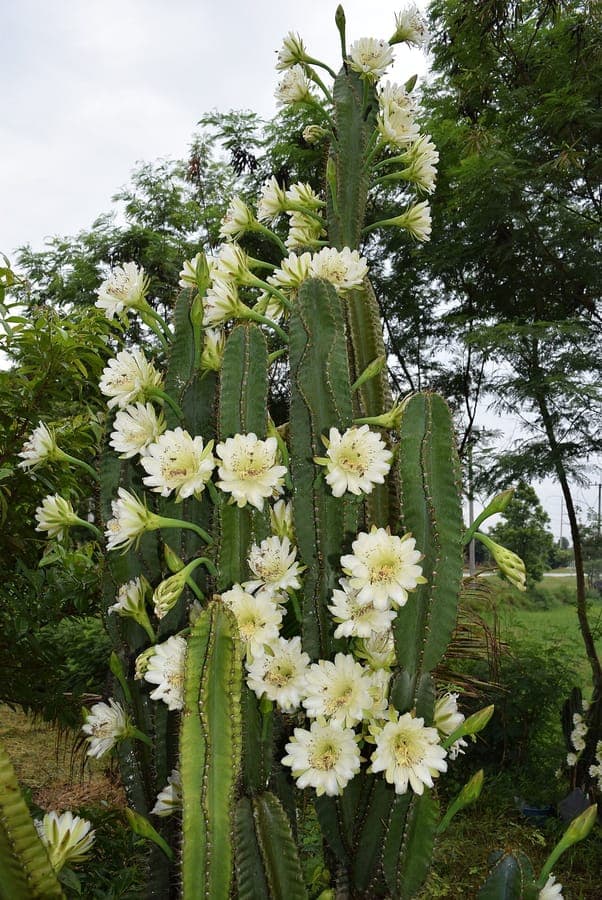
Siam 07 / CC BY-SA 4.0, via Wikimedia Commons
Jamacaru cactus: complete guide
Cereus jamacaru
¿Quieres ver Jamacaru cactus: complete guide en tu jardín?
1 minuto, sin tarjeta de crédito
Overview
Jamacaru cactus (Cereus jamacaru) is a dramatic columnar cactus native to central and eastern Brazil. This impressive plant reaches substantial height and offers structural impact with its green, ribbed stems. In the right climate, this specimen blooms at night with white flowers.
Although tropical in origin, Jamacaru cactus thrives excellently in pots indoors. This plant is ideal for those wanting minimal maintenance with maximum visual impact.
Appearance & Bloom
Jamacaru cactus grows in a stiff, columnar form with thick ribbed tissue. The plant effortlessly reaches 1-2 meters or higher in optimal conditions. The stem is deep green with prominent ribs and small spiny areoles.
The bloom is nocturnal - large, fragrant white flowers open in the evening and close the next morning. This spectacular blooming occurs in mature plants during summer season.
Ideal Location
Jamacaru cactus requires very bright light - a minimum of 6 hours direct daily sunlight is essential. Place the specimen on a sunny window, preferably south or west-facing.
The plant tolerates indoor climatic conditions well, as long as humidity is not extremely high. Well-ventilated spots prevent mold. Maintain temperatures above 10°C during winter.
Soil
Jamacaru cactus requires well-draining cactus soil - sand, perlite or special cactus substrate is ideal. Regular potting soil is not tolerated by this plant; excess moisture leads directly to root rot.
Addition of sand (up to 50%) significantly improves drainage. Use pots with drainage holes. Neutral to slightly alkaline pH is preferred.
Diseño gratis
¿Quieres ver Jamacaru cactus: complete guide en tu jardín? Crea un diseño gratis ahora.
Watering
Jamacaru cactus is very drought-tolerant. Water sparingly - only water when soil is completely dry, which may be monthly.
During the growing season (summer), somewhat more frequent watering is acceptable. Winter requires minimal water - keep almost dry. Overwatering is the primary death cause for cacti.
Pruning
Jamacaru cactus requires no pruning. The natural columnar growth is elegant in itself.
Remove only dead or diseased parts. Some damaged or broken spiny sections can be carefully cut off with sharp, clean tools.
Maintenance Calendar
Spring: Begin watering more frequently, provide growth stimulant. Summer: Water regularly, expect blooming. Fall: Reduce watering. Winter: Keep almost dry, maintain minimum temperature.
This is a low-maintenance plant for most months.
Winter Hardiness
Jamacaru cactus is sensitive to frost and temperatures below 10°C. This plant must overwinter indoors in cold climates.
In very warm regions (zone 10+) this specimen can stay outside, provided good drainage is ensured. Protection from rain during winter is essential.
Companion Plants
Plant Jamacaru cactus with other drought-loving plants such as succulents (Succulent) or other cacti. This combination creates desert-like ambiance.
Multiple cacti together form a spectacular collection.
Closing
Jamacaru cactus is a statement plant for those daring to want unique form and minimal maintenance. This Brazilian jewel offers generations of sculptural beauty. For gardens or interiors where tropical drama is central, this cactus certainly deserves attention on gardenworld.app.
¿Quieres ver Jamacaru cactus: complete guide en tu jardín? Crea un diseño gratis ahora.
Sube una foto, elige un estilo y obtén un diseño fotorrealista con lista de plantas en menos de un minuto.
Más de 10.000 jardines diseñados
Sin tarjeta de crédito


Plantas similares
Plains prickly pear: complete guide
Opuntia polyacantha
All about plains prickly pear cactus: hardiness, soil, placement and care. One of the most cold-tolerant cacti for temperate gardens.
Saguaro: complete guide
Carnegiea gigantea
Everything about growing saguaro cactus: container care, watering, overwintering, and companion plants for this iconic desert giant.
Cylindropuntia imbricata: complete guide
Cylindropuntia imbricata
The Tree Cholla offers distinctive segmented stems and vibrant red flowers. A unique ornamental succulent perfect for sunny, dry gardens and large containers.