
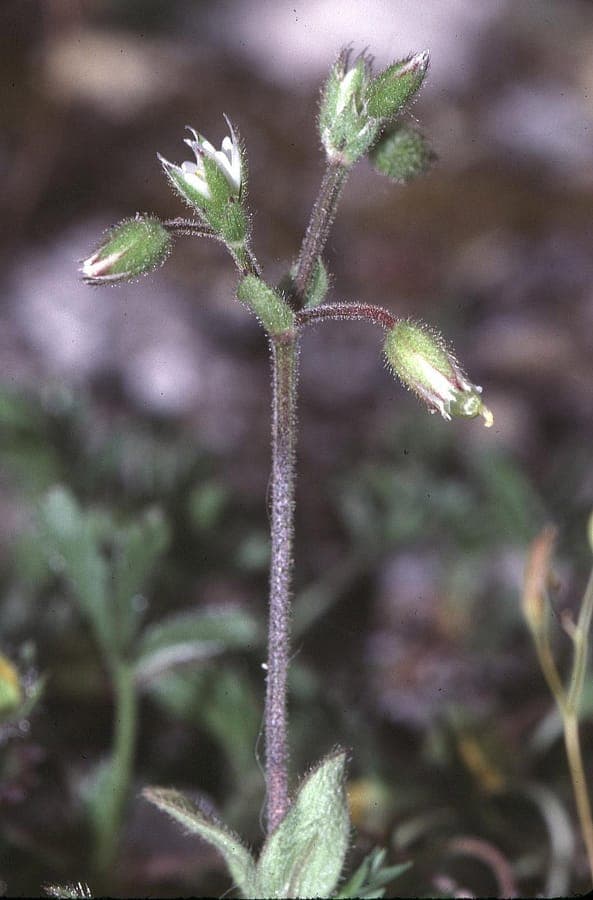
Fornax / Public domain, via Wikimedia Commons
European chickweed: complete guide
Cerastium pumilum
¿Quieres ver European chickweed: complete guide en tu jardín?
1 minuto, sin tarjeta de crédito
Overview
Cerastium pumilum, commonly known as European chickweed, is a resilient, low-growing plant that thrives in rocky, dry conditions. Often overlooked, this unassuming species brings subtle charm to alpine gardens, rockeries, and crevices in paving. Native across much of Europe and Western Asia, it's adapted to poor soils and intense sun, making it a reliable choice for low-maintenance landscapes.
Though sometimes dismissed as a weed, its delicate white flowers and compact form make it a standout in naturalistic designs. For gardeners aiming for a wildflower aesthetic, European chickweed fits perfectly. On gardenworld.app, you can create a garden plan that incorporates this plant into dry, sun-baked areas where few others survive.
Appearance & bloom cycle
European chickweed forms small, mat-like clumps no taller than 15 cm. The foliage is narrow, grey-green, and covered in fine hairs, giving it a soft, silvery appearance. From May to July, it produces tiny white flowers, each about 1 cm across, with five deeply notched petals. The blooms appear in loose cymes and have a light, airy quality that contrasts beautifully with bolder plants.
It's typically annual or short-lived biennial, reseeding readily in suitable conditions. In milder climates, it may behave as a biennial, overwintering as a small rosette. Its self-seeding habit means it can pop up in cracks and gravel paths year after year, adding spontaneity to garden design.
Ideal location
This plant thrives in full sun, requiring at least 6 hours of direct light daily. It excels in rock gardens, dry stone walls, gravel beds, and crevices between pavers. Light shade is tolerable, but dense shade results in leggy growth and reduced flowering.
In UK and northern European gardens, position it on south- or west-facing slopes where drainage is optimal. It's ideal for xeriscaping or urban gardens with limited irrigation. Using gardenworld.app, you can experiment with digital layouts that highlight its role in drought-prone areas.
Soil requirements
European chickweed prefers well-drained, lean soils. Sandy, gravelly, or stony substrates are ideal. It tolerates poor fertility and pH levels from 6.0 to 7.5. Avoid heavy clay or water-retentive soils, as these lead to root rot, especially in winter.
If your garden has compacted soil, improve drainage by mixing in sharp sand or grit. A raised bed or shallow mound helps mimic its natural habitat. These adjustments are easy to visualise with a 3D garden planner like the one on gardenworld.app.
Diseño gratis
¿Quieres ver European chickweed: complete guide en tu jardín? Crea un diseño gratis ahora.
Watering
Once established, Cerastium pumilum is highly drought-tolerant. Young plants need occasional watering during their first few months, particularly in dry springs. Mature plants can survive extended dry spells with no supplemental irrigation.
Water only when the top 2–3 cm of soil is dry. Deep, infrequent watering encourages strong root development. Avoid overhead irrigation, which can promote fungal issues. Instead, water at the base using a can or drip system.
Pruning
Pruning isn't essential, but cutting back spent flower stems after blooming can tidy the plant and limit excessive self-seeding. If you want natural spread, allow some seed heads to remain.
Cut just above the basal foliage to avoid damaging the crown. Use clean, sharp shears to prevent disease transmission. Never shear heavily-this species doesn't regenerate well from old wood.
Maintenance calendar
- January: Dormant; no action needed
- February: Check overwintered rosettes; remove debris
- March: Start seeds indoors or direct-sow if soil temperature rises
- April: Transplant seedlings; ensure full sun and sharp drainage
- May: Bloom begins; apply light compost if soil is poor
- June: Peak flowering; monitor for self-seeding
- July: Flowering ends; collect seeds or let them scatter
- August: Thin seedlings or transplant volunteers
- September: Allow some plants to set seed for next year
- October: Minimal care; remove dead foliage
- November: No action unless wet conditions threaten
- December: Dormant; protect from waterlogging
Winter hardiness
European chickweed is best suited to USDA zones 6–8. In colder areas, it rarely survives harsh winters, behaving as an annual. In milder regions, it may persist as a biennial. The key threat is wet soil, not cold-ensure excellent drainage to increase survival chances.
Mulch lightly with gravel or grit in winter to prevent crown rot. Avoid organic mulches that retain moisture.
Companion plants
Pair Cerastium pumilum with other drought-tolerant species like Sedum spp., Thymus praecox, or Sempervivum. These share similar water and soil needs, simplifying maintenance. It also works well with low grasses like Festuca ovina or Helictotrichon sempervirens.
Avoid aggressive spreaders or plants that create deep shade. Good companions enhance the airy texture of chickweed while respecting its low stature.
Closing
European chickweed is a quiet achiever in the garden. Its resilience, minimal needs, and fine texture make it ideal for modern, ecological planting schemes. Find it at garden centres across the UK or propagate from seed. With the right conditions, it becomes a dependable feature in sunny, dry spots. For design inspiration, visit gardenworld.app to explore how this plant can elevate your outdoor space.
¿Quieres ver European chickweed: complete guide en tu jardín? Crea un diseño gratis ahora.
Sube una foto, elige un estilo y obtén un diseño fotorrealista con lista de plantas en menos de un minuto.
Sin tarjeta de crédito


Plantas similares
Dianthus karami: complete guide
Dianthus karami
Dianthus karami is a rare Lebanese mountain pink with fringed pink blooms on limestone cliffs, ideal for rock gardens and troughs.
Sicilian pink: complete guide
Dianthus siculus
Discover Dianthus siculus, an elegant purple bloomer from Sicily. Cultivation, June-September flowering and garden combinations.
Alpine mouse-ear chickweed: complete guide
Cerastium pedunculatum
Full growing guide for Cerastium pedunculatum: ideal location, soil, watering, winter hardiness, and companion plants for rock gardens.