
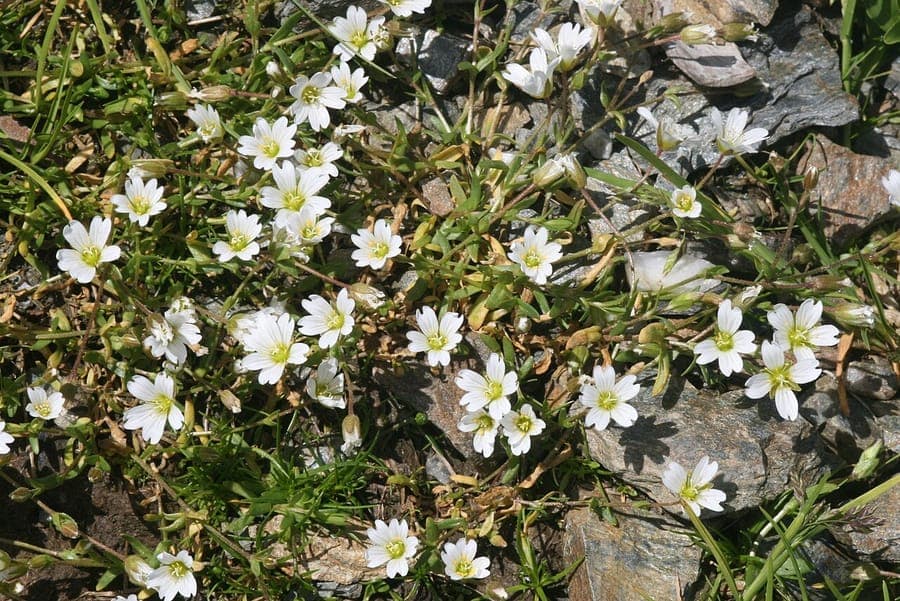
HermannSchachner / CC0, via Wikimedia Commons
Mountain chickweed: complete guide
Cerastium cerastoides
¿Quieres ver Mountain chickweed: complete guide en tu jardín?
1 minuto, sin tarjeta de crédito
Overview
Cerastium cerastoides, commonly called mountain chickweed or starwort mouse-ear, is a charming, low-growing plant from the family Caryophyllaceae. This alpine plant is native to European mountain regions and grows naturally on rocky alpine slopes and meadows.
The plant is perfect for rock gardens, alpine troughs, and stone gardens where a delicate white bloomer with elegant foliage is desired. This article guides you through everything you need to know about successfully growing this fascinating alpine.
Appearance and bloom
Cerastium cerastoides is a low, cushion-forming plant that typically reaches only 5 to 10 cm in height with a spread of 15 to 25 cm. This makes it ideal for small rock gardens and alpine troughs.
The plant produces numerous small, white flowers on thin flower stems during spring and early summer (May to July). The flowers are small but abundant, giving the plant a cloud-like appearance. The leaves are fine, hairy, and grey-green, forming an attractive contrast with the white flowers.
The characteristic hairy covering on both leaves and stems gives the plant a silky appearance, especially when covered with dew drops.
Ideal location
Alpine plants like Cerastium cerastoides thrive in sunny to partially shaded locations. In temperate climates, they benefit from some sunlight, especially in northern regions. In warmer climates, afternoon shade is beneficial.
Provide good air circulation around the plant to avoid fungal problems. Avoid stagnant moist conditions. A location on a raised stone bed or alpine trough is ideal.
Soil
This alpine plant requires extremely well-draining soil. Waterlogging is fatal. Use an alpine soil mix with generous amounts of sand, gravel, and humus, for example 40% sand, 30% gravel, 20% compost, and 10% peat.
Underestimating drainage is the main reason for failure. If planting in heavy clay, provide raised beds or container growing in alpine troughs.
The plant thrives on neutral to slightly acidic soils. Do not add fertilizer; alpine plants prefer lean conditions.
Diseño gratis
¿Quieres ver Mountain chickweed: complete guide en tu jardín? Crea un diseño gratis ahora.
Watering
Although Cerastium cerastoides can be drought-resistant, regular watering is needed during the growing season. However, this is delicate: ensure constantly moist but never wet soil.
In winter, especially in humid climates, extremely dry is better than moist. Minimize winter watering.
In containers, these plants must be monitored more closely. Check soil daily during hot periods.
Pruning
Cerastium cerastoides requires minimal pruning. Remove spent flowers after blooming for compact growth (deadheading).
After flowering, you can lightly cut back for compact form, especially if the plant becomes leggy. Always use clean tools.
Maintenance calendar
- Spring (March-April): Check soil drainage, remove dead foliage, water
- Summer (May-July): Regular watering, deadhead flowers, provide shade during extreme heat
- Autumn (August-October): Reduce watering, prepare for dormancy
- Winter (November-February): Minimal watering, check drainage during rain
Winter hardiness
Cerastium cerastoides is very hardy and grows naturally in mountain areas above 2500 meters. The plant tolerates severe frost conditions.
However, it is not so much frost damage as moisture damage in winter that causes problems. Well-draining soil is essential. Use gravel or sand around the plant for moisture protection.
Companion plants
Cerastium cerastoides combines beautifully in alpine gardens with:
- Saxifraga (saxifrage) - similar niche
- Dianthus alpinus (alpine pink) - matching scale
- Sedum (stonecrop) - for variety
- Sempervivum (houseleek) - succulent group companion
- Armeria maritima (sea thrift) - similar foliage
Closing thoughts
Cerastium cerastoides is a beautiful, delicate choice for alpine and rock gardens. While it requires careful attention, it is a very rewarding plant when you respect its clear preference for drainage.
For gardenworld.app users: this plant is ideal for alpine troughs and raised rock beds in transitional gardens. Combine with other alpines for an authentic mountain meadow aesthetic.
Gardenworld.app offers more alpine plant information. Discover how to integrate this delicate bloomer into your garden design.
Available from specialized alpine plant growers and online suppliers across Europe.
¿Quieres ver Mountain chickweed: complete guide en tu jardín? Crea un diseño gratis ahora.
Sube una foto, elige un estilo y obtén un diseño fotorrealista con lista de plantas en menos de un minuto.
Más de 10.000 jardines diseñados
Sin tarjeta de crédito


Plantas similares
Dianthus karami: complete guide
Dianthus karami
Dianthus karami is a rare Lebanese mountain pink with fringed pink blooms on limestone cliffs, ideal for rock gardens and troughs.
Sicilian pink: complete guide
Dianthus siculus
Discover Dianthus siculus, an elegant purple bloomer from Sicily. Cultivation, June-September flowering and garden combinations.
Alpine mouse-ear chickweed: complete guide
Cerastium pedunculatum
Full growing guide for Cerastium pedunculatum: ideal location, soil, watering, winter hardiness, and companion plants for rock gardens.