
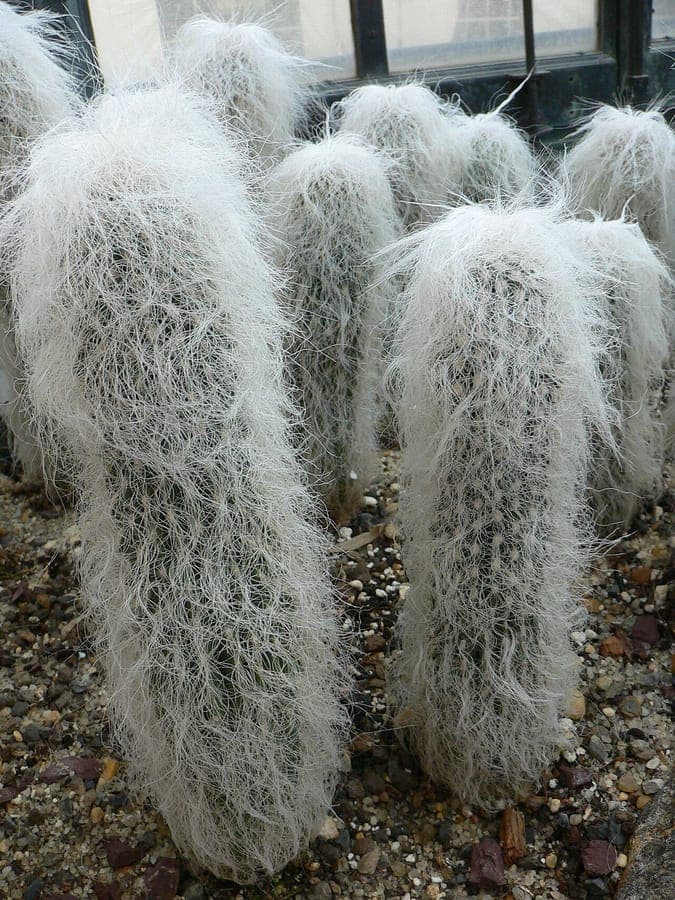
Wikimedia Commons / CC BY-SA 3.0, via Wikimedia Commons
Old Man Cactus: complete guide
Cephalocereus senilis
¿Quieres ver Old Man Cactus: complete guide en tu jardín?
1 minuto, sin tarjeta de crédito
Introduction
The Old Man Cactus (Cephalocereus senilis), also known as Bunny Ears Cactus or Old Man of Mexico, is one of the most unusual and photogenic cacti in the world. Native to northeastern Mexico, this remarkable succulent can reach an impressive height of up to 6 meters in its natural habitat. Its exceptional feature is the long, silky-white hair-like structures that cover its body, giving it a wise, elderly appearance - hence its popular common name.
Appearance and Characteristics
Cephalocereus senilis grows as an upright, columnar cactus with a dark green stem that can exceed 40 centimeters in diameter. What truly distinguishes this cactus are the fine, silvery-white hair-like structures covering its surface. These are actually modified spines that provide protection from intense desert sun in its native habitat. Adult plants occasionally produce small white flowers, though blooming is rare on specimens grown in cultivation and only occurs on very old, large individuals.
Ideal Location
The Old Man Cactus thrives in extremely sunny positions receiving 6-8+ hours of direct sunlight daily. Indoors, a bright, sunny windowsill with south, southeast, or southwest exposure is ideal. This protects against the harshest afternoon sun that can cause leaf scorch. For outdoor cultivation in warm climates, an open, very sunny position is essential for plant health.
Soil
This cactus demands exceptionally well-draining soil. Use standard cactus mix or create your own blend of 50% compost and 50% coarse sand, perlite, or gravel. The plant cannot tolerate waterlogged roots. In containers, ensure pots have drainage holes in the bottom. Sterile, gritty soils with minimal nutrient content are perfectly suitable.
Diseño gratis
¿Quieres ver Old Man Cactus: complete guide en tu jardín? Crea un diseño gratis ahora.
Watering
Watering must be cautious with this cactus. During growing seasons (spring and summer), water only when soil is completely dry, typically every 2-3 weeks. In autumn and winter, reduce watering drastically to minimal or none. The plant requires winter dormancy and excess moisture during this period can be fatal to roots. Remember: this is truly a plant for minimal watering - many people inadvertently kill it with too much care.
Pruning
The Old Man Cactus requires no pruning. It typically grows straight upward without branching. The white hair-like spines can be gently cleaned with a soft brush to remove dust and maintain their glittering appearance. No surgical intervention is usually needed.
Maintenance Calendar
Spring (April-May): Begin feeding with cactus fertilizer once monthly. Summer (June-August): Water freely when soil dries. Autumn (September-October): Gradually reduce watering. Winter (November-March): Minimal watering; plant rests.
Winter Hardiness
The Old Man Cactus is a tropical cactus and does not tolerate frost. It can withstand minimum temperatures around 10°C, but frost-free environments are required year-round. In frost-prone regions, it must be brought indoors during winter. Ideal temperature range is 15-25°C.
Propagation
Propagation occurs via seeds or cuttings. Sowing seeds on cactus soil mix in warmth (20-25°C) can result in new plants, though growth is extremely slow. Cuttings can be carefully removed from the plant and rooted in dry cactus soil.
Common Issues
Mealybugs and spider mites can occur in very dry indoor environments. Clean regularly with neem oil. Root rot from overwatering is the most serious problem and can be fatal. Ensure minimal watering.
Conclusion
The Old Man Cactus is an extraordinarily interesting and challenging houseplant for adventurous growers. Its unexpected appearance and minimal care requirements make it an exciting choice for collectors. Available at specialized cactus nurseries and large garden centres worldwide.
¿Quieres ver Old Man Cactus: complete guide en tu jardín? Crea un diseño gratis ahora.
Sube una foto, elige un estilo y obtén un diseño fotorrealista con lista de plantas en menos de un minuto.
Más de 10.000 jardines diseñados
Sin tarjeta de crédito


Plantas similares
Plains prickly pear: complete guide
Opuntia polyacantha
All about plains prickly pear cactus: hardiness, soil, placement and care. One of the most cold-tolerant cacti for temperate gardens.
Saguaro: complete guide
Carnegiea gigantea
Everything about growing saguaro cactus: container care, watering, overwintering, and companion plants for this iconic desert giant.
Cylindropuntia imbricata: complete guide
Cylindropuntia imbricata
The Tree Cholla offers distinctive segmented stems and vibrant red flowers. A unique ornamental succulent perfect for sunny, dry gardens and large containers.