
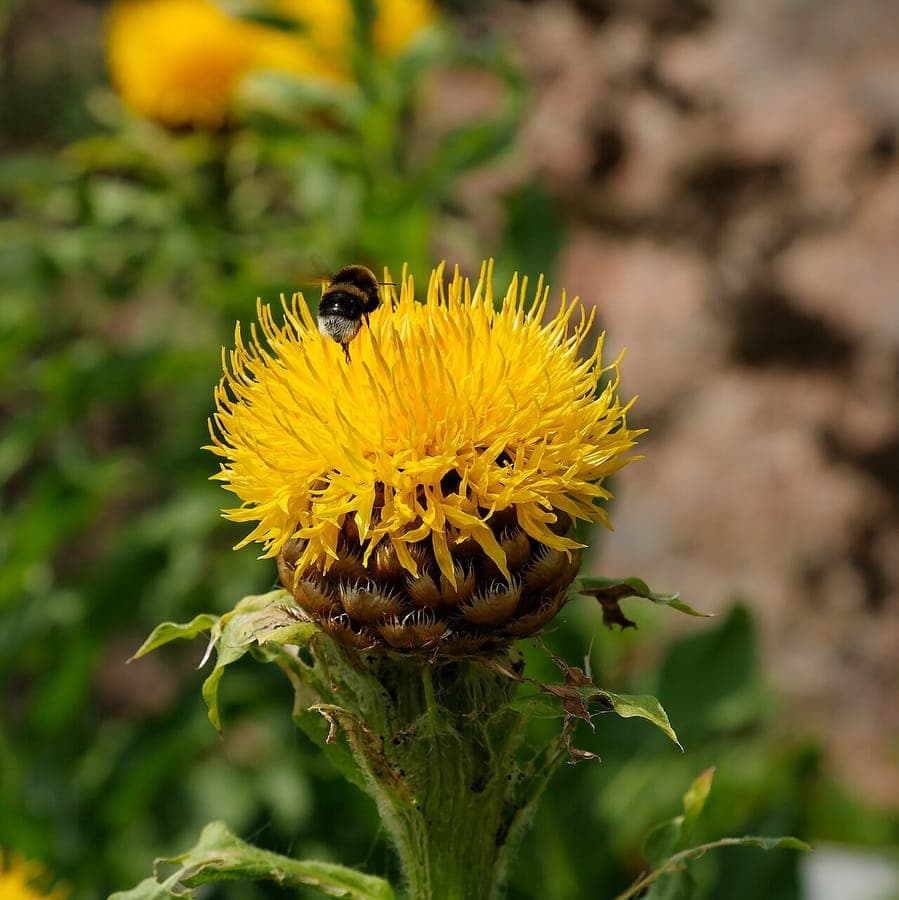
C T Johansson / CC BY 3.0, via Wikimedia Commons
Bighead knapweed: complete guide
Centaurea macrocephala
¿Quieres ver Bighead knapweed: complete guide en tu jardín?
1 minuto, sin tarjeta de crédito
Overview
Centaurea macrocephala, commonly known as bighead knapweed or globe centaurea, is a stunning hardy perennial native to Turkey and Iran. This plant is renowned for its spectacular large, round, yellow flower heads that are very distinctive and exotic. With its robust growth habit and extended bloom time, this plant adds tremendous color and texture to summer and fall gardens.
Bighead knapweed is relatively easy to grow and highly suitable for cut flowers. The plant grows fairly compactly and tolerates many different growing conditions.
Appearance & Bloom
Centaurea macrocephala reaches 60-90 centimeters tall with grayish-green, narrow leaves. The most striking feature is the flowers. The plant bears large, round, yellow flower heads approximately 5 centimeters in diameter.
Each flower head consists of densely packed yellow, thistle-like florets. The flowers have a very stately and sculptural appearance. They are extremely durable and remain beautiful for extended periods, both on the plant and in cut arrangements.
The plant grows upright with strong, grayish stems. The foliage is narrow and grayish-green, creating beautiful contrast with the golden flowers. Bloom time is late summer and fall.
Ideal Location
Centaurea macrocephala grows best in very sunny locations with a minimum of 6 hours of direct sunlight daily. The plant loves heat and full sun. In partial shade, the plant will produce fewer flowers and stretch more toward light.
Protection from extremely strong wind is beneficial, although the plant is reasonably wind-resistant.
Soil
Centaurea macrocephala grows easily in virtually any well-draining soil. The plant tolerates acidic to neutral soil, and can even grow in poorly fed soils. This makes it a very tolerant plant.
In very wet, heavy clay soil, improvement with sand or compost can be helpful. The plant tolerates drought better than wet conditions.
Diseño gratis
¿Quieres ver Bighead knapweed: complete guide en tu jardín? Crea un diseño gratis ahora.
Watering
Once well established, Centaurea macrocephala is very drought-tolerant. Young plants, however, will require regular watering until they are well established.
Water thoroughly but infrequently. Let the soil dry slightly between waterings. In extremely hot, dry seasons, supplemental water may be needed, but moderate watering is usually sufficient.
Avoid excessive moisture and waterlogging, which can cause root problems.
Pruning
Centaurea macrocephala requires minimal pruning. Once mature, the plant grows into an attractive form naturally. Remove dead, damaged, or diseased branches as needed.
Spent flowers can be removed to encourage more blooms (deadheading). This helps the plant save energy and can extend the blooming period.
Maintenance Calendar
Spring: Prepare planting holes; amend or improve poor soil
Summer: Regular watering for young plants; enjoy blooms
Fall: Continued blooming; remove spent plant material
Winter: Minimal maintenance; can be cut back nearly to ground level
Winter Hardiness
Centaurea macrocephala is very hardy and thrives in cold winters down to about -30 degrees Celsius. It is suitable for USDA zones 3-9. The plant will die back and regrow in spring.
In very warm climates (zones 10+), the plant may suffer from excessive heat and humidity. Mulch around plants helps protect roots.
Companion Plants
Centaurea macrocephala pairs well with other hardy perennials. It contrasts beautifully with purple flowers like lavender or salvias. Yellow goldenrod or blanket flowers form nice combinations. Grass-like plants such as feather reed grass provide nice contrast.
Conclusion
Centaurea macrocephala is a beautiful, easy-to-grow perennial with spectacular yellow flowers. It's perfect for those seeking color and texture without much fuss. With its robust growth habit and extended bloom time, this plant deserves a place in every summer garden.
¿Quieres ver Bighead knapweed: complete guide en tu jardín? Crea un diseño gratis ahora.
Sube una foto, elige un estilo y obtén un diseño fotorrealista con lista de plantas en menos de un minuto.
Más de 10.000 jardines diseñados
Sin tarjeta de crédito


Plantas similares
Calendula stellata: complete guide
Calendula stellata
Complete guide to Calendula stellata, the star-flowered marigold from Sicily: location, soil, watering and companion planting tips.
Korean chrysanthemum: complete guide
Chrysanthemum x rubellum
Chrysanthemum x rubellum is a hardy autumn perennial with single pink to copper flowers from August to November. Care and combinations.
Helianthus divaricatus: complete guide
Helianthus divaricatus
Helianthus divaricatus is a North American woodland sunflower with yellow summer blooms, ideal for naturalistic borders and shady edges.