
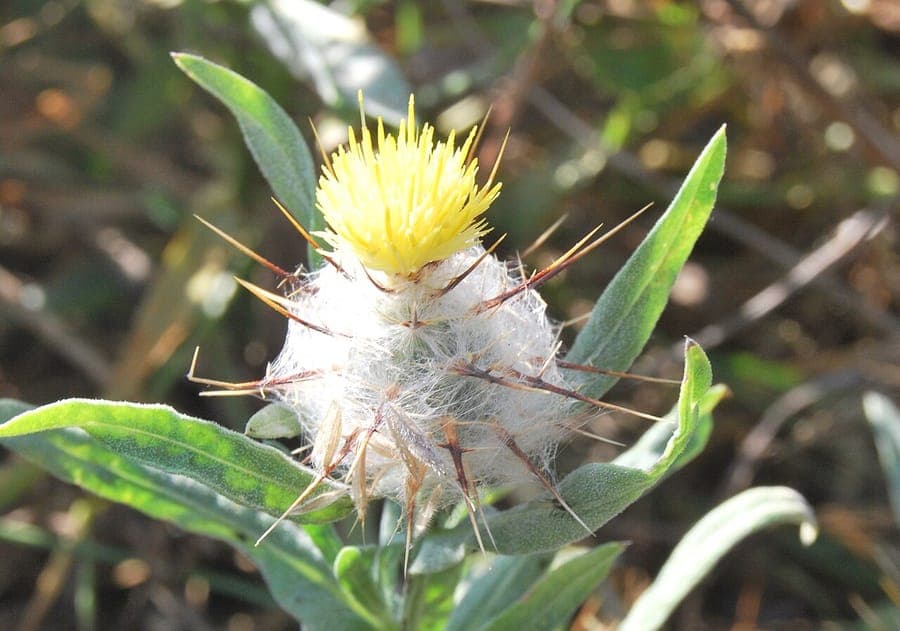
Eusebiol / CC BY-SA 3.0, via Wikimedia Commons
Woolly Star-thistle: complete guide
Centaurea eriophora
¿Quieres ver Woolly Star-thistle: complete guide en tu jardín?
1 minuto, sin tarjeta de crédito
Overview
Woolly Star-thistle (Centaurea eriophora), also known as woolly knapweed, is a charming perennial from the Asteraceae family. This Mediterranean native thrives beautifully in dry, sandy environments. The elegant purple flowers attract pollinators and provide color from spring through summer.
This plant is ideal for those wishing to cultivate drought-tolerant species with minimal maintenance. The flowers make perfect cut flowers and dry well for dried arrangements.
Appearance & Bloom
Woolly Star-thistle grows into a sturdy plant with grayish-green, hairy foliage that is narrow and linear. The plant reaches 30-60 cm height depending on growing conditions.
Blooming occurs from May to August with beautiful purple-pink flower clusters. These are densely packed with small florets and feature characteristic woolly texture. After blooming, seedheads form that attract birds.
Ideal Location
Woolly Star-thistle thrives in warm, sunny spots with a minimum of 6-8 hours of direct daily sunlight. The plant is perfect for heated walls, dry pergolas or open grasslands.
Avoid shady corners - this plant desires full sun for optimal blooming. Windy, open locations are ideal as these promote air circulation and dryness.
Soil
Woolly Star-thistle grows optimally in well-draining, sandy to loamy soils. This plant tolerates poor soils well and requires no rich fertilization.
Ensure excellent drainage as wet roots are problematic. In clay soil, sand addition improves drainage. Neutral to slightly alkaline pH is preferred.
Diseño gratis
¿Quieres ver Woolly Star-thistle: complete guide en tu jardín? Crea un diseño gratis ahora.
Watering
Once established, Woolly Star-thistle requires minimal watering. During the growing season water regularly, but allow soil to dry between waterings.
Once plants reach full height growth, supplementary watering can be largely stopped. Excess moisture leads to root rot and disease problems. In extreme droughts supplement only.
Pruning
Remove spent flower heads regularly to encourage further blooming. This also prevents unwanted self-seeding.
After the blooming season the plant can be cut back to the base to support compact growth next season. Winter pruning is unnecessary in milder climates.
Maintenance Calendar
Spring: Plant seedlings or divide old specimens. Summer: Deadhead regularly, water during heat waves. Fall: Allow some flowers to set seed for bird attraction. Winter: Minimal maintenance; protect in very hard frosts.
This is a low-maintenance plant that thrives largely independently.
Winter Hardiness
Woolly Star-thistle is moderately winter-hardy in temperate zones. In continental climates supplement with mulch around the root collar for extra protection.
In very cold regions this plant tolerates brief freezing but dies at prolonged -15°C. Good drainage significantly increases winter survival.
Companion Plants
Plant Woolly Star-thistle with other dry/sand-loving plants such as sage (Salvia), lavender (Lavandula) and helianthemum (Helianthemum). This combination creates authentic Mediterranean charm.
Layer with grasses such as feather grass (Stipa) for texture contrast.
Closing
Woolly Star-thistle is a premier specimen for gardens where drought and low maintenance are priorities. This Mediterranean classic delivers years of purple color and pollinator-friendliness. For small spaces and dry grassland imitation, this quietly overlooked jewel deserves attention on gardenworld.app.
¿Quieres ver Woolly Star-thistle: complete guide en tu jardín? Crea un diseño gratis ahora.
Sube una foto, elige un estilo y obtén un diseño fotorrealista con lista de plantas en menos de un minuto.
Más de 10.000 jardines diseñados
Sin tarjeta de crédito


Plantas similares
Calendula stellata: complete guide
Calendula stellata
Complete guide to Calendula stellata, the star-flowered marigold from Sicily: location, soil, watering and companion planting tips.
Korean chrysanthemum: complete guide
Chrysanthemum x rubellum
Chrysanthemum x rubellum is a hardy autumn perennial with single pink to copper flowers from August to November. Care and combinations.
Helianthus divaricatus: complete guide
Helianthus divaricatus
Helianthus divaricatus is a North American woodland sunflower with yellow summer blooms, ideal for naturalistic borders and shady edges.