
Philmarin / CC BY-SA 3.0, via Wikimedia Commons
Red star-thistle: complete guide
Centaurea calcitrapa
¿Quieres ver Red star-thistle: complete guide en tu jardín?
1 minuto, sin tarjeta de crédito
Overview
Red star-thistle (Centaurea calcitrapa), also known as purple cockspur or calotrope, is a striking plant from the aster family (Asteraceae). This biennial plant originates in Mediterranean and arid regions of Europe and Asia. The plant is valued primarily for its unusual, spine-surrounded flowerheads with characteristic purple to violet blooms.
The plant is exceptionally drought-tolerant and grows well in lean, chalky soils. This makes it suitable for dry garden sections, sunny borders, and rock gardens. While it can be invasive in certain regions, it remains manageable in temperate gardens under proper care.
Appearance and Bloom Cycle
Red star-thistle is a biennial forming a coarse, fringed-leaf rosette in its first year. In the second year, it grows to 80 to 100 centimeters tall with spreading lateral branches. The stems are purplish-green with hairy texture.
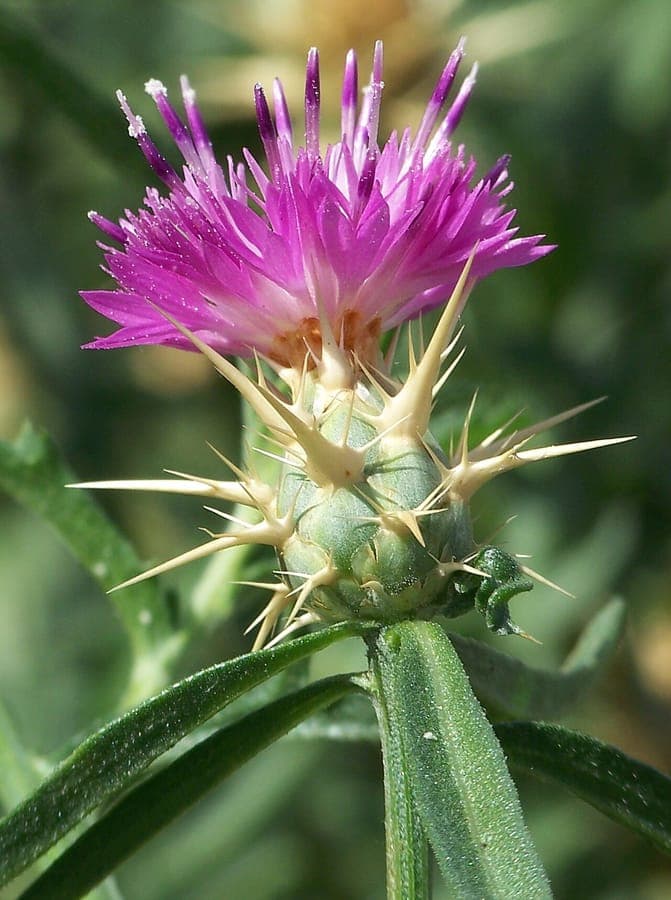
The characteristic flowerheads are surrounded by a crown of long, spiny scales that radiate outward like a star. The actual florets are small and purple to violet in color. The bloom period extends from July through September. After flowering, seeds develop in characteristic, spiny protective covers.
Ideal Location
Red star-thistle grows best in full sun. The plant thrives in light dappled shade but flowers much less prolifically. Plant it in a warm, sheltered location for best results.
The plant is moderately winter-hardy and grows well in temperate climates. It flourishes in most regions, though it may freeze during severe winters.
Soil Requirements
Red star-thistle performs best on dry, lean, chalky to neutral soils. The plant prefers a pH between 6.5 and 7.5. The plant tolerates poor soils and actually flowers better on lean, dry ground than on rich compost.
Avoid heavy manure. Simple sand preparation of the planting hole is usually sufficient.
Diseño gratis
¿Quieres ver Red star-thistle: complete guide en tu jardín? Crea un diseño gratis ahora.
Watering
Red star-thistle is exceptionally drought-tolerant and requires minimal supplemental water once established. After initial planting, water only during prolonged dry periods. Once established, the plant actually drinks less water and flowers more profusely.
Excessive water can cause root rot.
Pruning and Maintenance
Red star-thistle requires minimal pruning. Remove faded flowers to encourage continuous blooming and limit self-seeding. In the second year, you can remove the old leaf rosette if it becomes soiled or damaged.
Wear protective gloves when working with the plant, as the spines are sharp.
Maintenance Calendar
March-April: Sow seed for biennial cycle. May-June (first year): Rosette formation, minimal care needed. June-July (second year): Stem elongation. July-September (second year): Flowering and seed development. October-November: Collect seed.
Winter Hardiness
Red star-thistle is moderately winter-hardy. The plant survives winter in temperate climates, though it may freeze in severe winters. In the first year, the plant forms only a rosette that is very winter-hardy. In the second year, the plant dies after seed maturation.
Young rosettes require no winter protection.
Companion Plants
Red star-thistle grows well alongside other drought-tolerant Mediterranean plants such as lavender, sage, and rosemary. It also pairs well with other thistles and thistle-like plants.
Avoid combining with moisture-loving and shade plants that would compete.
Closing Remarks
Red star-thistle is a striking and highly practical plant for dry, sunny garden sections. With its unusual spine-surrounded flowerheads and beautiful purple blooms, it brings considerable character and texture to borders. For more information on plant care, visit gardenworld.app for detailed advice. Seed is available from seed suppliers. Plant this fascinating thistle for Mediterranean flair. Gardenworld.app is here to help with everything.
¿Quieres ver Red star-thistle: complete guide en tu jardín? Crea un diseño gratis ahora.
Sube una foto, elige un estilo y obtén un diseño fotorrealista con lista de plantas en menos de un minuto.
Más de 10.000 jardines diseñados
Sin tarjeta de crédito


Plantas similares
Calendula stellata: complete guide
Calendula stellata
Complete guide to Calendula stellata, the star-flowered marigold from Sicily: location, soil, watering and companion planting tips.
Korean chrysanthemum: complete guide
Chrysanthemum x rubellum
Chrysanthemum x rubellum is a hardy autumn perennial with single pink to copper flowers from August to November. Care and combinations.
Helianthus divaricatus: complete guide
Helianthus divaricatus
Helianthus divaricatus is a North American woodland sunflower with yellow summer blooms, ideal for naturalistic borders and shady edges.