
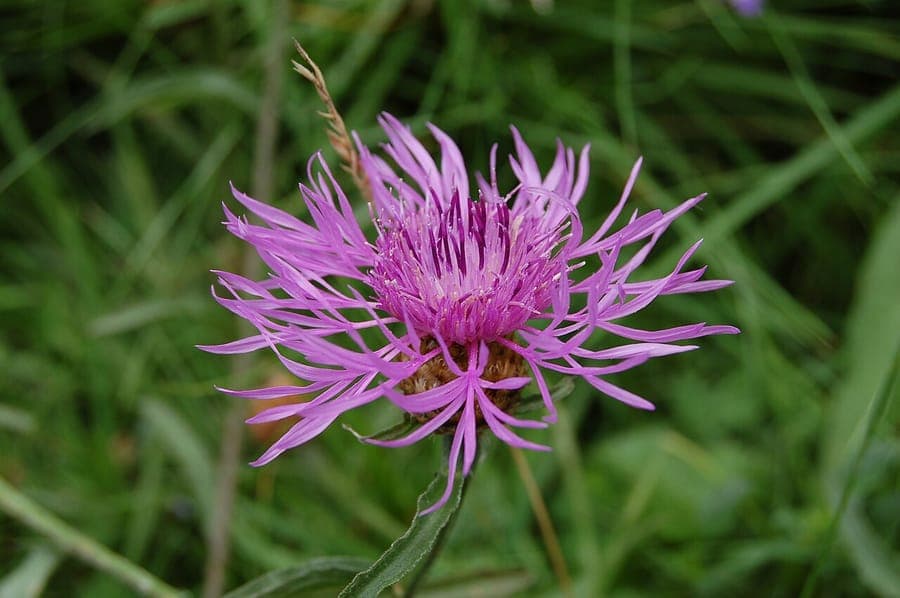
Clément Beckert / CC BY 2.5, via Wikimedia Commons
Rough star-thistle: complete guide
Centaurea aspera
¿Quieres ver Rough star-thistle: complete guide en tu jardín?
1 minuto, sin tarjeta de crédito
Overview
Centaurea aspera, better known as Rough star-thistle or Rough star thistle, is a Mediterranean plant with vigor and character. This plant grows naturally in Western Europe to the southern Mediterranean basin on dry, sunny slopes. It is a unique plant for those wanting Mediterranean flora in their garden. The plant is very drought-tolerant once established and requires minimal care.
Appearance and Bloom
Centaurea aspera is a pleasant shrub of 40-100 centimeters height with grey-green, rough leaves. The leaves are characteristically wavy and have a somewhat rough surface. This gives the plant distinction on sight. The flowers are the true stars: beautiful purple to pink, sturdy flowers on upright branches. The bloom extends from June to September. Each time you remove faded flowers, new ones appear.
Ideal Location
Absolutely choose the sunniest, warmest spot in your garden. South-facing against a wall is ideal. Avoid partial shade. The plant adores heat and full sun. Suitable for dry slopes, rocks, and raised beds. Protection from strong winter wind is beneficial.
Soil Requirements
Centaurea aspera requires very well-draining, preferably somewhat chalky soil. Sandy, chalky soil (pH 7.0-7.5) is perfect. Add plenty of sand and gravel. Organic matter should be limited. The plant tolerates nutrient-poor soil well. Avoid heavy clay.
Watering
Water regularly when establishing. Once established (after 1-2 seasons) very drought-tolerant. Summer watering can be minimal. In winter, almost no water. Absolutely avoid stagnation.
Pruning
Remove faded flowers regularly to encourage blooming. In early spring, remove any frost-damaged branches. In late autumn, light pruning helps maintain compact form.
Diseño gratis
¿Quieres ver Rough star-thistle: complete guide en tu jardín? Crea un diseño gratis ahora.
Maintenance Calendar
Spring: Clean up damaged branches. Summer: Remove faded flowers. Autumn: Light pruning. Winter: No watering, protect from strong wind.
Winter Hardiness
Centaurea aspera is moderately winter-hardy to around minus 10-12 degrees Celsius. In very cold areas, protection may be needed. In temperate ocean climates it is reliable. In continental cold climates it may not survive.
Companion Plants
Combine with other Mediterranean drought-lovers: lavender, rosemary, santolina, and sage. Beautiful together with silver-foliaged plants. Ideal in gravel gardens and Mediterranean-themed gardens. Excellent for warm-climate combinations with olive trees. Create group plantings for dramatic visual impact that rivals any manicured garden.
Propagation and Maintenance
Centaurea aspera can be grown from seed. Sow in March on warmbed. Prick out and pot in May. Plant out in June-July at final location. The plant self-seeds thanks to wind-dispersed fruits. This leads to natural propagation. Seedlings can be transplanted for new plantings. Once established, virtually no maintenance is required beyond deadheading to extend bloom season.
Seasonal Care
During growing season (summer) regularly remove faded flowers. This stimulates continuous blooming. After growing season (late autumn) can be lightly pruned back for shape. During dormancy (winter) virtually no maintenance needed except protection from extreme wind. Spring pruning is not strictly necessary as the plant maintains its own form naturally.
Closing
Centaurea aspera brings authentic Mediterranean feel to your garden with minimal requirements. Perfect for those not wanting to use much water and seeking low-maintenance plants. Local garden centers regularly offer plant material. Discover more garden inspiration on gardenworld.app. Create your Mediterranean dream garden today with gardenworld.app.
¿Quieres ver Rough star-thistle: complete guide en tu jardín? Crea un diseño gratis ahora.
Sube una foto, elige un estilo y obtén un diseño fotorrealista con lista de plantas en menos de un minuto.
Más de 10.000 jardines diseñados
Sin tarjeta de crédito


Plantas similares
Calendula stellata: complete guide
Calendula stellata
Complete guide to Calendula stellata, the star-flowered marigold from Sicily: location, soil, watering and companion planting tips.
Korean chrysanthemum: complete guide
Chrysanthemum x rubellum
Chrysanthemum x rubellum is a hardy autumn perennial with single pink to copper flowers from August to November. Care and combinations.
Helianthus divaricatus: complete guide
Helianthus divaricatus
Helianthus divaricatus is a North American woodland sunflower with yellow summer blooms, ideal for naturalistic borders and shady edges.