
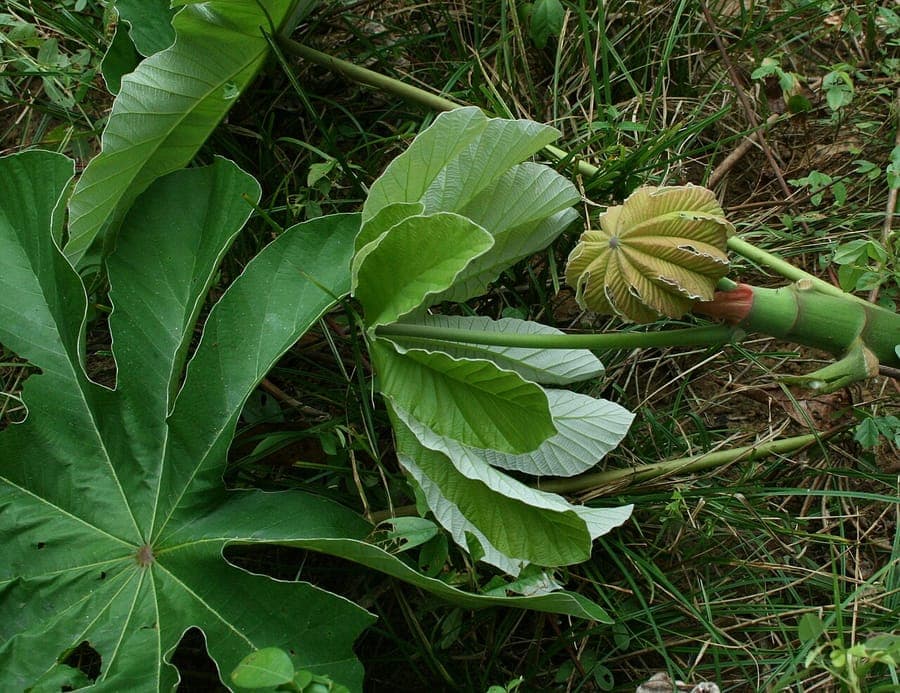
Vojtěch Zavadil / CC BY-SA 3.0, via Wikimedia Commons
Cecropia peltata: complete guide
Cecropia peltata
¿Quieres ver Cecropia peltata: complete guide en tu jardín?
1 minuto, sin tarjeta de crédito
Overview
Cecropia peltata, known as the Trumpet Tree or Cannon Tree, is a fast-growing tropical tree native to Central and South America. This tree is primarily cultivated in tropical and subtropical regions due to its unusually large leaves and rapid growth. Cecropia peltata grows up to 20 meters tall and forms a light, open crown that allows considerable light to pass through to the understory.
Appearance and Leaves
Cecropia peltata immediately stands out due to its enormous, shield-shaped leaves that are green on top and silvery-gray underneath. These leaves can reach up to 60 centimeters in diameter. The stem is hollow and yellow-green in color, which is particularly striking. The tree grows very quickly, especially in favorable climate conditions. During the growing season, the tree can grow up to 2 meters per year.
The small green flowers are not spectacular but produce abundant nectar. After flowering, thick fruits appear that are popular with birds and monkeys.
Ideal Location
This tree needs full sun with at least 6 to 8 hours of direct sunlight daily. Cecropia peltata can only be cultivated in tropical and subtropical areas (minimum 15-18 degrees Celsius year-round). In Northern Europe, this tree is only suitable for greenhouses with well-controlled heat and humidity.
Soil Requirements
Cecropia peltata prefers loose, nutrient-rich soil with good drainage. Both acidic and neutral soil types are suitable. The tree also tolerates relatively infertile soils but grows faster in nutrient-rich soil. Adding compost at planting time helps rapid growth.
Diseño gratis
¿Quieres ver Cecropia peltata: complete guide en tu jardín? Crea un diseño gratis ahora.
Watering
This tree needs plenty of water, especially during the growing season. Provide regular water and ensure the soil remains moist but not waterlogged. In dry seasons, supplemental water is very important. High humidity promotes healthy growth.
Pruning
Cecropia peltata grows quickly and tolerates pruning well. Pruning can be used to control the tree's shape and stimulate a denser crown. Perform pruning work during the growing season. Remove very long, dominant branches to encourage lateral branching.
Maintenance Calendar
Spring to summer: Period of vigorous growth. Provide regular water and fertilization. Mid-summer: Pruning can be performed. Autumn: Slowed growth. Water less frequently. Winter: Growth virtually stops. Provide minimal water.
Winter Hardiness
Cecropia peltata is not winter-hardy and cannot survive in cold climates. The minimum temperature is around 10-12 degrees Celsius. This tree is only suitable for tropical and subtropical areas or heated greenhouses.
Companion Plants
In tropical gardens, this tree grows well with other fast-growing pioneer species. Smaller tropical plants can grow underneath in the shade. The tree is popular with bird enthusiasts because of the many birds it attracts.
Closing Remarks
Cecropia peltata is an unusual and impressive tree for those with access to a warm tropical climate. Its rapid growth and spectacular foliage make it an interesting choice. This is not a tree for temperate climates, but in the tropics, it is an important element of landscape design.
Gardenworld.app helps you with all the details of plant care. Gardenworld.app is your guide to more beautiful gardens.
¿Quieres ver Cecropia peltata: complete guide en tu jardín? Crea un diseño gratis ahora.
Sube una foto, elige un estilo y obtén un diseño fotorrealista con lista de plantas en menos de un minuto.
Más de 10.000 jardines diseñados
Sin tarjeta de crédito


Plantas similares
False nettle (Boehmeria cylindrica): complete guide
Boehmeria cylindrica
Full guide to Boehmeria cylindrica, false nettle: origin, appearance, ideal location, soil, watering and care for this wetland perennial.
Pumpwood: complete guide
Cecropia schreberiana
Complete guide to Cecropia schreberiana: origins, appearance, care requirements and growing tips for this tropical pioneer tree.
Laportea canadensis: complete guide
Laportea canadensis
Discover Laportea canadensis (Wood-nettle), a fascinating woodland plant. Thrives in moist shaded areas. Complete growing and care guide for this unique species.