
Wikimedia Commons / Public domain, via Wikimedia Commons
Caucalis platycarpos: complete guide
Caucalis platycarpos
¿Quieres ver Caucalis platycarpos: complete guide en tu jardín?
1 minuto, sin tarjeta de crédito
Overview
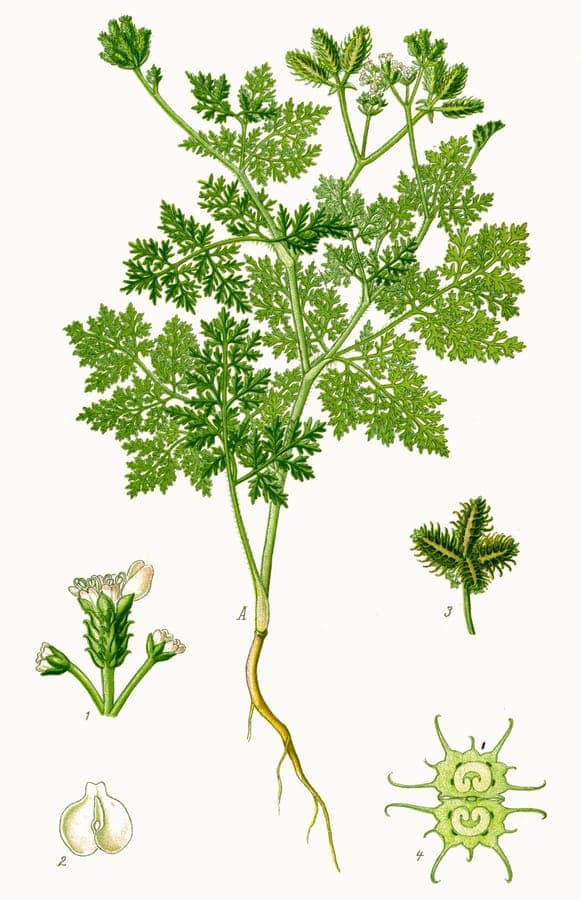
Caucalis platycarpos, commonly known as Small bur-parsley or Hedgehog parsley, is a remarkable annual plant from the Apiaceae or carrot family. This plant grows from Europe through Central Asia to North Africa. It is a compact, non-toxic plant reaching 30-40 cm in height. The plant distinguishes itself through characteristic, flattened seed forms (schizocarp) that are distinctly visible. This is arguably a plant more for plant enthusiasts than typical gardeners.
Appearance and bloom
Caucalis platycarpos displays fine, triangular leaves strongly resembling parsley or dill. The flowers are very small, white or pale pink-tinged, forming characteristic flat umbels. The true highlight, however, are the unusual, flattened fruits with spiny margins, closely resembling tiny fleas or chestnuts. These fruits are remarkably distinctive and add considerable texture and interest to the garden.
Ideal location
Caucalis platycarpos thrives best in full sun on dry to moderately moist soils. This is a sun lover that underperforms in shade. Position it in warm, sunny locations receiving abundant light. The plant tolerates various conditions well, provided it remains dry and sunny. Excellent for summer flower borders or wildflower mixes.
Diseño gratis
¿Quieres ver Caucalis platycarpos: complete guide en tu jardín? Crea un diseño gratis ahora.
Soil
Caucalis platycarpos has no special soil requirements. It grows in dry to moderately moist soils, on lean substrates. The plant even tolerates poor, stony or sandy soils. Good drainage matters. Rich soils can cause excessive leaf growth and fewer flowers. This plant is ideal for difficult, dry locations where little else thrives.
Watering
Once established, Caucalis platycarpos requires minimal water. It is a drought-tolerant species. During growing season, some water helps, but the plant tolerates dryness well. Excessive water causes soft growth and diminished blooming. Maintain minimal watering after establishment.
Pruning
This annual requires no pruning. Remove spent flowers to encourage seed production (or prevent it, depending on preference). Allow some plants to set seed for self-sowing next season.
Maintenance calendar
APRIL-MAY: Direct sow or presow indoors. JUNE-JULY: Flowering period, minimal water. AUGUST-SEPTEMBER: Seed setting, allow self-seeding. OCTOBER: Collect and store seeds.
Winter hardiness
This is an annual plant, so winter hardiness is irrelevant. The plant dies back in autumn/winter.
Companion plants
Caucalis platycarpos combines beautifully with other wildflowers in summer borders. Lovely with Calendula, Cornflower and Cosmos. Fun as fresh-cut stems for dill-like texture in mixed arrangements.
Final thoughts
Caucalis platycarpos is a charming choice for gardeners loving unusual wildflowers. The strange fruits offer considerable interest and conversation value. Seeds are available through specialty seed suppliers.
¿Quieres ver Caucalis platycarpos: complete guide en tu jardín? Crea un diseño gratis ahora.
Sube una foto, elige un estilo y obtén un diseño fotorrealista con lista de plantas en menos de un minuto.
Más de 10.000 jardines diseñados
Sin tarjeta de crédito


Plantas similares
Whorled carrot: complete guide
Daucus involucratus
Daucus involucratus is a Mediterranean umbellifer with white flower heads framed by lacy bracts. Growing this gravel garden gem.
Daucus muricatus: complete guide
Daucus muricatus
Daucus muricatus, the spiny wild carrot, grows wild on Mediterranean coasts. Discover sowing, June-July bloom, and wildflower meadow use.
Daucus pumilus: complete guide
Daucus pumilus
Daucus pumilus is a dwarf wild carrot relative with white lacy umbels, thriving on dunes and coastal rock in poor, fast-draining soil.