
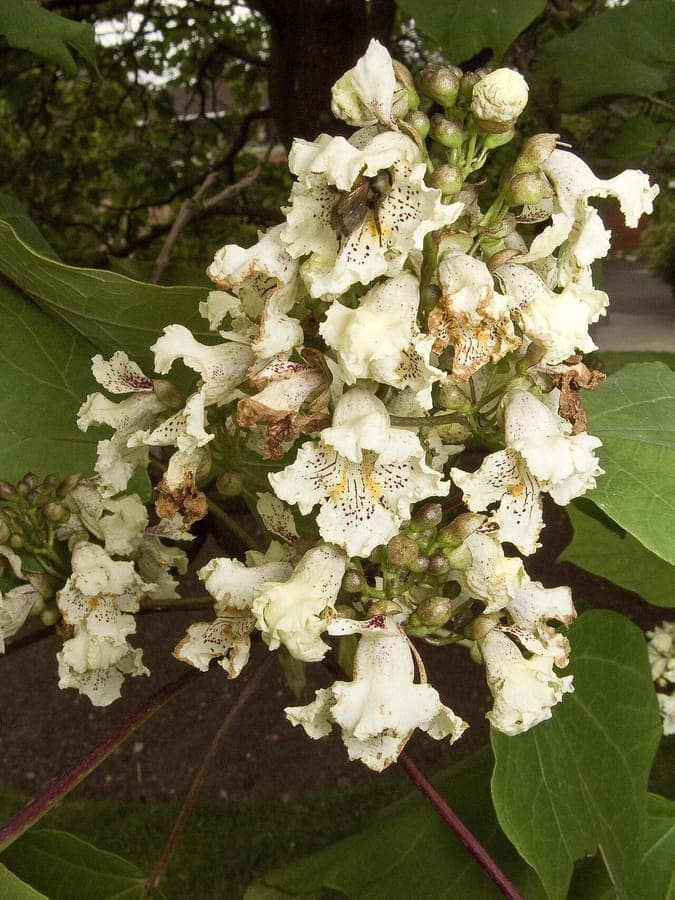
Peter coxhead / CC0, via Wikimedia Commons
Catalpa ovata: complete guide
Catalpa ovata
¿Quieres ver Catalpa ovata: complete guide en tu jardín?
1 minuto, sin tarjeta de crédito
Overview
Catalpa ovata, commonly known as the Chinese Catalpa or Yellow Catalpa, is a stunning deciduous tree native to central and southern China. This tree is widely cultivated in gardens throughout Europe and North America for its striking appearance and attractive flowers. Chinese Catalpa reaches heights of 8 to 15 meters and forms a broad, rounded crown providing excellent summer shade. In its natural habitat in China, this tree grows in mountainous regions at elevations between 600 to 1500 meters.
Appearance and Bloom
Catalpa ovata is distinguished by its large, heart-shaped leaves that emerge from greenish shoots in spring. The leaves are dark green and can grow up to 20 centimeters long, featuring a distinctive heart-shaped form. From June to July, fragrant yellow flowers appear in large, upright clusters. These flowers feature characteristic trumpet-shaped blooms with light yellow coloring and small brown or red spots in the throat. The flowers are approximately 2 to 3 centimeters long and emit a pleasant, sweet fragrance that is particularly noticeable in the morning. Given their fragrance and nectar production, these flowers attract numerous insects, especially bees and various fly species.
After flowering, long pod-like fruits form (up to 40 centimeters long) that ripen in autumn and persist on the tree year-round. These fruits are brown, hollow, and contain numerous winged seeds dispersed by wind. The seeds are flat with long wings, contributing to their natural dispersal. The leaves display beautiful autumn coloring in yellow to golden-brown tones.
Ideal Location
Chinese Catalpa grows best in full sun with at least 6 to 8 hours of direct sunlight daily. This ensures optimal flowering and healthy leaf growth. The tree can also grow acceptably in partially shaded locations, although flowering will be less abundant. Provide protection from strong, dry winds, especially while the tree is young.
This tree is suitable for central and southern Europe and can also be cultivated in protected locations in the north. In warm locations, the tree can develop very well.
Soil Requirements
Catalpa ovata prefers loose, well-draining soil with a pH between 5.5 and 7.0. Heavy clay soils can be improved by adding compost, peat, or sand to enhance soil structure. The tree is quite adaptable to different soil types, as long as they are not permanently wet. Ensure good drainage to prevent root rot. Nutrient-rich soil promotes better growth and flowering.
Diseño gratis
¿Quieres ver Catalpa ovata: complete guide en tu jardín? Crea un diseño gratis ahora.
Watering
In the first year after planting, the tree needs regular water, especially during dry periods. Keep the soil moist but not waterlogged. Water approximately twice weekly under dry conditions. Once established (after 2-3 years), the tree is fairly drought-tolerant and normally needs water only during prolonged dry spells. In very dry years, you can provide supplemental water, especially in July and August.
Pruning
Pruning is generally not necessary, but you can prune young growth to encourage a tidier crown structure. Remove dead, damaged, or weak branches during late winter or early spring. Avoid heavy pruning cuts on mature trees, as these heal slowly. Removing competing stems helps establish a single, strong trunk.
Maintenance Calendar
March to April: Check the tree for dead branches and perform careful pruning if needed. This is also the best time to apply fertilizer. May to June: Enjoy the spectacular yellow flowers that attract many insects. July to August: Provide supplemental water during dry periods. Monitor for disease. Autumn: Collect fallen fruits and leaves. This helps minimize disease and pest issues. Winter: The tree rests. No special maintenance needed.
Winter Hardiness
Catalpa ovata is moderately winter-hardy but not suitable for very cold climates with temperatures below -15 degrees Celsius. In the Netherlands and Belgium, the tree grows well in protected locations. In northern regions, you can protect young trees with straw or other insulation materials. The tree tolerates brief frosts well, but prolonged frost periods can cause damage.
Companion Plants
Chinese Catalpa grows well with other deciduous trees such as birches, maples, and prunus species. Underneath, you can plant evergreen groundcovers such as ivy or dwarf conifers. Avoid strong competitors for root nutrients. Grasses and flowering groundcovers also form attractive combinations.
Closing Remarks
Catalpa ovata is a spectacular choice for larger gardens and parks, especially if you enjoy attracting flowers and birds. With its attractive blooms and striking fruits, this tree provides year-round beauty to your landscape. Check your local garden center for young specimens or seedlings.
Gardenworld.app helps you with all the details of plant care. Gardenworld.app is your guide to more beautiful gardens.
¿Quieres ver Catalpa ovata: complete guide en tu jardín? Crea un diseño gratis ahora.
Sube una foto, elige un estilo y obtén un diseño fotorrealista con lista de plantas en menos de un minuto.
Más de 10.000 jardines diseñados
Sin tarjeta de crédito


Plantas similares
Tabebuia pallida: complete guide
Tabebuia pallida
Full growing guide for Tabebuia pallida: location, soil, watering, pruning, hardiness and companion plants for this tropical trumpet tree.
Northern catalpa: complete guide
Catalpa speciosa
Everything about northern catalpa (Catalpa speciosa): bold white flowers, fast growth, and how to grow this striking tree in your garden.
Desert willow: complete guide to Chilopsis linearis
Chilopsis linearis
Complete growing guide for desert willow (Chilopsis linearis): sun, soil, flowering, pruning, and winter care for this spectacular flowering small tree.