
Bidgee / CC BY 3.0, via Wikimedia Commons
Australian beefwood: complete guide
Casuarina equisetifolia
¿Quieres ver Australian beefwood: complete guide en tu jardín?
1 minuto, sin tarjeta de crédito
Overview
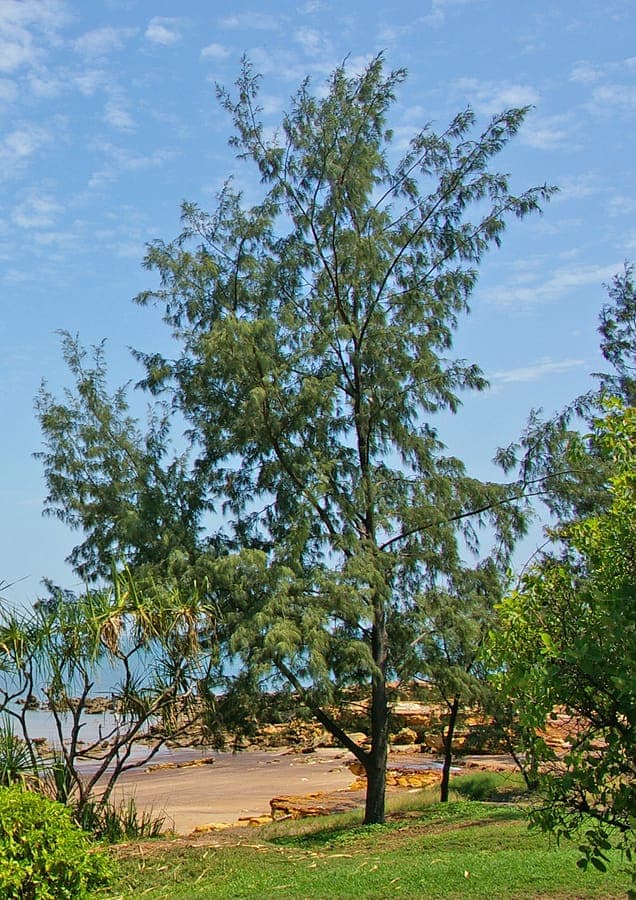
The Casuarina equisetifolia, commonly known as Australian beefwood, horsetail tree, or beach sheoak, is a striking and elegant conifer native to Australia and the Indo-Pacific region. This tree is prized for its distinctive fine foliage that resembles delicate horsetails more than traditional conifers. With its slender, graceful growth habit and expressive silhouette, the Australian beefwood adds exotic character to any landscape design.
Although the Australian beefwood originates from tropical and subtropical regions, this tree can also thrive in temperate climates when properly maintained. The tree develops gracefully spreading branches with fine, thread-like needles that sway gently in the breeze, creating a soothing visual effect.
Appearance & Bloom
The Australian beefwood can grow 15-30 meters tall and features a pyramidal to columnar crown. The distinctive feature of this tree is its foliage. Instead of broad leaves or thick needles, the tree has extremely fine, hair-like, thread-thin needles that grow in clusters. This gives the tree an airy, almost ethereal appearance.
The bark is dark brown to gray with a rough, deeply fissured pattern. This creates beautiful contrast with the light, fine foliage. The tree is evergreen and retains its needles year-round.
The flowers of Casuarina equisetifolia are small and inconspicuous - male flowers appear as red or yellow catkins at branch tips, while female flowers are much smaller. After pollination, the tree produces small, woody seed cones approximately 2 centimeters long.
Ideal Location
The Australian beefwood thrives in full sun with a minimum of 6 hours of direct sunlight daily. The tree is very light-hungry and will appear less vigorous in shade. An open, airy location is ideal, especially since this tree is also wind-resistant and copes well with strong winds.
Planted near the sea or in salty, windy areas, this tree feels completely at home. The tree is perfect for coastal areas or maritime gardens where other species might struggle. Shelter from other trees or windbreaks can help in harsh climates.
Soil
The Australian beefwood is not particularly fussy about soil type and tolerates poor, sandy, or gravelly soils well. This is actually a major advantage because the tree can grow in marginal soils where many other trees struggle.
The tree does, however, strongly prefer well-draining soil. Waterlogging and wet, clay soils can be harmful and lead to root problems. Both acidic and neutral sand to light clay soil is well tolerated.
Improve very poor soil with some compost or peat when planting, but excessive fertilization is not needed. The tree can also grow in saline soil, making it an excellent choice for coastal areas.
Diseño gratis
¿Quieres ver Australian beefwood: complete guide en tu jardín? Crea un diseño gratis ahora.
Watering
Once well established, the Australian beefwood is very drought-tolerant and requires little supplementary water. Young trees, however, will need to be watered several times a week until well established, especially during dry seasons.
Water thoroughly but infrequently - this encourages strong, deep roots. In rainy climates, supplemental water is usually unnecessary. In dry climates or during droughts, you can water weekly. However, do not allow the soil to become waterlogged.
A soil moisture meter can help determine if watering is needed. When the top 5 centimeters of soil feel dry, it's time to water.
Pruning
The Australian beefwood requires minimal pruning and grows gracefully into an attractive form naturally. Dead, damaged, or diseased wood should be removed as soon as noticed.
If you want to keep the tree more compact, you can do light pruning after the growing season, but this is not essential. Avoid heavy pruning as it can damage the tree's natural form.
With young plants, you can help direct central leaders toward clean, upright stem growth. Once established, the tree shapes itself well.
Maintenance Calendar
Spring: Regular watering for young trees
Summer: Check for drought stress; water as needed
Fall: Clean up dead needles and branches; prepare for winter
Winter: Minimal maintenance; no frost sensitivity in temperate zones
Winter Hardiness
The Australian beefwood is frost-sensitive and grows best in zones where temperatures don't drop much below freezing. In temperate climates, this may mean keeping the tree as a container plant or growing it in a conservatory during harsh winters.
In more southern regions (USDA zones 9-11), this tree can overwinter outdoors, though in sheltered locations. Northern European gardens can treat this tree as a seasonal annual or keep it in containers brought inside. Mulch around young trees to protect roots from frost in marginal climates.
Companion Plants
The Australian beefwood pairs well with other maritime and salt-tolerant plants. Consider other sea trees or shrubs that tolerate salt and wind. Grass-like sedums and low-growing ground covers can create nice accents around the base of this tree.
Conclusion
The Australian beefwood is an unusual and elegant tree that adds charm and texture to gardens with sunny, open spaces. While not suitable for all climates, this tree delivers excellent results in maritime and southern regions and requires minimal maintenance. For those seeking something beyond the ordinary tree catalog, this is a fantastic choice.
¿Quieres ver Australian beefwood: complete guide en tu jardín? Crea un diseño gratis ahora.
Sube una foto, elige un estilo y obtén un diseño fotorrealista con lista de plantas en menos de un minuto.
Más de 10.000 jardines diseñados
Sin tarjeta de crédito


Plantas similares
Acer pycnanthum: complete guide
Acer pycnanthum
Acer pycnanthum, the Japanese swamp maple, is a fast-growing tree with early red flowers and brilliant autumn color, ideal for damp garden settings.
Freeman maple: complete guide
Acer × freemanii
Everything about the Freeman maple (Acer x freemanii): a fast-growing shade tree with spectacular autumn colour for large gardens.
Silver vine: complete guide
Actinidia polygama
Discover silver vine (Actinidia polygama): a hardy climbing plant with silvery foliage, loved by gardeners and cats alike.