
Ethel Aardvark / CC BY 3.0, via Wikimedia Commons
Casuarina cunninghamiana: complete guide
Casuarina cunninghamiana
¿Quieres ver Casuarina cunninghamiana: complete guide en tu jardín?
1 minuto, sin tarjeta de crédito
Overview
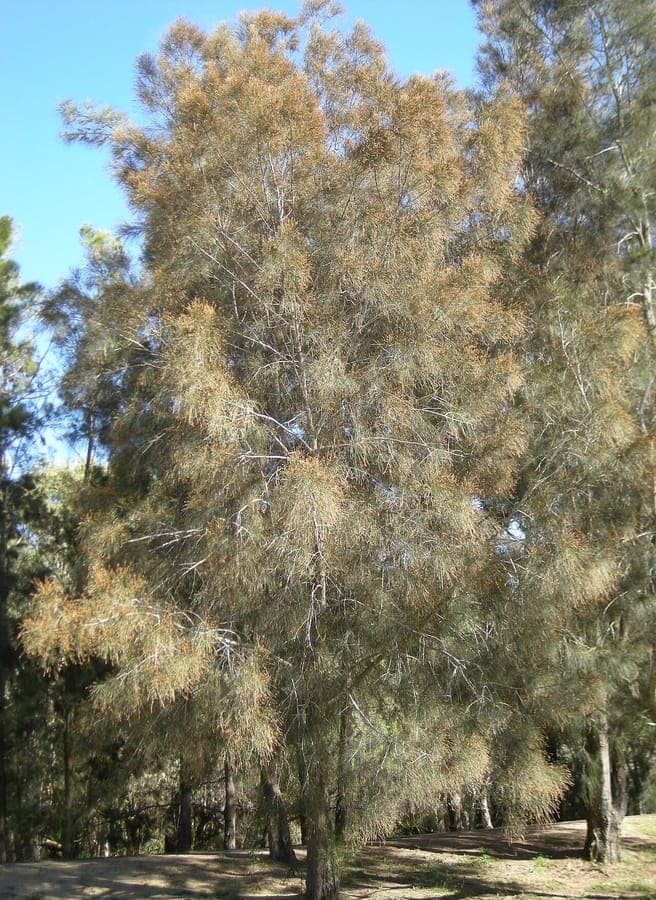
Casuarina cunninghamiana, commonly called Beefwood, River she-oak, or Australian Pine, is an elegant tree from the Casuarinaceae family. Native to Australia and Papua New Guinea, this tree distinguishes itself through its characteristic fine, needle-like branchlets and rapid growth. In warm climates, it provides a spectacular specimen for large gardens and landscapes with its elegant, airy branching pattern and impressive stature.
Appearance and bloom
Casuarina cunninghamiana is a substantial tree reaching 20-35 meters tall in ideal conditions. The tree displays a columnar, elegant silhouette with fine, feathery branchlets giving an extremely graceful, light appearance. The needle-like "leaves" are actually reduced branchlets typical of Casuarina species. Small, inconspicuous flowers appear in early spring, with botanical interest focusing on the unique branching architecture. Brown seed cones follow pollination, persisting for extended periods.
Ideal location
This tree performs best in full sun with excellent air drainage. Position it in open, sunny locations where it can develop freely. The tree appreciates well-ventilated sites and cannot tolerate severe frost. In temperate zones, it suits protected southern-facing locations or Mediterranean gardens. Avoid exposed locations with strong winds or frost pockets where damage occurs readily.
Soil requirements
Casuarina cunninghamiana thrives in well-drained, sandy to loamy soils. The tree accepts poor soils and even grows on rocky ground. The only prohibitive condition is waterlogged, poorly drained soil with stagnant moisture. A neutral to slightly acidic pH is ideal. This species is remarkably adaptable to various soil types provided drainage is adequate.
Watering
Once established, Casuarina cunninghamiana shows considerable drought tolerance. Water regularly during the first growing season to establish deep roots. Thereafter, mature trees require only moderate watering, supplemented during extreme drought. In temperate zones, natural rainfall typically suffices. This tree becomes extremely drought-tolerant once fully established with deep root systems.
Diseño gratis
¿Quieres ver Casuarina cunninghamiana: complete guide en tu jardín? Crea un diseño gratis ahora.
Pruning
Pruning requirements are minimal. This tree develops a naturally attractive form rapidly without intervention. Remove damaged branches in spring as needed. Lower branches can be selectively removed to create a clearer stem structure and allow light penetration. Avoid heavy pruning, as the tree prefers natural growth patterns. The tree regenerates rapidly following necessary pruning operations.
Maintenance calendar
March-April: Inspect for damaged branches, light fertilizer application. May-August: Monitor watering needs during dry periods. September-October: Reduce fertilizer applications. November-February: Minimal intervention, frost protection in colder regions.
Winter hardiness
Casuarina cunninghamiana is not winter hardy in temperate zones outside very protected gardens in warm regions. The tree tolerates temperatures only to about -5 to -10 degrees Celsius before suffering damage. In cooler climates, cultivation in containers with winter protection is recommended. This makes it a choice for warm Mediterranean or subtropical gardens rather than harsh temperate winters.
Companion plants
Pair Casuarina cunninghamiana with Mediterranean plants: olive, broom, Santolina, and rosemary. The fine branching pattern contrasts beautifully against dark or colorful foliage. In warmer climates, the tree associates well with palms and other Australian shrubs. For maximum impact, plant as a striking specimen with clear sky as backdrop.
Closing remarks
Casuarina cunninghamiana offers spectacular architecture with its characteristic needle-like branchlets and graceful growth form. For warm Mediterranean and subtropical gardens, this Australian tree represents unparalleled botanical interest. Available from specialized tree nurseries particularly in warmer regions. Explore more Mediterranean garden inspiration on gardenworld.app. This Australian beauty brings exotic elegance and architectural presence to warm-climate gardens worldwide.
¿Quieres ver Casuarina cunninghamiana: complete guide en tu jardín? Crea un diseño gratis ahora.
Sube una foto, elige un estilo y obtén un diseño fotorrealista con lista de plantas en menos de un minuto.
Sin tarjeta de crédito


Plantas similares
Acer pycnanthum: complete guide
Acer pycnanthum
Acer pycnanthum, the Japanese swamp maple, is a fast-growing tree with early red flowers and brilliant autumn color, ideal for damp garden settings.
Freeman maple: complete guide
Acer × freemanii
Everything about the Freeman maple (Acer x freemanii): a fast-growing shade tree with spectacular autumn colour for large gardens.
Silver vine: complete guide
Actinidia polygama
Discover silver vine (Actinidia polygama): a hardy climbing plant with silvery foliage, loved by gardeners and cats alike.