
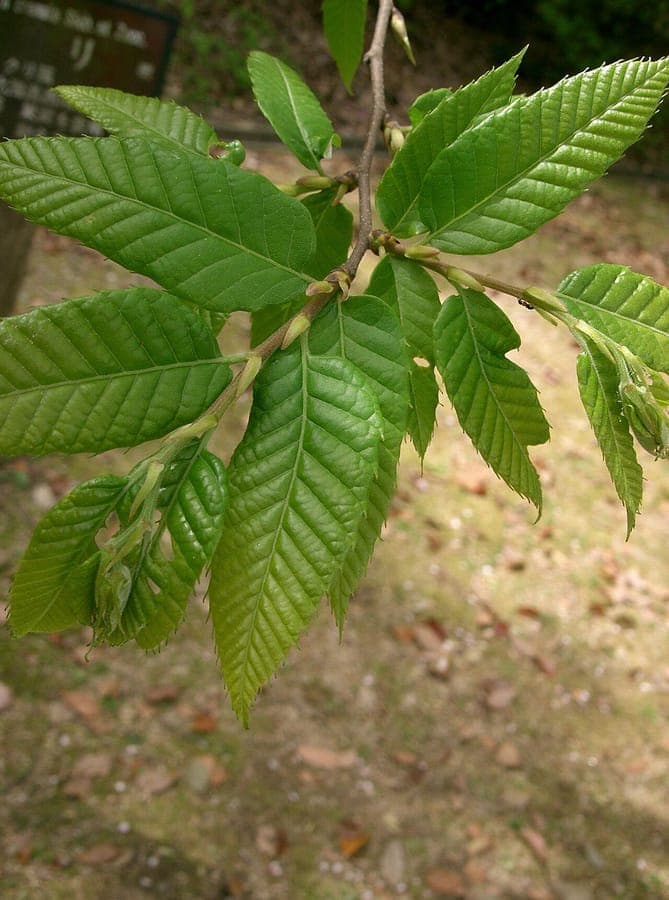
KENPEI / CC BY-SA 3.0, via Wikimedia Commons
Castanea crenata: complete guide
Castanea crenata
¿Quieres ver Castanea crenata: complete guide en tu jardín?
1 minuto, sin tarjeta de crédito
Overview
The Japanese chestnut (Castanea crenata) is an impressive tree from East Asia, native to Japan and Korea. This tree is named after its characteristic crenulations (fine notches) along the leaf margins. In Japan this tree is called 'Kuri' and has been important for food production for thousands of years. It is a magnificent ornamental tree with fragrant flowers and nutritious fruits.
Appearance and Bloom
The Japanese chestnut is a moderately growing tree that can reach 10 to 15 metres high. The tree forms a broad, rounded crown with glossy green leaves. The leaves are elongated, smooth-edged, with characteristic fine notches (crenate) along the leaf margins.
The flowers appear in June and July in striking, fragrant catkins. They are cream to yellow in colour and highly attractive to bees and butterflies. After flowering, characteristic spiky chestnut husks develop with 1 to 3 chestnuts per husk.
Ideal Location
The Japanese chestnut feels best in sunny to half-shaded locations with well-drained soil. The tree grows optimally in warm climates where it receives sufficient summer temperatures. In the Netherlands and Belgium, this tree can grow without much difficulty.
Soil
Castanea crenata is not very fussy about soil type. The tree grows well on acidic to neutral soils. Well-drained soils are important to prevent root rot. Sandy to loamy soils are ideal. Ensure sufficient depth of topsoil so roots can penetrate well.
Diseño gratis
¿Quieres ver Castanea crenata: complete guide en tu jardín? Crea un diseño gratis ahora.
Watering
Water regularly during the first growing season. Once established, the tree is very drought-tolerant. However, ensure the tree receives sufficient water during the growing season for good fruit set.
Pruning
Minimal pruning needed - mainly form building in the juvenile phase. As an ornamental tree, prune in late winter (February). Remove dead wood and crossing branches. Ensure the crown remains open to light and air.
Maintenance Calendar
January to February: Winter pruning, form building. March to April: Growing season begins, water. May to June: Flowering, highly fragrant, pollination by insects. July to September: Fruit development. October to November: Harvest chestnuts.
Winter Hardiness
Castanea crenata is moderately hardy and can tolerate temperatures down to about -15 to -20 degrees Celsius, depending on the origin of the plant material. The tree grows well in warmer parts of the UK.
Companion Plants
Plant shade-loving plants such as ivy or Pachysandra at the base of the tree. With other trees, it forms attractive tree groups in park landscapes.
Final Thoughts
The Japanese chestnut is a magnificent tree for those who have space and patience. With its fragrant flowers and edible fruits, it brings much pleasure. Available from specialized tree nurseries and wholesalers. This is not a tree for small urban gardens, but for those with space: indispensable. Read more garden tips at gardenworld.app.
¿Quieres ver Castanea crenata: complete guide en tu jardín? Crea un diseño gratis ahora.
Sube una foto, elige un estilo y obtén un diseño fotorrealista con lista de plantas en menos de un minuto.
Más de 10.000 jardines diseñados
Sin tarjeta de crédito


Plantas similares
Lucombe oak: complete guide
Quercus crenata
Lucombe oak (Quercus crenata): a majestic semi-evergreen giant with corky bark, perfect for large gardens, parks, and country estates.
Blue oak: complete guide
Quercus douglasii
Discover the blue oak, a drought-tolerant Californian shade tree with striking blue-green foliage, ideal for large, climate-resilient gardens.
Quercus montana: complete guide
Quercus montana
Quercus montana, the chestnut oak, is a rugged American shade tree with deeply furrowed bark and large acorns, well suited to dry, rocky, spacious gardens.