
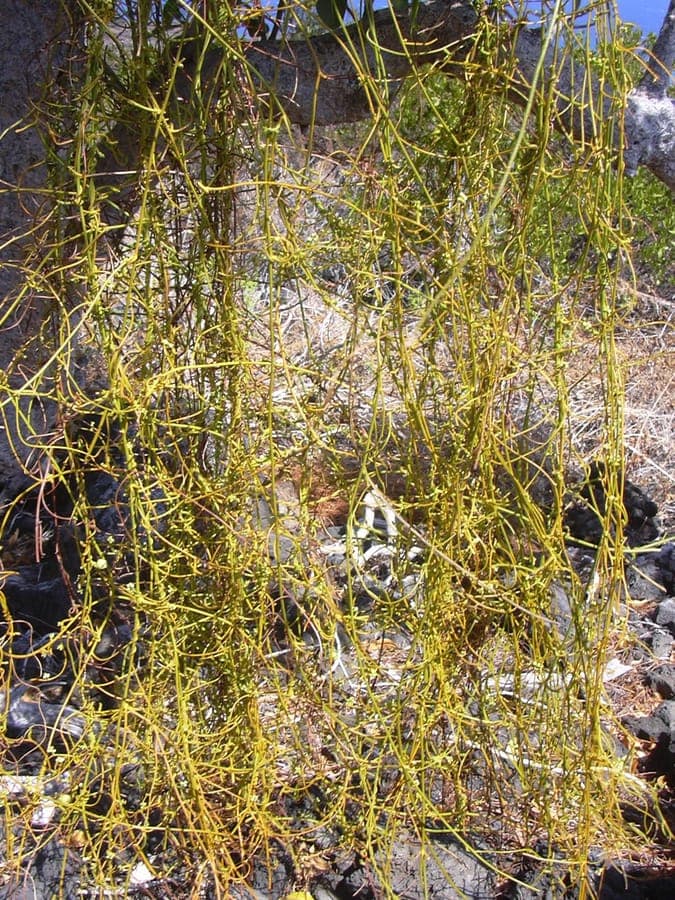
Forest and Kim Starr / CC BY 3.0 us, via Wikimedia Commons
Cassytha filiformis: complete guide
Cassytha filiformis
¿Quieres ver Cassytha filiformis: complete guide en tu jardín?
1 minuto, sin tarjeta de crédito
Cassytha filiformis, better known as dodder-laurel, is one of the most fascinating parasitic plants from tropical and subtropical regions. This thread-like plant has a unique growth pattern that differs from almost all other plants.
Origin and Family Cassytha filiformis belongs to the Lauraceae family and occurs in tropical and subtropical regions worldwide. This plant is endemic to warm areas and spreads rapidly in suitable habitats.
Unique Parasitic Growth Pattern Unlike normal plants, Cassytha filiformis lacks roots and extracts food from host plants. The plant is a parasitic climber that winds around other plants. It has thin, thread-like stems with minimal leaves. The plant develops haustoria, sucking organs that penetrate the host plant to extract nutrients.
Appearance and Bloom The plant consists mainly of fine, green threads that wind around other plants. In the growing season, small, inconspicuous yellow or white flowers appear in clusters. After blooming, small, round fruits develop.
Ideal Host Plants This plant parasitizes a wide range of plants. It usually grows on shrubs and other climbing plants. In garden design, this is rarely planted intentionally because of its parasitic nature.
Growth Conditions In natural habitats, Cassytha filiformis grows in warm, humid environments. The plant thrives best in full sun to partial shade. It needs warm weather and cannot tolerate frost.
Nutrition and Maintenance The plant requires no traditional fertilization because it extracts nutrition from host plants. This makes it a challenging plant in gardens. Control is usually better than promotion.
Control in Gardens If this plant grows unwanted in your garden, it can be removed manually by pulling off the thread-like stems. Regular inspection helps detect early infestation. Herbicides can be used in severe cases.
Maintenance Calendar Spring: Monitor for new growth Summer: Remove parasitic growth Fall: Continue control measures Winter: Minimal activity in cold climates
Frost Hardiness Not frost-hardy. This plant does not survive frost periods and dies at temperatures below 5 degrees Celsius.
Ecological Role Although parasitic, Cassytha filiformis plays a role in ecosystems as food for birds and insects. The fruits are eaten by various animal species.
Closing Thoughts Cassytha filiformis is of mainly biological interest rather than garden value. This parasitic plant provides insight into the diversity of plant strategies in nature. Visit gardenworld.app for more plant guides and design inspiration.
¿Quieres ver Cassytha filiformis: complete guide en tu jardín? Crea un diseño gratis ahora.
Sube una foto, elige un estilo y obtén un diseño fotorrealista con lista de plantas en menos de un minuto.
Más de 10.000 jardines diseñados
Sin tarjeta de crédito


Plantas similares
Ocotea floribunda: complete guide
Ocotea floribunda
All about Ocotea floribunda, a tropical laurel tree from Central and South America: growing in temperate climates, containers, pruning, and care in greenhouses.
Redbay: complete guide
Persea borbonia
A full guide to redbay (Persea borbonia), a fragrant evergreen tree native to the southeastern United States, related to avocado and laurel.
Swamp bay: complete guide
Persea palustris
A full guide to swamp bay (Persea palustris), an evergreen tree native to the wetlands and coastal swamps of the southeastern United States.