
Wikimedia Commons / Public domain, via Wikimedia Commons
Carya glabra: complete guide
Carya glabra
¿Quieres ver Carya glabra: complete guide en tu jardín?
1 minuto, sin tarjeta de crédito
Overview
Carya glabra, also known as pignut hickory or sweet pignut, is an impressive deciduous tree from the eastern United States. This majestic tree reaches heights to 25 meters and is valued for its elegant architecture, spectacular autumn coloration and valuable nuts. With its intricate leafy canopy and rich history, Carya glabra represents a culturally and ecologically valuable addition to larger landscapes.
This native tree provides food for wildlife and establishes itself readily. Once established, it grows vigorously with minimal maintenance requirements.
Appearance and Bloom
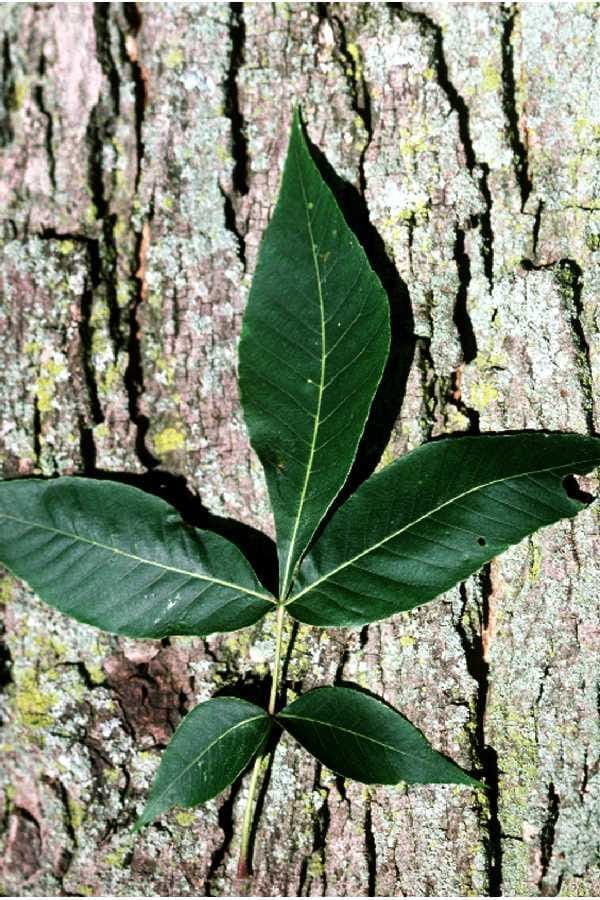
Carya glabra reaches heights of 15 to 25 meters with a broad, rounded crown. The compound leaves (to 20 centimeters long) consist of 7-9 small leaflets with finely serrated edges. This elegant leaf structure provides dappled shade and textural interest.
Male catkins appear as drooping flowers in spring. Female flowers develop at stem terminals. From fertilized flowers emerge approximately golf-ball-sized nuts in thick, hard shells containing sweet, oily kernels.
Ideal Location
Carya glabra thrives in full sun with a minimum of 6 hours direct daily radiation. Select locations with adequate space for complete crown development. This is a large tree requiring substantial room.
Sheltered locations perform best as strong winds may break branches. The tree tolerates wind well though it grows better in protected positions.
Soil
Carya glabra grows in various soil types from sand to loam but prefers well-draining, neutral to slightly acidic soils (pH 6.0-7.0). Heavy clay causes growth reduction. Add organic matter at planting for improved moisture retention.
This tree is drought-tolerant once established due to deep rooting. Good soil preparation at planting improves long-term performance.
Diseño gratis
¿Quieres ver Carya glabra: complete guide en tu jardín? Crea un diseño gratis ahora.
Watering
Normal rainfall usually suffices once the tree is established. Regular watering during the first year is essential for root establishment. Drip irrigation or basin watering supports early growth.
During dry seasons, regular watering (weekly) provides moisture. The tree tolerates drought well after establishment.
Pruning
Minimal shaping pruning is needed for Carya glabra. Remove dead, diseased or damaged branches. This tree naturally forms a beautiful structure without artificial intervention.
Main branches should be supported in youth for strong formation. This prevents split trunks in later years.
Maintenance Calendar
Spring: Damage inspection, moisture monitoring, feeding Summer: Watering during drought, disease observation Fall: Leaf cleanup preparation, seed removal (optional) Winter: Structural inspection, minimal maintenance
Winter Hardiness
Carya glabra is hardy to approximately -20 degrees Celsius. This native tree is adapted to cold winters in the eastern United States. Heavy snow loads pose no problem as the tree structure is flexible.
The tree survives extremes. Damaged branches recover without additional intervention.
Companion Plants
Combine Carya glabra with other North American natives like Quercus, Acer and Cornus. Shade-tolerant groundcovers like Trillium and Smilacina make good companions. Native shrubs like Sambucus create interesting understory.
In woodland landscapes, it integrates perfectly. This tree functions as a habitat tree in landscape planning.
Closing
Carya glabra merits placement in larger gardens and landscapes. With impressive stature, autumn display and ecological value, it delivers years of pleasure. Perfect for those seeking classic North American woodland character.
Source Carya glabra from reputable tree nurseries. Discover how large trees can transform your landscape on gardenworld.app. Visit gardenworld.app for more inspiration today.
¿Quieres ver Carya glabra: complete guide en tu jardín? Crea un diseño gratis ahora.
Sube una foto, elige un estilo y obtén un diseño fotorrealista con lista de plantas en menos de un minuto.
Más de 10.000 jardines diseñados
Sin tarjeta de crédito


Plantas similares
Texas walnut: complete guide
Juglans microcarpa
Complete guide to Texas walnut (Juglans microcarpa): a small, drought-tolerant walnut tree for gardens. Location, soil, watering, and care advice.
Mockernut hickory: complete guide
Carya alba
Mockernut hickory is a majestic North American tree with ornamental and nut value. Learn everything about care, cultivation and ideal location.
Pecan Tree: complete guide
Carya illinoinensis
Majestic pecan tree producing delicious nuts. Explore this American native for shade-free growth and abundant harvests worldwide.