
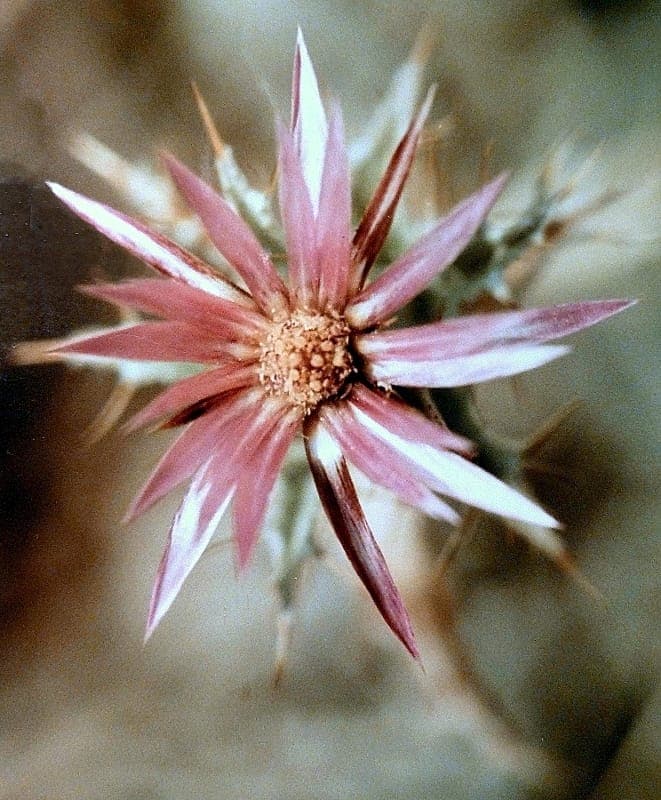
Philmarin / CC BY-SA 3.0, via Wikimedia Commons
Carlina lanata: complete guide
Carlina lanata
¿Quieres ver Carlina lanata: complete guide en tu jardín?
1 minuto, sin tarjeta de crédito
Overview
Carlina lanata, known as woolly carline thistle, is a striking plant from the Asteraceae family (the same family as sunflowers). This Mediterranean plant originates from countries around the Mediterranean Sea, from Italy and Spain to North Africa. The plant is known for its characteristic, soft, silvery-white bracts surrounding the flower.
In English gardens, Carlina lanata is valued as a distinctive ornamental plant and cut flower. It displays a rustic, cottage-like charm that perfectly suits wild flower garden designs.
Appearance and bloom
Carlina lanata is a biennial or short-lived perennial that grows to 60 to 80 centimetres in height. The leaves are elongated, greenish and deeply toothed at the margins, giving the plant a silvery-green appearance.
The spectacular part of Carlina lanata is the flower. It sits on a robust stem and is surrounded by dozens of soft, silvery-white spine-like leaves that feel remarkably soft to touch. The actual flower in the centre is small and yellow. The entire structure resembles a soft silver star or artwork.
Carlina lanata blooms from July to September. After flowering, the plant produces seed that is dispersed by wind. The seeds are attached with fine hairs that help them float.
Ideal location
Carlina lanata grows best in warm, sunny locations. At least 6 to 8 hours of sunlight daily is needed for optimal growth and flowering. The plant tolerates full sun without problems.
The plant thrives in dry, well-drained spots. Moist, shaded corners of the garden are not suitable. The perfect location would be on a rocky slope, in a sunroom or against a south-facing wall.
In the wild, Carlina lanata grows on quiet, dry mountain slopes and in open grasslands of the Mediterranean region. This tells us much about optimal growing conditions.
Soil
Carlina lanata grows best in dry, well-draining sandy or gravelly soil. The pH can be anywhere between 6.0 and 8.0. The plant accepts poor, infertile soils without problem.
Do not add compost or fertiliser. Too much nutrition causes the plant to grow too much foliage at the expense of flowers. The plant prefers minimal nutrition.
Ensure the planting hole has good drainage by working sand and gravel into the soil. This plant tolerates even shallow, rocky soils better than many other plants.
Diseño gratis
¿Quieres ver Carlina lanata: complete guide en tu jardín? Crea un diseño gratis ahora.
Watering
Once planted, water regularly for the first 4-6 weeks until the plant is established. Water until the soil feels moist but not soggy.
Once established, Carlina lanata needs much less water. It is drought-tolerant and can grow for months without extra water. Only during extended droughts (more than 2 months without rainfall) does water need to be given.
In winter, almost no water is needed. Heavy overwatering in winter can lead to root rot.
Pruning
Carlina lanata requires minimal pruning. Remove dead or damaged leaves in early spring.
After flowering, the plant can be removed or you can let it drop seeds itself. If you want the plant to return via self-seeding, leave some flowers to set seed.
Pruning is actually not recommended as it damages the natural form. Let the plant grow as it wishes.
Maintenance calendar
March-April: Check for new growth. Remove winter-damaged parts.
May-June: Monitor for pest insects, add feeding if needed (very minimal).
July-September: Enjoy the flowers. Water as needed.
October-November: Let seed drop for next year, or remove plant.
December-February: Winter rest. Minimal maintenance.
Winter hardiness
Carlina lanata is moderately winter-hardy and very sensitive to harsh frost and moisture. In the UK, there are two approaches:
- Grow as an annual (sow in March, flower in summer, remove in autumn)
- In sheltered, dry locations, it can survive as a biennial, especially in southern regions.
In northern areas and in very wet winters, it is safer to treat it as an annual plant.
Companion plants
Carlina lanata combines well with:
- Lavender: complementary purple flowers
- Santolina: silvery-white foliage contrast
- Salvia: drought-tolerant, airy
- Stipa: ornamental grass texture
- Papaver (poppies): wild, informal look
Mix with other drought-tolerant Mediterranean herbs for a cohesive, warm design.
Closing thoughts
Carlina lanata brings an almost magical quality to the summer garden with its silvery, fuzzy flowers. Treat it as an annual from seed or try it surviving in sheltered, dry corners. This plant is a guarantee for interest and compliments from visitors. Seeds are available at garden centres.
Visit gardenworld.app for inspiration on how to use Mediterranean plants in your English garden!
Looking for a special plant for your dry spots? Check gardenworld.app!
¿Quieres ver Carlina lanata: complete guide en tu jardín? Crea un diseño gratis ahora.
Sube una foto, elige un estilo y obtén un diseño fotorrealista con lista de plantas en menos de un minuto.
Más de 10.000 jardines diseñados
Sin tarjeta de crédito


Plantas similares
Calendula stellata: complete guide
Calendula stellata
Complete guide to Calendula stellata, the star-flowered marigold from Sicily: location, soil, watering and companion planting tips.
Korean chrysanthemum: complete guide
Chrysanthemum x rubellum
Chrysanthemum x rubellum is a hardy autumn perennial with single pink to copper flowers from August to November. Care and combinations.
Helianthus divaricatus: complete guide
Helianthus divaricatus
Helianthus divaricatus is a North American woodland sunflower with yellow summer blooms, ideal for naturalistic borders and shady edges.